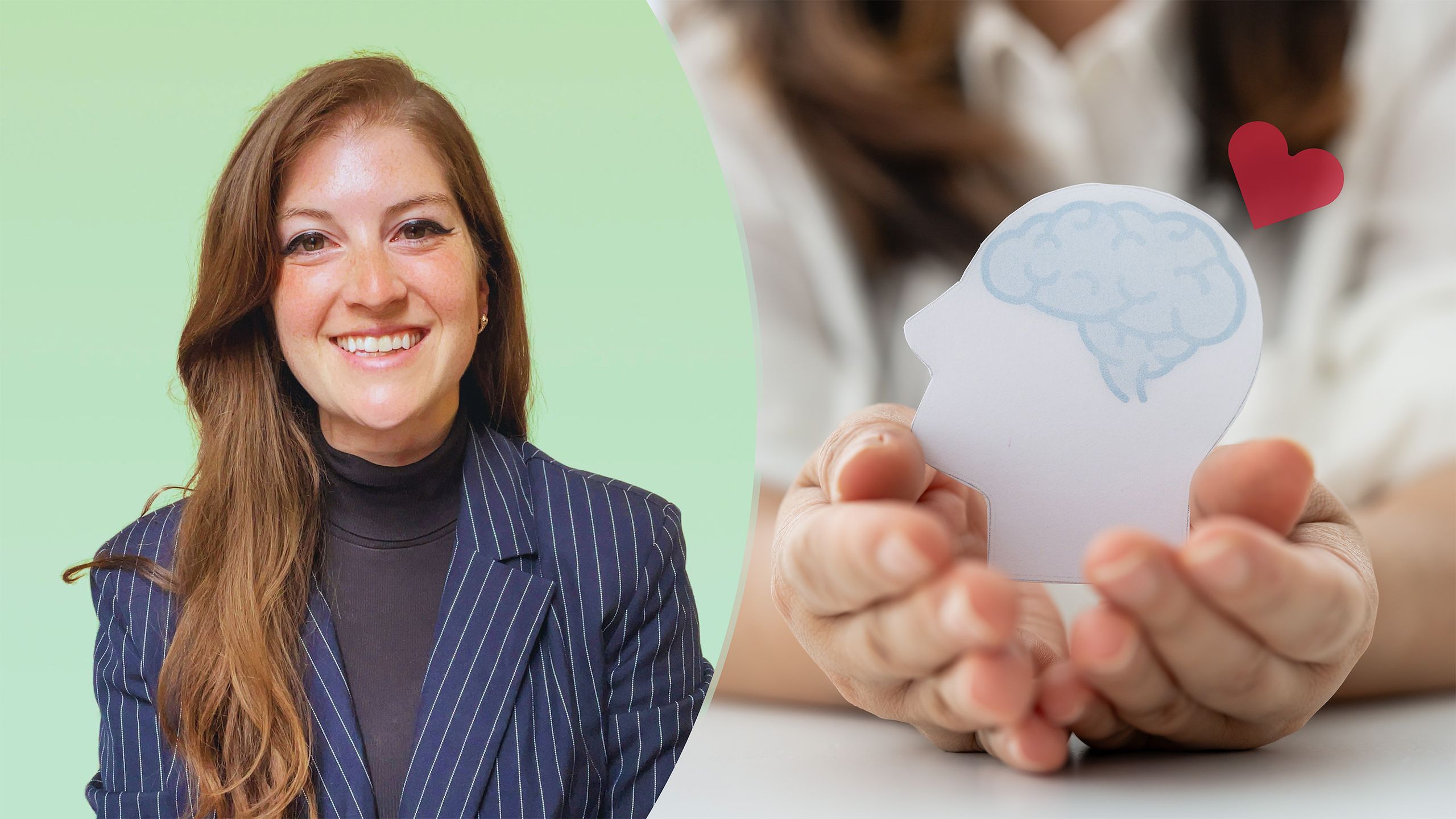
(Image credit: Talkspace/Shutterstock) Life can feel overwhelming sometimes. Work, family, finances and everything else have a way of piling up until it feels like you're carrying more than you can handle.When that happens, talking to a licensed therapist is still the best place to start. Services like Talkspace make that easier by connecting you with licensed therapists through video, voice or live chat, so help is available without needing to visit an office.AI has also become part of the conversation. More people are turning to chatbots when they need someone to talk to, whether it's to organize their thoughts, vent after a difficult day or get ideas for managing stress. There's an obvious appeal to having something that's available any time, day or night. But it's important to remember what AI can and can't do. It can offer support and encouragement, but it isn't a therapist and it can't diagnose or treat mental health conditions.Talkspace is making sure Tee, its new AI mental health support tool, can be trusted and used as a supplement for users who can also seek out human support through their services. We spoke to Monika Dargis, Head of Clinical Operations and Quality at Talkspace, about how Tee came to be, the future of AI in the mental health space and more.Introducing an efficient and dependable AI assistant to the mental health space (Image credit: Shutterstock)Tom’s Guide: What led to the creation of Talkspace’s Tee?Monika Dargis: Millions of people are already using general AI systems for highly sensitive emotional and mental health conversations, even though those tools aren’t being built for that purpose. As a leading mental health provider, we saw it as our responsibility to create a safer and purpose-built alternative for behavioral health support, with clinician-in-the-loop oversight, privacy protections, and safety guardrails. Tee is designed to raise the standard for how AI should be used in mental health support.Tom’s Guide: What's the biggest misconception you wish the public understood more about AI's role in mental healthcare?Get instant access to breaking news, the hottest reviews, great deals and helpful tips.Dargis: That it will replace therapists. AI is not therapy, and human clinicians are essential to mental healthcare. But what AI chatbots like Tee can do is support and complement the broader mental health ecosystem and reach a much larger population of people - from those who may be reluctant to start therapy to those who want an always-on sounding board between sessions.Tom’s Guide: Are there any instances where AI should never replace a human clinician?Dargis: Talkspace believes human clinicians remain essential to mental healthcare. We also believe that therapy, by definition, is between two people.Tom’s Guide: If AI ultimately becomes widely used in mental healthcare, how do you think its success will be measured? Faster access to mental health experts? Better outcomes for patients? Lower burnout rates for mental healthcare workers? Or something else entirely?Dargis: AI is already pretty widely adopted for non-client-facing tools (e.g., AI notes and clinician-supported tools) to help streamline administrative tasks. Last year, Talkspace introduced Insights, a new feature that enhances therapeutic care by helping Talkspace providers efficiently prepare for sessions and guide client care between sessions. To measure success, we should first look at how AI can impact and move the needle on the metrics that matter in current-state mental healthcare (e.g., those listed above as well as metrics around safety, compliance, accuracy, etc.). How to Manage Stress and Anxiety According to a Therapist - YouTube Watch On Tom’s Guide: Do you think we’ll ever reach a point in the future where AI will be used to detect and prevent mental illnesses? If so, what might that look like?Dargis: There are so many variables (genetic, biological, sociological, psychological, etc., etc.) that contribute to mental illness and AI can help solve these puzzles (e.g., pattern recognition and synthesizing a ton of data); so there is room for early intervention efforts, which is one version of prevention. But it is important to emphasize that AI cannot diagnose, nor is it a replacement for human mental health professionals.Bottom lineJudging by the pros connected to Tee (it being completely private, secure and built to meet HIPAA protections being the most important in our eyes), Talkspace’s AI support tool sounds like one of the safest ways for everyone to get the mental health aid they need.Preventing yourself from “crashing out”, building dependable coping skills or simply venting about a particularly difficult day can be done with Tee.Nikole Benders-Hadi, M.D., Chief Medical Officer at Talkspace, also made sure to relay the message that Tee is as viable and reliable as it gets. “Tee was created by our mental health experts to provide people a safe, private alternative to general-purpose AI chatbots,” she stated on Tee’s official site. “We designed it based on proven therapy principles and rigorously tested it for safety. Although Tee is not a replacement for a human therapist, it provides convenient, flexible support you can trust.” Follow Tom's Guide on Google News and add us as a preferred source to get our up-to-date news, analysis, and reviews in your feeds. Subscribe to Tom's Guide on YouTube and follow us on TikTok.More from Tom’s GuideI asked ChatGPT for the best ways to reduce stress — these 7 simple techniques helped me feel like myself again'Not a chatbot on the sidelines': Ridley AI wants to automate your home sale and eliminate 6% commission fees'Used right, AI is a patient tutor. Used wrong, it's a shortcut around the learning': we spoke to the creator behind an AI tool that's changing the way students learn Elton Jones covers AI for Tom’s Guide, and tests all the latest models, from ChatGPT to Gemini to Claude to see which tools perform best — and how they can improve everyday productivity.He is also an experienced tech writer who has covered video games, mobile devices, headsets, and now artificial intelligence for over a decade. Since 2011, his work has appeared in publications including The Christian Post, Complex, TechRadar, Heavy, and ONE37pm, with a focus on clear, practical analysis.Today, Elton focuses on making AI more accessible by breaking down complex topics into useful, easy-to-understand insights for a wide range of readers.
'Raising the standard': Inside Talkspace's bold new AI mental health support tool
Full Article
Original Source
Read the full article at Tomsguide →KhanList aggregates and links to publicly available news content. We do not host full articles from third-party sources. Always verify important information with original sources.