
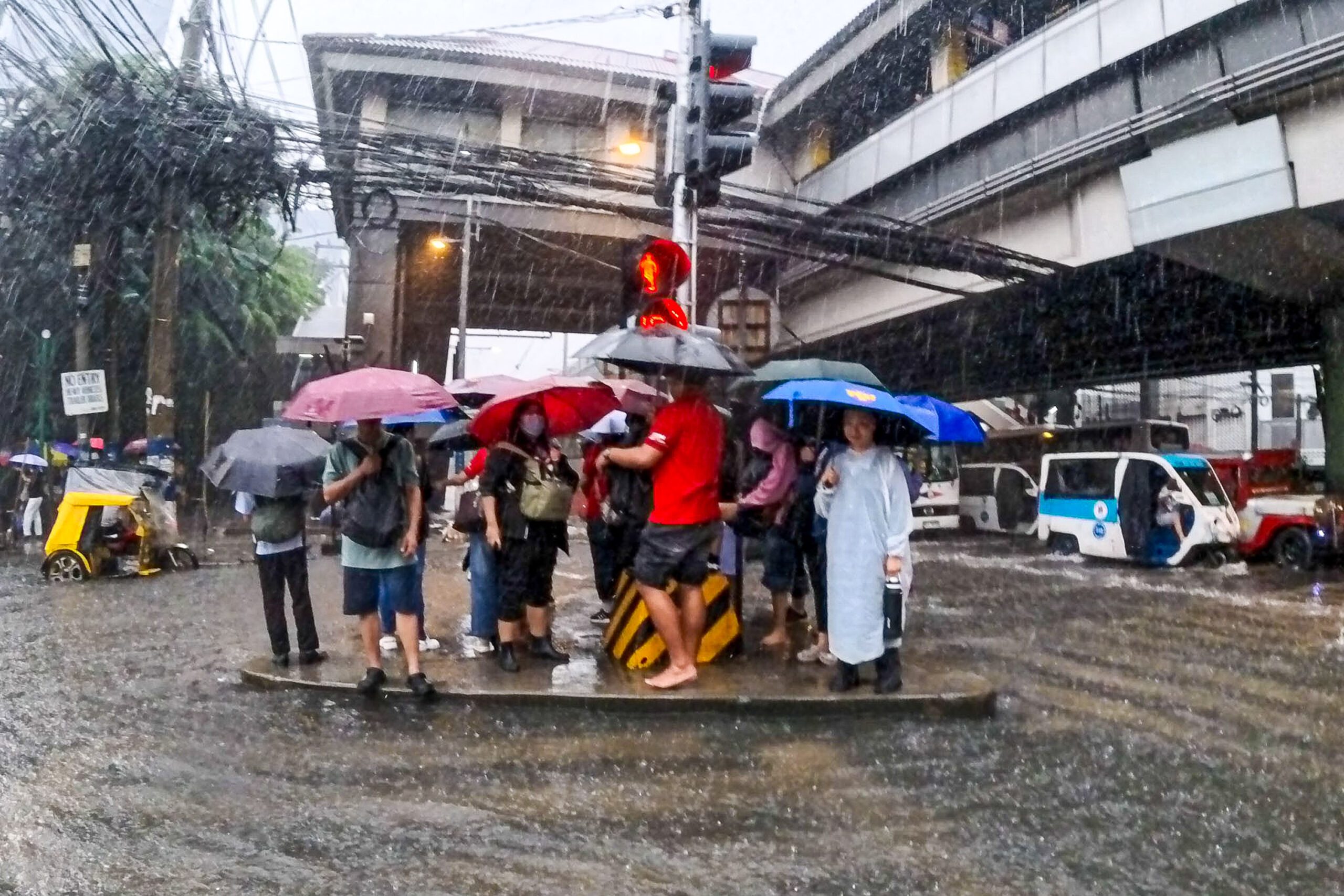
BAD WEATHER. Pedestrians wait at the corner of Taft Avenue and UN Avenue in Manila on September 9, 2026, amid heavy rain brought by the southwest monsoon. Rappler Now, the Philippines is transitioning to the period of the northeast monsoon. But El Niño is also expected to cause hotter-than-usual conditions in the coming months. MANILA, Philippines – The southwest monsoon or habagat is over, marking the end of the 2026 rainy season in the western portions of Luzon and the Visayas. The Philippine Atmospheric, Geophysical, and Astronomical Services Administration (PAGASA) said on Monday, October 5, that it has observed “a gradual shift in the prevailing weather pattern” over the past days. PAGASA noted the weakening of winds and reduced rainfall linked to the southwest monsoon, as well as the strengthening of a high pressure system over East Asia and the “southward migration” of the intertropical convergence zone (ITCZ). The ITCZ is a belt near the equator where the trade winds of the Northern Hemisphere and the Southern Hemisphere meet. So far, it is the only weather system currently affecting the country, bringing scattered rain showers and thunderstorms to the Visayas, Mindanao, and Palawan. The southwest monsoon had begun in late May, and monsoon rain subsequently triggered the onset of the rainy season in early June. Now, the Philippines is transitioning to the period of the northeast monsoon or amihan, which is also called the cool and dry season. The northeast monsoon typically lasts from October to February or March, causing surges of cool temperatures. But PAGASA has warned that the strong El Niño currently active in the tropical Pacific Ocean may become very strong in the fourth quarter of 2026, and persist until the first half of 2027. That would mean hotter-than-usual conditions and below-normal rainfall in most parts of the Philippines, according to the weather bureau. Droughts and dry spells are likely to spread in the coming months. However, tropical cyclones can still develop within or enter the Philippine Area of Responsibility, and possibly affect the country, even during El Niño. These are PAGASA’s estimates for the next six months: October 2026 – 1 or 2 November 2026 – 1 or 2 December 2026 – 1 or 2 January 2027 – 0 or 1 February 2027 – slim chance March 2027 – slim chance Other weather systems that may bring rain in the next six months include the ITCZ, shear line, low pressure areas, easterlies, and localized thunderstorms. – Rappler.com How does this make you feel? Loading
Rainy season over for 2026 as southwest monsoon ends
Full Article
Original Source
Read the full article at Rappler →KhanList aggregates and links to publicly available news content. We do not host full articles from third-party sources. Always verify important information with original sources.