
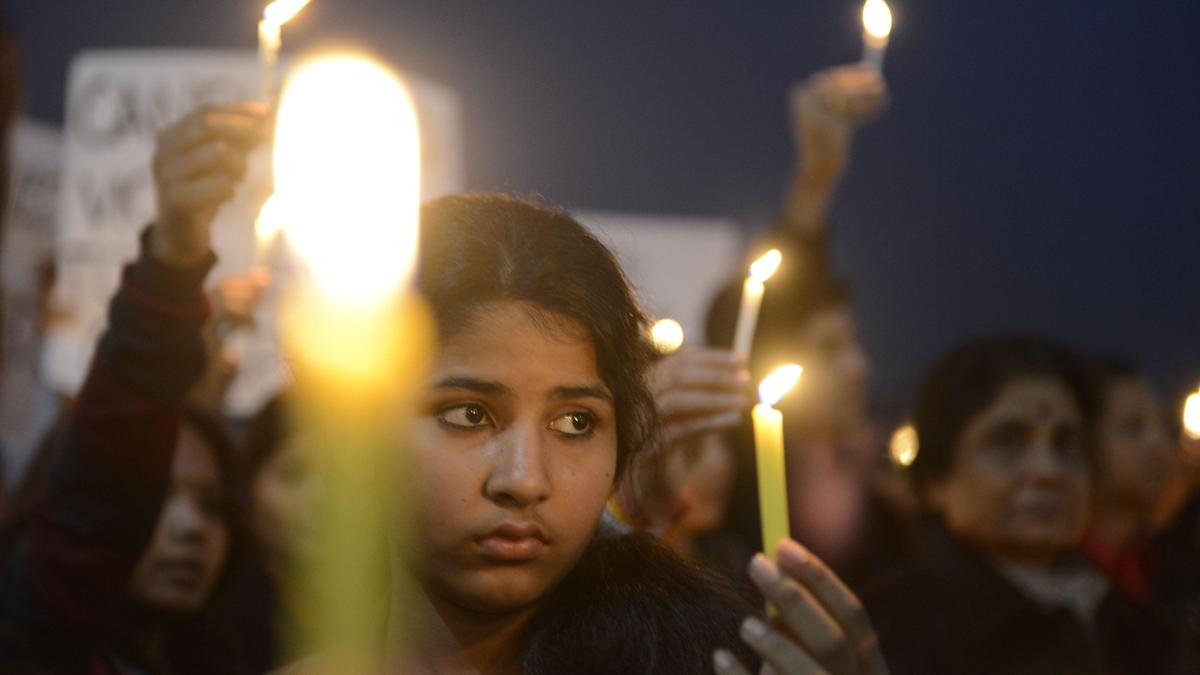
A landmark is visible because the ground around it is flat. Mihira Sood’s Courting Equality: Landmark Cases in the Battle for Women’s Rights is, as its subtitle promises, a survey of the tall things, from the Mathura custodial rape case of 1972 to the Uttarakhand Uniform Civil Code. And, as a survey, it is a very good one, written by a feminist lawyer, and also as a feminist lawyer. What happens on the flat ground in between, in the magistrate’s court or family courts, where most women meet the law, is another book, and Sood does not claim to have written it. Her warning that legal reform is no silver bullet recurs through every part of this one.The strongest toolThe book is arranged in five parts and opens on a tension that Ratna Kapur and Brenda Cossman named 30 years ago in Subversive Sites: why do women keep returning to a legal system they have diagnosed, correctly, as patriarchal? Sood’s answer is the practitioner’s — that law is imperfect but perhaps the strongest tool available.The book tests that faith against judicial archive, from the Mathura case and the open letter of four law teachers to the 1983 amendments; 30 years later, the Verma Committee at the cusp of the Nirbhaya protests; then the Mahmood Farooqui and Tarun Tejpal acquittals, which showed how quickly a reformed statute is read through unreformed eyes. From this sequence Sood draws the book’s sharpest phrase, “rage, reform, repeat” — outrage changes the law, attention moves on, and the slower and more tedious work of changing the institutions that apply it is left undone. Janet Halley cautioned against governance feminism (feminism walking the corridors of power), and anyone who watched the Bharatiya Nyaya Sanhita arrive in 2024 with the marital rape exception intact will recognise the cycle.Sood’s best pages hold two ideas at once. On privacy she is properly ambivalent: Catharine MacKinnon’s warning that privacy has meant a man’s right to be left alone to oppress women sits beside her recognition that Puttaswamy and Joseph Shine gave women a vocabulary of sexual autonomy that the equality doctrine never supplied. On personal law she follows the ghost of Narasu Appa Mali, the 1951 judgment no bench has overruled and which still places personal law beyond Article 13, through Shah Bano, Shayara Bano, and Sabarimala. Her retelling of Shah Bano, the 75-year-old woman putting her thumb impression to a statement disowning the judgment won in her name, is the book’s most affecting passage, demonstrating the cost of a landmark to the woman who becomes one. Against the shelf of Flavia Agnes, Nivedita Menon, and Pratiksha Baxi, Sood’s contribution is a single volume that runs the whole arc in prose a general reader can appreciate, which is not a small thing.View from the groundMy questions concern form rather than content. Katharine Bartlett’s feminist legal method was the ‘woman question’: what has a rule meant for the women who lived under it? A history told through landmark cases asks that question of doctrine, but makes the appellate court its protagonist and reproduces the Supreme Court’s picture of itself as the place where equality is made. Sood anticipates a version of this objection and pre-emptively explains why there is no chapter on rape in the book: sexual violence is everywhere, so the book is organised by site rather than by offence — a real advance on the casebook. But within each site, the unit of analysis is still the reported judgment.Sood is alert to this. Her repeated insistence that a judgment changes the terms of an argument and not the society in which it has to work is the book’s counterweight. But the structure pulls the narrative upward all the time. It is in the maintenance order that takes years to arrive and execute, for instance, that the gap between promise and delivery becomes visible — a place that a history organised around landmark cases can only visit. The Tejpal trial is the exception that shows the rule: a Goa sessions court put a complainant on trial under a statute that forbade exactly that, but the case is in the book because it became an appellate event. Most trials that go the same way never do.Second, Mathura was Adivasi and Rameeza Bee was Muslim. Sood defends the 1970s movement’s silence on this: solidarity was the need of the hour. But a Dalit feminist reading, of the kind Sharmila Rege demanded, would treat caste and religion not as facts about the victim but as the mechanism of the violence and its impunity. This is less a criticism than a suggestion for a book that could follow.Third, the book’s compass points to constitutional morality and to the autonomous individual, whom Sood calls, in the discussion around the Sabarimala case, the smallest minority. Feminist theory has spent 40 years complicating that individual: Jennifer Nedelsky’s relational autonomy and Martha Fineman’s vulnerable subject were responses to a rights-bearer who looked a great deal like a man with a wife at home. On the Uniform Civil Code her distinction between the secular code feminists once demanded and the Uttarakhand statute is exact. I would only add that the state codes now proliferating are as much a question of federal design as content: who legislates the family, and for whom, deserves a chapter of its own.None of this is a reason not to read Courting Equality. It is a reason to read it, as its author intends, as a ledger rather than a triumph. Sood says this is a story everyone should know; she has written the book she meant to write. The flat ground between the landmarks is where the rest of us, including Sood, still practise, and it is a comfort to have so clear a map of the heights.The reviewer is an advocate practising at the Calcutta High Court and the Supreme Court of India. She writes on gender, family law, and legal history. Courting Equality: Landmark Cases in the Battle for Women’s Rights Mihira SoodJuggernaut₹799
Rage, reform, repeat | Review of Mihira Sood’s Courting Equality
Full Article
Original Source
Read the full article at Thehindu →KhanList aggregates and links to publicly available news content. We do not host full articles from third-party sources. Always verify important information with original sources.