
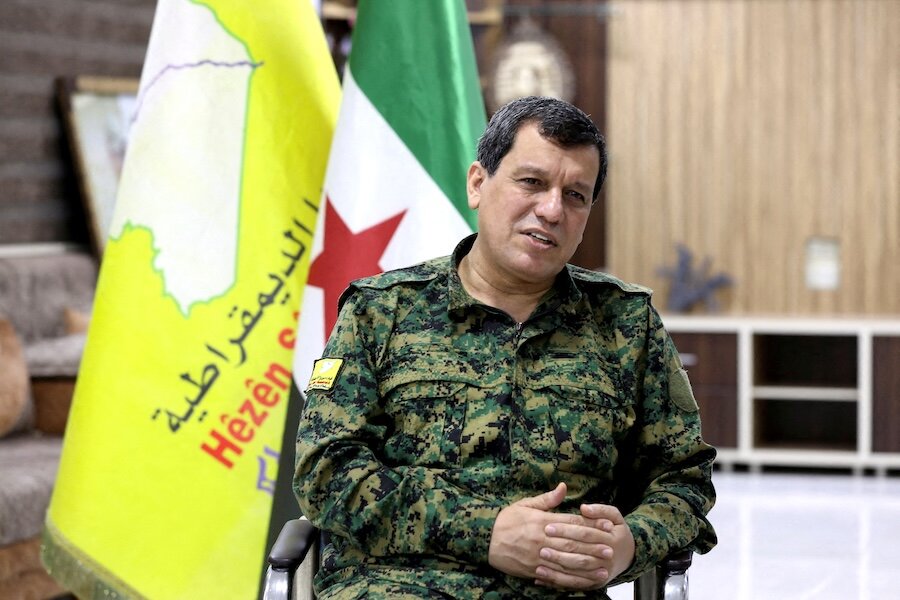
To most Arab leaders, stability in a unified Syria is a necessary cornerstone for Middle East peace. Until late August, however, the country had not been very unified or stable for 15 years, even after the ouster of a dictator in 2024. More than 5.5 million people remain displaced within the country from past conflicts.For most Syrians, a simple everyday act such as using a Visa credit card has been nearly impossible.For 47 years, the United States isolated Syria because it was deemed a sponsor of terrorism.For the country’s largest ethnic minority, the Kurds, independence from Syria was an urgent goal.Despite recent moves toward democracy and the rule of law in Syria, unity and stability are still a ways off.Yet note these recent news items:On Aug. 24, the U.S. removed Syria from its list of state sponsors of terrorism, opening the gate for economic and financial ties to the world. On Aug. 26, the country’s new president, Ahmed al-Sharaa, paid for a coffee with a Visa card at a restaurant in Damascus, demonstrating a restored international card payment system.The day before, Mazloum Abdi, the leader of the large Kurdish militia, announced that his Syrian Democratic Forces would be dissolved and integrated into the national army. He said the country had entered “a new phase defined by peace and the building of a new Syria.” President al-Sharaa then appointed him as one of his advisers.“We want this day to be the beginning of a true transition from the battlefields to the fields of construction,” Mr. Abdi said.In particular, those last moves toward a unified Syria were widely noted.The blending of the two forces would lead to “one army, one government, one state,” said Thomas Barrack, U.S. envoy for Syria. Syria’s permanent representative to the United Nations, Ibrahim Olabi, said the move was “a genuine process of national integration ... based on equality among citizens and not sectarian quotas.” For the first time since Syria’s independence in 1946, Kurdish rights – in culture and language – will be formally recognized.The rest of the Middle East will be closely watching the steady, if often stormy, healing of Syria. The region’s peace depends on it. Syrians themselves are already laying a new foundation for this “cornerstone” state.
Quite a week for a disquieted Syria
Full Article
Original Source
Read the full article at Csmonitor →KhanList aggregates and links to publicly available news content. We do not host full articles from third-party sources. Always verify important information with original sources.