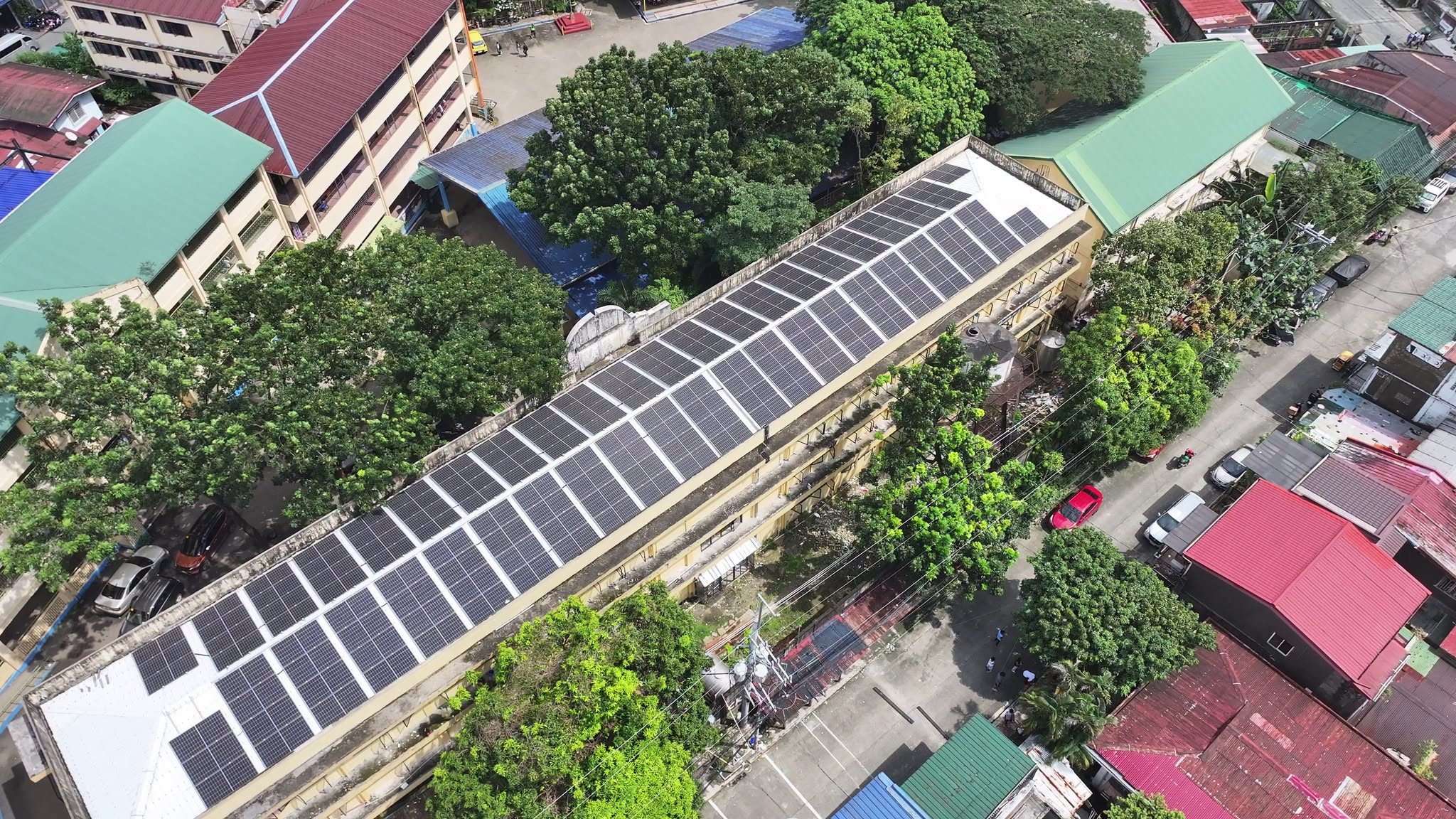
PANELS. 170 solar panels installed on the rooftop of Novaliches High School in Quezon City. Quezon City government ‘The school solarization program is a key driver of local climate action,’ Quezon City Engineer Dale Perral says MANILA, Philippines – Twenty-five public schools in Quezon City now use solar panels to help power their daily operations, while the local government is looking to expand the program to more schools and public buildings. The plan also followed the installation of solar panels on several buildings inside the Quezon City Hall compound. With a working budget of P300 million, the city government expanded this initiative and selected schools. A total of 4,250 solar panels were installed across 25 schools. According to City Engineer Dale Perral, the budget covered not only solar technology but also rehabilitation work needed to prepare the schools for solar systems. Materials were purchased before prices soared due to the US-Israel war on Iran. “The school solarization program is a key driver of local climate action,” said Perral. Among the schools now with solar panels installed are Camp General Emilio Aguinaldo High School, Commonwealth Elementary School, and North Fairview Elementary School. The city engineer said they have partnered with the C40 Cities – a global network of mayors for climate action – for guidance. But the technology and materials used in the city compound and school buildings were procured through public bidding. Outside Quezon City, more public schools could see solar power projects in the near future. Education Secretary Sonny Angara earlier said the government is considering installing solar panels on public school rooftops across the country. It could begin by 2027 if funding is allocated, as the agency has no budget for such program this year. Concerns over energy security have gained renewed urgency amid global oil supply disruptions caused by the US-Iran war. Demand for solar power among Filipino households has surged, raising interest and putting pressure on the local industry to deliver more than it has in the past. Quezon City is already laying the groundwork that other cities may use as a template in the future. Aside from more schools, the city is also eyeing other public buildings as well. “[S]ome of our institutional buildings as well, iyong mga public libraries and barangay halls and city government-owned buildings,” said Perral. “Paunti-unti we are installing the same.” (Some of our institutional buildings, the public libraries, village halls, and city government buildings – little by little, we are installing the same). ‘Models of sustainability’ Discussions on solar energy in the Philippines have largely focused on household installations, including how to install solar systems and their cost, as well as large-scale corporate projects. Local governments can serve as models for sustainability by installing solar systems on city-owned buildings and bringing the shift to solar power closer to communities. The Department of Energy partnered with Metro Manila cities in 2025 to implement energy-saving projects, including the installation of solar systems on key public buildings. “Every kilowatt-hour saved in our public facilities translates into more resources for classrooms, health centers, and social services that directly uplift our people,” Energy Secretary Sharon Garin said earlier. Cities can cut costs by installing solar systems on public buildings, as Quezon City has found after installing solar panels at three city-owned hospitals. The 786 panels are expected to save the city government about P5.5 million a year. – Rappler.com How does this make you feel? Loading
Quezon City eyes solar power for more public buildings after 25 schools
Full Article
Original Source
Read the full article at Rappler →KhanList aggregates and links to publicly available news content. We do not host full articles from third-party sources. Always verify important information with original sources.