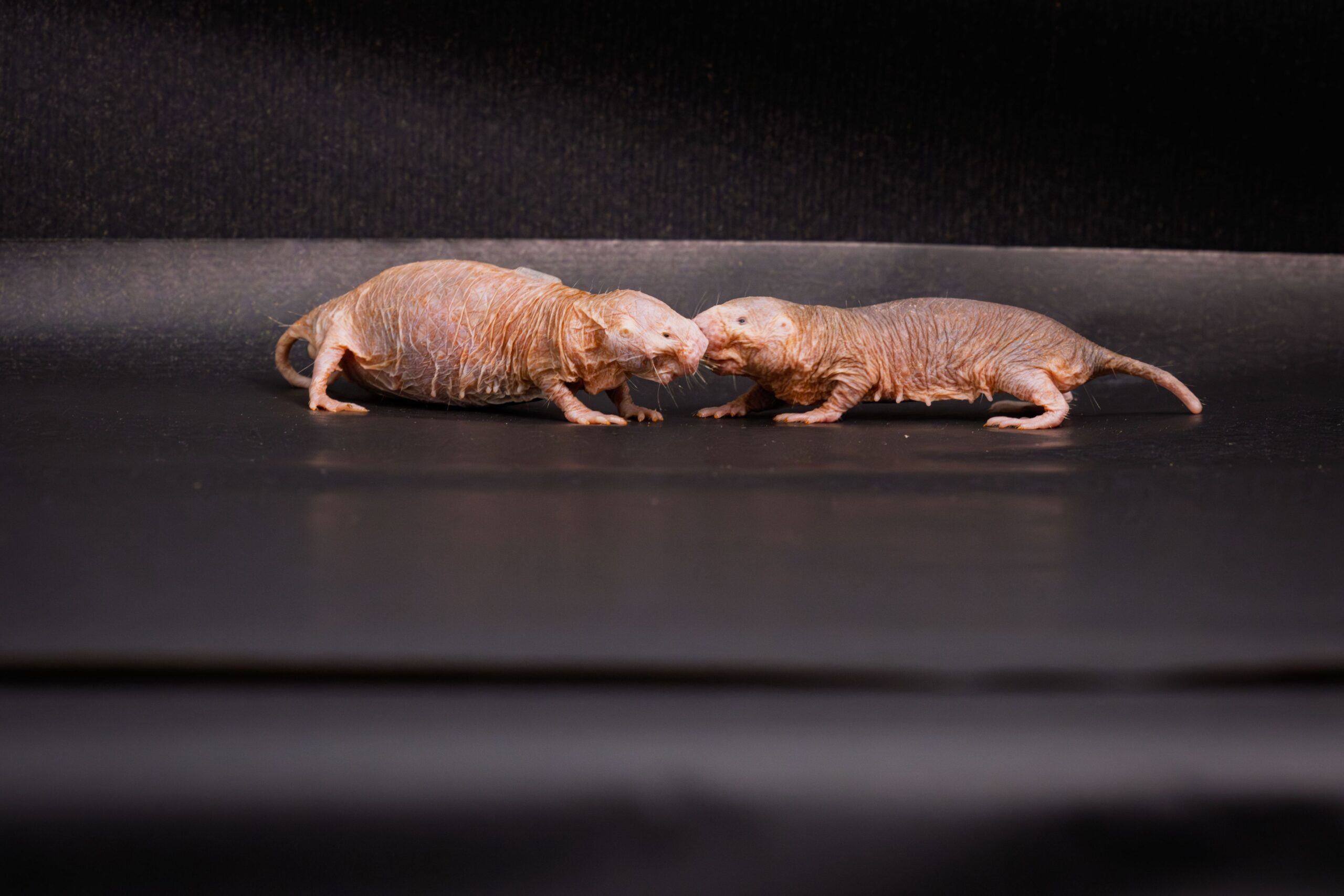
Deep beneath the ground, a naked mole-rat queen rules without a crown. Scientists have now discovered that part of her authority may be carried through a chemical scent that keeps colony members calm while suppressing their ability to reproduce. A study published in Nature identified isopropyl myristate (IPM), a chemical present at much higher levels in queens than in non-breeding animals. Researchers found that the compound appears to suppress reproduction and reduce aggression, helping maintain the highly structured social order of naked mole-rat colonies. “The queen is not just the colony’s top animal; she also seems to broadcast a scent that helps hold the whole society together,” said lead author Mohammed Khallaf, a postdoctoral researcher at the Max Delbrück Center for Molecular Medicine (MDC) in Berlin and Assistant Professor at Assiut University in Egypt. Khallaf described IPM as a chemical signal that effectively tells colony members to “keep calm and stay non-reproductive.” Naked mole-rats are among the few mammals that exhibit eusocial behaviour, living in colonies organised in a manner similar to ants or bees. Although many females live within a colony, typically only the queen reproduces, while the others remain reproductively inactive. The researchers found that naked mole-rats detect IPM through their sense of smell. Exposure to the compound was associated with increased levels of prolactin—a hormone known to suppress fertility—as well as lower progesterone levels and reduced reproductive activity. “The simplest picture is: queen scent goes in, prolactin stays up, progesterone and reproductive activation stay down,” Khallaf explained. The study’s strongest evidence came from experiments in which researchers removed the queen from a captive colony. Under normal circumstances, her absence triggers intense aggression as females compete to become the new queen. Instead, researchers applied IPM to the colony’s bedding every day. The treatment prevented aggressive behaviour, and the colony remained stable for 12 weeks. When the treatment was discontinued, however, aggression quickly returned. One female was killed during the ensuing conflict, while another established dominance, became pregnant and later gave birth. According to Khallaf, the findings suggest that the queen maintains social order through more than physical dominance. He said IPM “looks very much like a mammalian version of a queen pheromone,” comparable to the chemical signals used by queen bees and ants to regulate the behaviour and reproduction of their colonies. However, he cautioned that IPM is unlikely to be the only factor involved. Other chemical cues, vocalisations and social interactions may also contribute to maintaining colony organisation, and further research is needed to determine whether the same mechanism operates in wild naked mole-rat populations. The findings provide new evidence that mammalian societies may employ sophisticated chemical communication systems resembling those found in social insects, regulating behaviour, hormones and reproduction through scent. The research was supported by funding from European, German and South African institutions.
Queen’s scent keeps naked mole-rat colonies peaceful, infertile, study finds
Full Article
📰 Original Source
Read full article at Dailynewsegypt →KhanList aggregates and links to publicly available news content. We do not host full articles from third-party sources. Always verify important information with original sources.