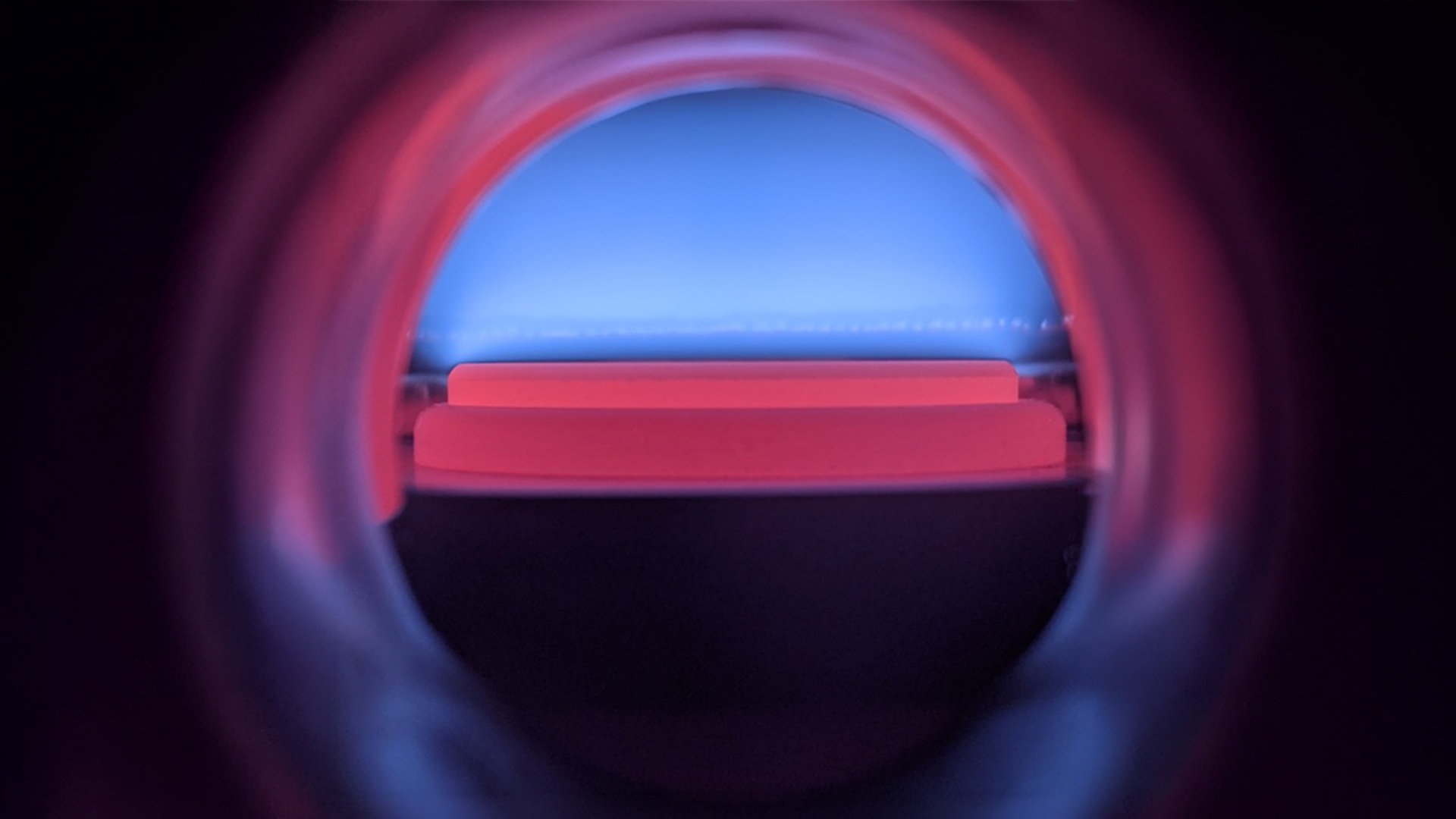
Researchers in the US have launched a USD 1 million project to develop quantum sensors by using the tiny defects in diamonds, to measure electromagnetic fields with extraordinary sensitivity. The effort is part of a new three-year project carried out at the U.S. Department of Energy’s Argonne National Laboratory (ANL) in Illinois. The researchers will create compact sensors that can precisely map electromagnetic fields. The devices could additionally be integrated into particle accelerators and other experiments. Understanding how electromagnetic forces affect particles is crucial for particle physics, according to the scientists. “This is another front for the likely quantum revolution. Five or 10 years ago, this was kind of science fiction,” Nazar Delegan, PhD, a researcher at ANL and project co-lead, highlighted. “But now we tend to think that these are practical paths to making the devices useful for other scientists and ourselves.” Tiny diamond flaws For the project, the researchers studied tiny defects in diamonds called nitrogen-vacancy centers, or NV centers. They are created when a nitrogen atom replaces the carbon atom in the diamond structure and sits next to an empty space left by a missing carbon atom. These defects have distinct quantum energy states that respond to surrounding magnetic and electric fields. To read these changes, researchers rely on light and microwaves. This is how the defects convert into highly sensitive electromagnetic sensors. Diamond membranes are cut and removed from a larger layer of material using a special tool at Argonne.Credit: Nazar Delegan / Argonne National Laboratory While ANL has spent years developing NV-center technology, the new project will now adapt it specifically for high-energy physics. Delegan noted that the platform will allow quantum sensors to be integrated directly into existing microelectronic systems for the first time ever. “We have something of a wide range of flexibility from an engineering and science perspective,” he added. This could make the technology useful for different particle physics experiments, such as those involving high radiation levels, extremely precise measurements, or limited space for equipment. As diamonds are resistant to radiation, the sensors could work well in demanding environments. Exploring the universe As part of the project, the scientists aim to develop several technologies, such as ultra-high-precision NV quantum sensors and systems that could map magnetic fields across large areas. They will moreover explore sensor arrays that could run in environments where electromagnetic fields change rapidly. The first stage will focus on tailoring the diamond material to the requirements of high-energy physics. The sensors will then be tested in laboratory and operational environments, like areas with powerful magnetic fields and high radiation levels. Finally, the team plans to build field-ready prototypes and integrate them into future experiments. “We’re looking for a pretty diverse platform that could enable this field mapping under various circumstances,” Peter Winter, PhD, ANL physicist and project lead, said in a press release. The sensors small size could also reduce the amount of cabling and other instrumentation needed around experiments. If successful, the project could help researchers make more precise measurements and open ways to explore the fundamental nature of the universe by harnessing the quantum properties of tiny defects in diamonds. The DOE will back the effort via the Office of High Energy Physics’ Quantum Information Science program.Get the latest in engineering, tech, space & science - delivered daily to your inbox.Based in Skopje, North Macedonia. Her work has appeared in Daily Mail, Mirror, Daily Star, Yahoo, NationalWorld, Newsweek, Press Gazette and others. She covers stories on batteries, wind energy, sustainable shipping and new discoveries. When she's not chasing the next big science story, she's traveling, exploring new cultures, or enjoying good food with even better wine.
Quantum sensors made from diamond defects to let US scientists probe the universe
Full Article
Original Source
Read the full article at Interestingengineering →KhanList aggregates and links to publicly available news content. We do not host full articles from third-party sources. Always verify important information with original sources.