
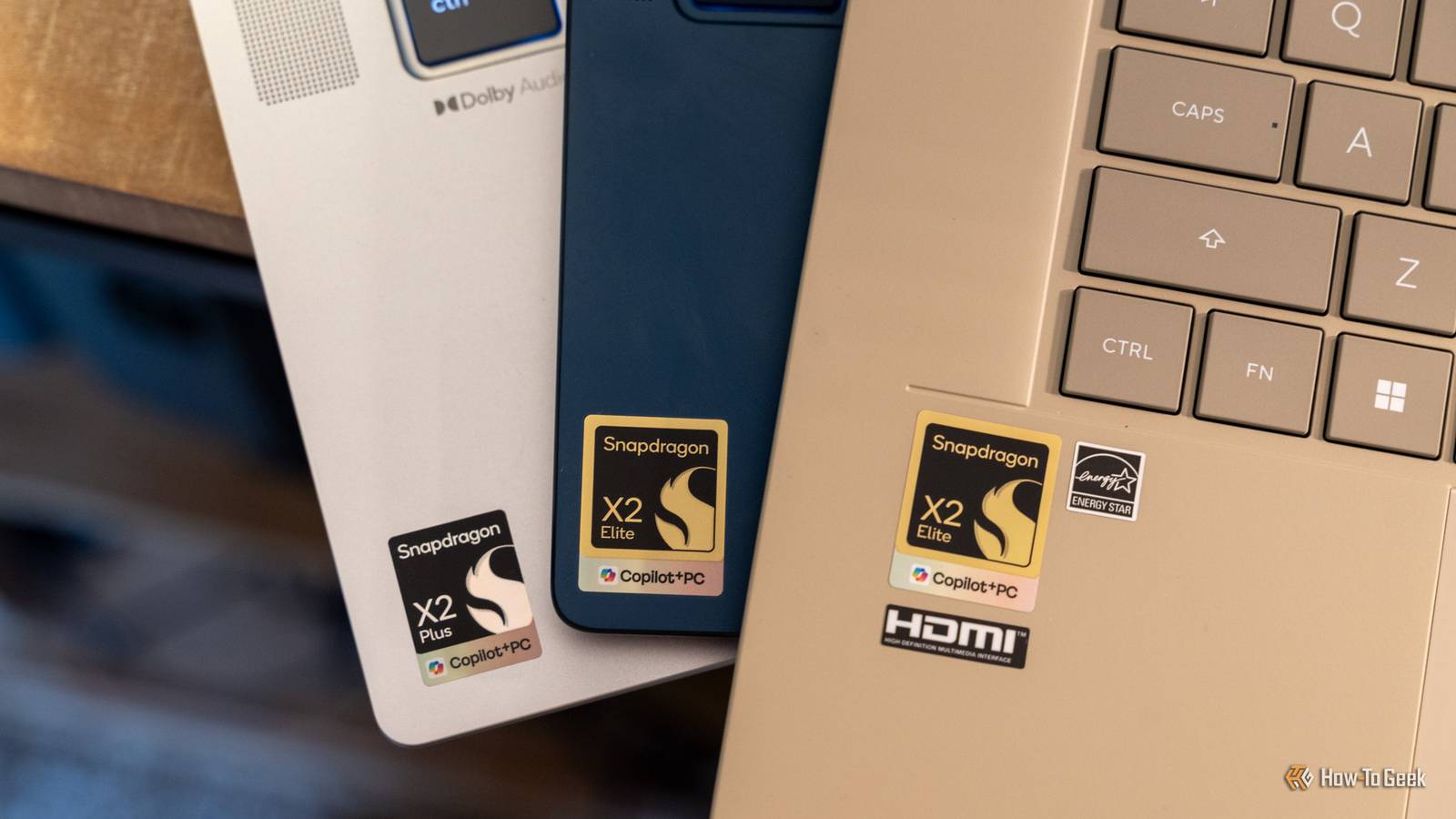
Credit: Patrick Campanale / How-To Geek Published Sep 23, 2026, 5:48 PM EDT Andrew Heinzman is a seasoned tech writer with over half a decade of experience. He specializes in delivering insightful tech news and detailed product reviews, particularly focusing on audio and video technology, as well as computers and smartphones. His journey in tech writing includes a two-year stint as the News Editor at Review Geek, the former sister site of How-To Geek. Throughout his career, Andrew has consistently provided readers with valuable insights and up-to-date information on the latest developments in the tech world, earning recognition for his clarity, depth, and relevance. In his free time, Andrew likes to explore music and read books, just as he did when earning his bachelor's degree in English literature. Sign in to your How-To Geek account Qualcomm flew us out to Snapdragon Summit 2026 for a hands-on experience with the all-new, cutting-edge Googlebooks and Microsoft Surface laptops. And although the event has been relatively predictable, Wednesday's briefing closed out with a big surprise—Qualcomm is officially working to support Linux on Snapdragon X2 laptops, brands like ASUS have already committed to offer Linux-flavored versions of their X2-powered devices, and a developer preview is available today for those with the hardware to test it. As explained on the Qualcomm blog, Debian 13 is currently being utilized as the reference and testing environment for Linux on Snapdragon X2 hardware. Foundational Debian support will be complete by the end of 2026, while Ubuntu certification, which should be the more common choice among laptop manufacturers, is planned for early 2027. Qualcomm is leveraging a custom kernel to make things work, and although there are still a lot of kinks to iron out, the developer preview is working well enough for devs to start contributing toward software support. Though, to be clear, developers will need an X2 laptop if they want to participate in this preview. Is this news as important as it sounds? It all depends on Qualcomm's ability to follow through Credit: Justin Duino / How-To Geek It's been two years since Qualcomm announced that it was upstreaming Linux kernel support for the Snapdragon X Elite platform. But, as many Linux enthusiasts (and ARM evangelists) will be quick to point out, Linux still doesn't work that well on X Elite hardware. Today's developer preview for X2 devices is promising, as is ASUS' promise to offer ARM laptops with Ubuntu in 2027. But it's difficult to predict exactly how this will shake out. In any case, Qualcomm says that Linux support will be incremental. The basic outline is already there, but proper Hexagon NPU and Adreno GPU support are still underway, as are quality-of-life details like power management and thermals. Linux support for laptops with Snapdragon X2 Series is rolling out in stages, starting with the core pieces developers need before they can do production-level work on their device. The first priority is upstreaming the drivers that unlock real workloads, including Qualcomm Hexagon NPU support through fastRPC for on-device AI inference and GPU support through Freedreno , Turnip and Rusticl the open-source Mesa drivers for Qualcomm Adreno graphics and compute. As a consumer, it's unlikely that you'll experience Linux on an X2 laptop until mid-2027 at the earliest. We're also unsure of how Linux on X2 will compare to Linux on flagship Intel or AMD mobile platforms. Software support will naturally be somewhat limited on ARM, at least relative to x86, and although Qualcomm is placing a big emphasis on X2 Elite's AI capabilities, there may not be an immediate payoff outside of some fringe use-cases (Apple Silicon and NVIDIA Spark will remain the talk of the town for some time). But this could be a boon in the long term. Improved Linux support on cutting-edge ARM hardware gives hope for improved efficiency in AI and ML development. And at a purely practical level, the battery-efficient Linux on ARM laptop revolution is long overdue.
Qualcomm is officially working on Linux support for X2 ARM laptops
Full Article
Original Source
Read the full article at Howtogeek →KhanList aggregates and links to publicly available news content. We do not host full articles from third-party sources. Always verify important information with original sources.