
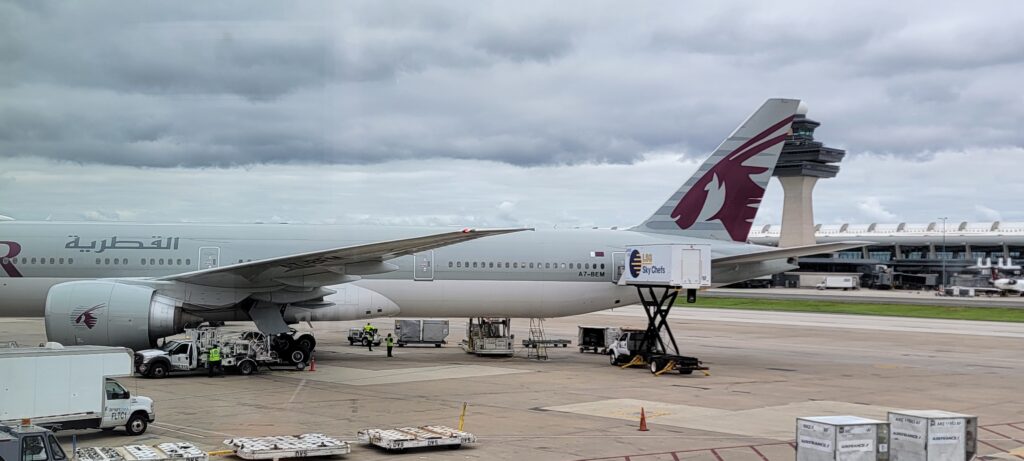
A 16-year-old Pennsylvania boy died on a Qatar Airways flight from Doha to New York after a crewmember who was told about his peanut, dairy and fish allergies reportedly assured him that a sandwich was safe to eat. His family says the medical response onboard failed, too: after the boy’s nebulizer didn’t help, an injection from the crew did not nothing, and they say that the onboard portable oxygen tank did not work. He was believed dead soon afterward, according to the family’s federal lawsuit, and remained laid out behind his father and sister for the rest of the flight with the oxygen mask still on his face. What The Family Says Happened Jason Hu was returning home from China with his father and sister on August 21, 2024. They had flown Qatar Airways from China to Doha and connected to flight QR701 to New York JFK. Jason had allergies to peanuts, dairy products and fish. During sandwich service, both Jason and his father allegedly told the crew about all three allergies. The crew allegedly said that the food offered was suitable for him. Immediately after eating it, Jason had trouble breathing. He used his nebulizer, received what the complaint calls an “unknown injection” from a crewmember, and collapsed. The lawsuit refer to a nonfunctional EpiPen. It’s not clear to me whether there was a drug that failed to help, or a malfunctioning delivery device. The crew produced portable oxygen, but the tank supposedly was not operational. The crew contacted MedAire, which coordinated emergency services at JFK. Jason was pronounced dead on arrival. The Montreal Convention governs injuries and deaths during international air travel. The family must prove a death caused by an “accident” onboard, which is an unexpected or unusual event external to the passenger and not merely an allergic reaction. In Olympic Airways v. Husain, the Supreme Court held that a flight attendant’s unusual refusal to help an asthmatic passenger avoid cigarette smoke could be the external accident, even though his medical vulnerability and the cabin air itself were not unusual. Being told the sandwich was safe seems like the liability trigger. In Schaefer-Condulmari v. US Airways, a passenger said she ordered a gluten-free meal and was assured it was gluten-free, then went into anaphylactic shock. The court held that serving an allergen contrary to a passenger’s order can be a treaty “accident.” But US Airways’ records said that she ordered a vegetarian meal, the flight attendant denied the assurance, and the airline ultimately won at trial. It seems like this case comes down to questions like what was actually in the sandwich, what exactly did the crewmember say, what did the family disclose to the airline, and did the onboard response affect the outcome? Just last year a mother sued Qatar Airways claiming that a flight attendant fed her three-year-old daughter a KitKat after being warned about her dairy and nut allergies. The mother used her own EpiPen and the child survived, though she later spent two days in intensive care. In another case, the family of an 85-year-old vegetarian says Qatar had no vegetarian meal left, told him to “eat around” the meat, and he choked. That flight also contacted MedAire, allegedly delayed diversion, and the passenger died after landing in Edinburgh. Topics on this page
Qatar Airways Told A 16-Year-Old His Sandwich Was Safe To Eat—Then He Died Inflight
Full Article
Original Source
Read the full article at Viewfromthewing →KhanList aggregates and links to publicly available news content. We do not host full articles from third-party sources. Always verify important information with original sources.