
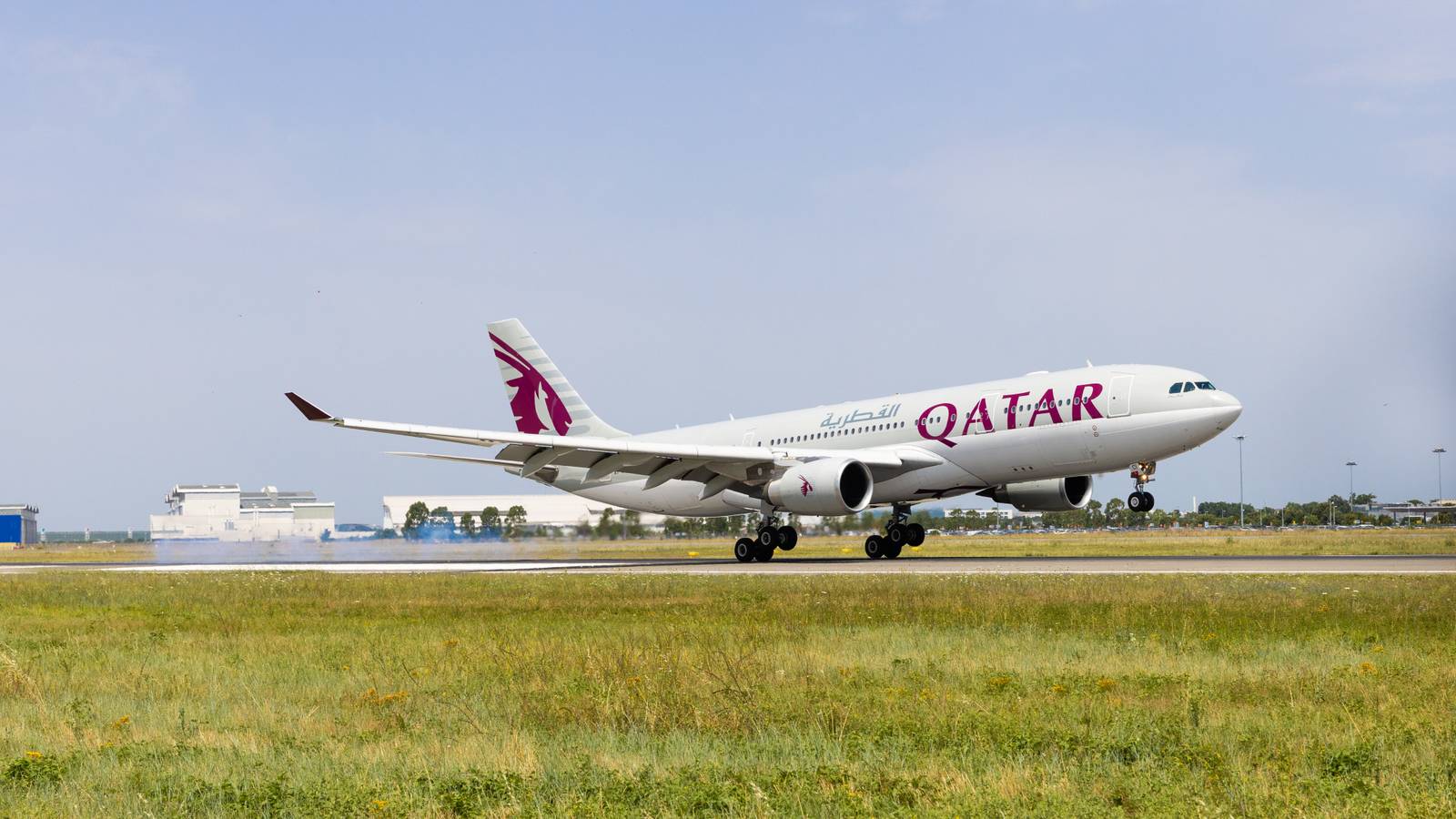
Credit: Qatar Airways Published Sep 28, 2026, 6:35 PM EDT Jack comes to Simple Flying with a lifelong interest in all things aviation. He holds a degree in Aerospace Engineering from Georgia Tech, and is a certified private and remote pilot. Beyond these experiences, Jack previously worked for a corporate flight department where he gained first-hand experience in the world of business aviation. Currently, Jack works in the professional services industry and continues to build his flight hours outside of work. Sign in to your Simple Flying account Qatar Airways has retired its final Airbus A330 passenger aircraft, ending the airline's A330 era after the type remained in its fleet longer than originally expected. The carrier is also offering a voluntary short-term secondment opportunity to more than a dozen A330-trained pilots at Rwandair, allowing pilots who have had limited commercial flying during the regional disruption to maintain their flying skills. The developments were reported by Reuters, citing two people familiar with the matter and fleet data. The retirement comes as the prolonged war involving Iran continues to disrupt Gulf aviation and push fuel prices higher. Qatar Airways had leased four A330s from Oman Air in 2025 with plans to operate them through 2026, but those aircraft never entered commercial service. One was acquired by RwandAir earlier this year, while two A330s remaining in Doha are scheduled to return to lessor Jetran in October. Qatar Airways Removes Its Last A330s Credit: Airbus The A330 represented a relatively small but established part of Qatar Airways' widebody fleet. As of March, A330s accounted for about 7% of the airline's passenger aircraft, according to company data. Qatar Airways currently operates a mixed Airbus and Boeing fleet comprising 239 passenger aircraft and 30 freighters. The airline's decision follows a period in which older widebodies remained useful because of strong post-pandemic demand and delays affecting new aircraft deliveries. Reuters reported that analysts had expected older A330s to leave service earlier, but airlines retained them longer as manufacturers struggled to deliver replacement aircraft and passenger demand recovered. The economics have now shifted. Jet fuel prices have doubled since the war began, according to Reuters, making older, less fuel-efficient aircraft increasingly expensive to operate. Parking an aircraft can be considerably cheaper than flying it when fuel costs are elevated, giving airlines an incentive to accelerate retirements rather than preserve older capacity. A330 Pilots Move To RwandAir Credit: RwandAir Qatar Airways is also addressing what happens to pilots trained on an aircraft type it no longer operates. The airline said a group of its A330 pilots are being offered voluntary, short-term secondments with RwandAir. The arrangement allows those pilots to continue flying while also supporting RwandAir's operational needs. The partnership is supported by an existing relationship between the two airlines. Qatar Airways and RwandAir have a codeshare agreement, and RwandAir has been building its own A330 operation. The African carrier received the first of five expected A330 aircraft in August, according to a post cited by Reuters. One of those aircraft was previously associated with Qatar Airways' recent A330 fleet. For Qatar Airways, keeping experienced pilots current can also preserve personnel capacity as the airline transitions toward newer aircraft. The carrier said it expects to begin recruiting pilots for those aircraft as growth resumes, while the secondment gives affected A330 crews an opportunity to maintain their qualifications and operational experience during the transition. Fleet Renewal Continues Despite Capacity Cuts The A330 retirement is part of a broader fleet strategy rather than a retreat from widebody expansion. Qatar Airways plans six aircraft exits and 19 new deliveries between September 2026 and the end of 2027. Over the next five years, the airline expects to receive 138 new aircraft, according to a company spokesperson. In the near term, however, Qatar Airways has reduced its operating capacity as Gulf aviation absorbs the effects of regional disruption. Cirium data cited by Reuters showed the airline's available seat miles were below the previous year in September. Its flight count was also 12% lower, while it was operating 4% fewer aircraft. The airline is nevertheless expected to return to capacity and network growth by 2027. The wider A330 market is experiencing similar pressure. Global operations of the A330-200 and A330-300 were down approximately 12% from September 2025, according to seven-day averages calculated by Cirium Ascend. About 801 aircraft of those two variants remain active worldwide, compared with 1,437 delivered since production began. Qatar Airways' longer-term fleet plans remain substantial. The airline has 410 aircraft on order from Airbus and Boeing, supporting its objective of returning to growth as regional conditions stabilize. Its A330 retirement therefore marks the end of an aircraft chapter, but not the end of its widebody expansion. Instead, the carrier is using the current disruption to remove older aircraft while preparing its crews and fleet for a newer generation of jets.
Qatar Airways Officially Ends Its Airbus A330 Era, Sends Pilots To RwandAir
Full Article
Original Source
Read the full article at Simpleflying →KhanList aggregates and links to publicly available news content. We do not host full articles from third-party sources. Always verify important information with original sources.