
Vladimir Putin likes to project an image of invincibility. It’s a tactic that has served him well, particularly when presenting his demands for the surrender of Ukraine to American negotiators who often seem singularly unequipped with knowledge of reality against which to measure his claims. And even before the return of Donald Trump to the US presidency, Russia benefited from an entire mythology constructed around the idea that “Putin never de-escalates”. That was a key element in Moscow’s campaign of nuclear intimidation, which cowed the US under Joe Biden into not backing Ukraine too dangerously far and risking the defeat of Russia. Now, it is Steve Witkoff, Jared Kushner and Trump himself who have drunk the Muscovite Kool-Aid, and consequently all three consider any possible resolution of Russia’s war on Ukraine from the starting point that victory for Moscow is inevitable – and therefore, any alternative to surrender to Russia merely prolongs the suffering for no eventual benefit. But attentive watchers of Russia can see cracks in the facade starting to spread. For years, the long-term economic damage to Russia and the staggering death toll on young Russians sent into the meat grinder on the front line seemed to be accepted by Putin almost with a shrug. Now, however, admissions that all is not well in Russia are starting to slip through. Meeting the press after the Shenzhen summit last week, Putin was visibly upbeat – no doubt buoyed by Trump once again displaying puppy-like infatuation before their meeting, and confirming after it that he would continue to pander to Putin’s wishes. Members of Wagner in a street in the city of Rostov-on-Don, on 24 June, 2023, during an armed mutiny (Photo: AFP via Getty) But when asked by a Russian state media journalist if he planned to accept Trump’s invitation to attend the planned G20 summit in the United States in December, Putin sounded a note of caution. “Of course, I have to consider the situation here at home first and foremost,” he replied. “I do not always feel quite at ease if I make frequent trips abroad.” There are a number of different things that could be read into Putin’s remark. The perennial optimists hoping for a change of leader in Moscow – and hoping that such a change would lead to a real shift in Russia – may seize upon this comment as evidence that the Russian President fears an internal conspiracy against him, which might succeed in toppling him from power. The narrative of an invincible, undeterrable Putin is accompanied by one of a paranoid Putin, constantly in fear of being usurped and deposed, and relying on an ever-shrinking group of close confidants. While there is unlikely to be any repetition of a challenge to Moscow like the march on the capital by Yevgeny Prigozhin’s Wagner group in 2023, if Putin does indeed fear stepping away from the levers of power, he may recall August 1991 when coup plotters against Mikhail Gorbachev seized the opportunity of him leaving Moscow to make their move. At this point, Putin probably has little to fear from outside the walls of the Kremlin. After a crackdown on political demonstrations in 2021 as part of the preparations for going to war, and waves of emigration of Russians who either disapproved of the assault on Ukraine or did not wish to be caught up in it personally, most Russians who remain in the country are fully aware that public protest is an unhealthy life choice. Moscow’s Red Square on 19 August, 1991, amid an abortive coup that aimed to topple Soviet leader Mikhail Gorbachev after he left the city (Photo: Dima Tanin/AFP via Getty) While the standard of living of urban Russians has fallen slightly as a result of the war, it has not done so nearly as much as the disasters that have previously triggered bottom-up political change in Russia, as in 1905 or 1917, or even to some extent 1991. Meanwhile, rural areas continue to reap the rewards of the war in the form of the huge amounts that have poured in from the state in recruitment bonuses and death benefits, transforming whole regions that in some cases had remained practically unimproved by the 21st or even 20th centuries. And even if Russians became sufficiently discontented to challenge their leadership instead of applauding it or remaining apathetic, Russia still has substantial reserves of repressive capacity to deal with the challenge – like the Rosgvardiya internal security force, organised for the kind of “crowd control” that requires armoured vehicles, flamethrowers and machine guns. Alternatively, however, the “situation at home” could refer to the increasingly successful Ukrainian campaign to hit Russians where it hurts by triggering fuel shortages and the collapse of small businesses. Earlier in his press conference, Putin was asked about demands for compensation from the West for the damage caused to Russia by sanctions and Ukrainian attacks – confirming that the impact of Ukrainian successes was an active topic of discussion even among state media. That, too, is a recognition that claims that the war is all going Russia’s way are not standing up to scrutiny even within the country. Either way, the apparently unscripted comment was a striking admission by an experienced leader for whom appearing at ease and in control at all times is something of a trademark. The suggestion that the “situation here at home” in Russia could be a cause for concern sits badly with the reassuring messages previously transmitted by Putin through state media. And it is a data point for planners in Ukraine and beyond assessing how long Russia can keep up the pretence that its war is already won.
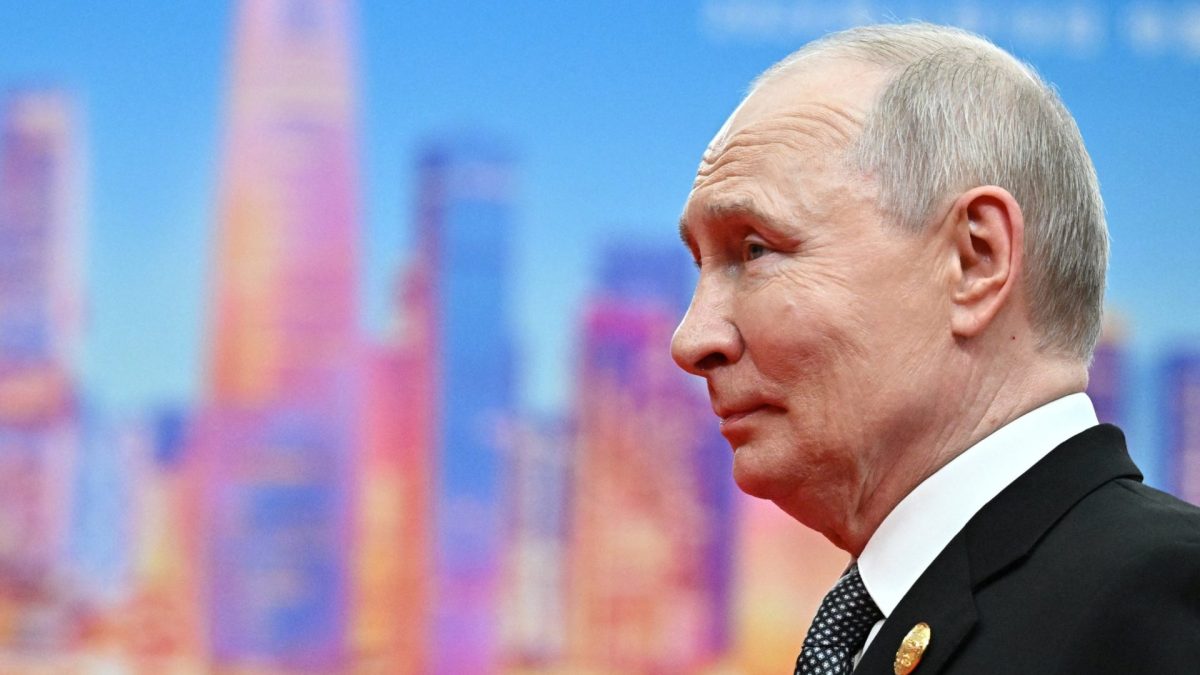
Putin’s unscripted comment may have just let slip his real fears about Russia
Full Article
Original Source
Read the full article at Inews →KhanList aggregates and links to publicly available news content. We do not host full articles from third-party sources. Always verify important information with original sources.