
The surge in support for the far-right Alternative for Germany (AfD) in regional elections over the weekend was a major boon for Russia – but not because the swing in one of Germany’s smaller regions matters in practical terms. What is far more important is the impact this could have on national and European politics. If mainstream parties are forced to treat the AfD and others like it as troubling but necessary partners, it points to worrying divisions across Europe that Vladimir Putin could look to further exploit. But trying to freeze them out of government would be almost as useful to the Kremlin. There is little wonder, therefore, that some are questioning how much of a role Russia played in interfering and influencing the results. Shorts AfD won 44.5 per cent of the vote in Saxony-Anhalt, well ahead of Chancellor Friedrich Merz’s Christian Democratic Union (CDU). With 39 seats in the 83-seat regional parliament, AfD are three short of an absolute majority. However, the German political system leans on coalitions. Under normal circumstances, AfD would reach an understanding with one or more of the other five parties which crossed the 5 per cent threshold to be represented. But these are not normal circumstances. Although the populist ultra-left Sahra Wagenknecht Alliance (BSW), with its five seats, has previously expressed a willingness to talk to AfD, other parties have long observed what is known as the “firewall”, refusing to negotiate, co-operate or ally with the far-right party. Now that firewall is under pressure. Merz, who saw the CDU’s vote share halved, will have to decide whether – if the AfD can reach an understanding with BSW or others – he is willing to breach it. So far, he has made no overtures. Quite the opposite: Merz said he was “deeply shocked” by the result and that his federal government would be watching very carefully, ready to intervene if any AfD local administration “crosses lines”. This is what makes this moment especially exciting for the Kremlin. Top candidate of the far-right Alternative for Germany, Ulrich Siegmund, centre, with party co leaders Alice Weidel and Tino Chrupalla, reacts after polls closed on 6 September (Photo: Fabrizio Bensch/Reuters) AfD has been openly critical of support for Ukraine and wants to resume economic co-operation with Russia. No wonder Kirill Dmitriev, the head of the Russian Direct Investment Fund, celebrated the result as an “historic” humiliation for the German political mainstream, having also praised AfD as “the party of hope and reason, co-operation, truth”. While the scale of AfD’s victory, with 77 per cent turnout, was primarily down to a prevailing sense of dissatisfaction with politics as usual, and a sense that the region had been left behind, it’s clear that Moscow did what it could to help. There is evidence of Russian-backed disinformation campaigns intended to undermine the other parties and exacerbate local discontent. One particular Russian initiative, code-named Operation Matryoshka, has been especially active, including generating fake posts impersonating German and other media organisations. A study of its activities by the Institute for Strategic Dialogue found that it focused on discrediting mainstream party candidates and the integrity of the electoral process in general. If AfD does manage to form a local government, whether on a minority basis or in alliance with the BSW – which shares its pro-Moscow and anti-immigration stance – it will have limited practical impact on national policy. The local administration does have considerable authority over local police, education and cultural matters, but it cannot run its own foreign policy, defy federal laws or block aid for Ukraine. Seeing the AfD take down rainbow flags, urge Ukrainian refugees to leave and defund pro-Kyiv theatrical performances may be satisfying for the Kremlin, but has little practical significance. What is far more important is the impact this will have on national politics, out of proportion with Saxony-Anhalt’s objective weight. If the mainstream parties in Germany, and Merz in particular, are forced to breach their own firewall and treat the AfD as any other party, it will be a humiliating climbdown for one of Ukraine’s closest allies. It also opens up the prospect of the AfD becoming a serious player on the national level. The flags of the EU, Ukraine and Germany in front of the Reichstag building in Berlin. AfD has been openly critical of support for Ukraine and wants to resume economic co-operation with Russia (Photo: John MacDougall/AFP) The party is currently riding high in the polls, with around 28 per cent, ahead of the CDU’s 20 per cent. Presidential elections will be held in January next year within Germany’s Bundesversammlung, the Federal Convention comprising a mix of national and state parliamentarians. The AfD will not be in a position to elect its own candidate, but this is likely to be a moment of uncertainty and horse-trading. Ignoring the pro-Moscow populists will get harder and harder. With elections to follow in France in April, where Marine Le Pen’s similarly far-right and Russia-friendly National Rally is heading the field, Putin must be hoping for a populist swing that will shatter the current pro-Kyiv consensus. Meanwhile, if the mainstream parties in Germany continue to try to freeze the AfD out, the party has made it clear that it will regard it as an affront to democracy. Even the defeated Saxony-Anhalt CDU leader has admitted that the AfD won a mandate in the elections. Ignoring or disputing this, or creating some ramshackle alliance of other parties, usually at each other’s throats, simply to keep the AfD out, will give the Kremlin’s propagandists plenty of opportunity to do what they do best: highlight and magnify Western hypocrisies, as well as stirring up communities that often feel unheard and marginalised. Moscow doesn’t expect to win over the mainstream in the West. Instead, it seeks to disrupt it, encouraging the new populist insurgents, from Reform in the UK to the Freedom Party of Austria, while amplifying the genuine disillusions, dissatisfactions and divisions of our times. From that perspective, AfD’s continued rise is a clear win for Putin. Many in the West will hope it isn’t a harbinger of things to come.
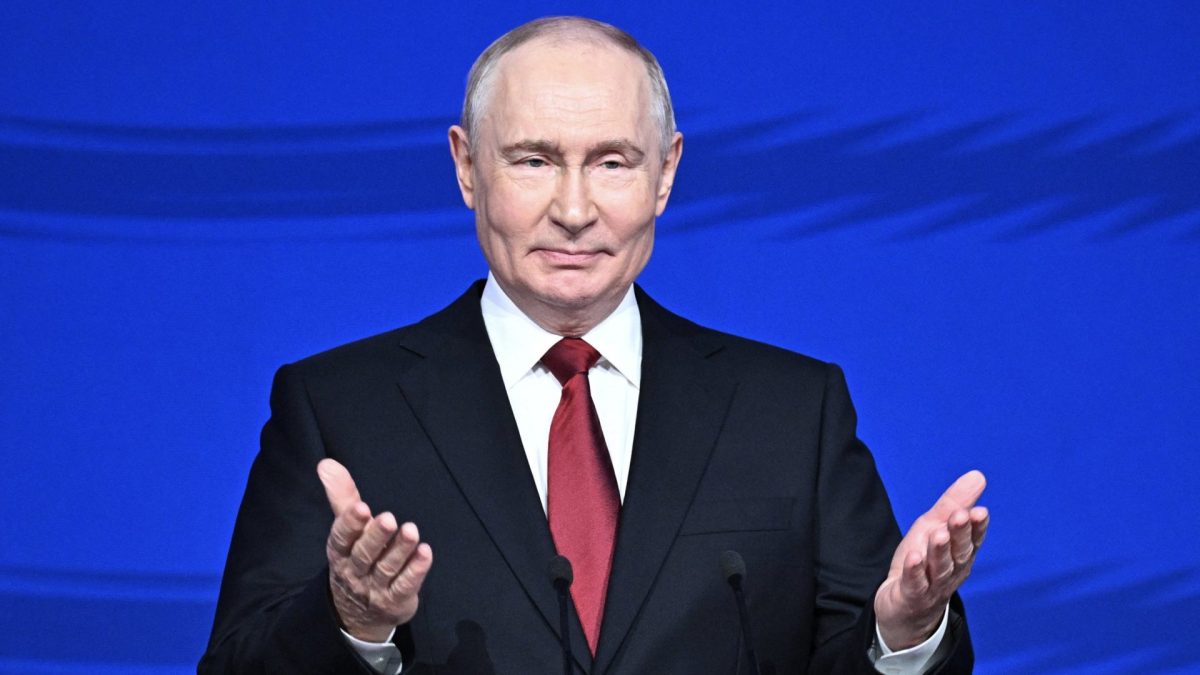
Putin is eyeing more election chaos
Full Article
Original Source
Read the full article at Inews →KhanList aggregates and links to publicly available news content. We do not host full articles from third-party sources. Always verify important information with original sources.