
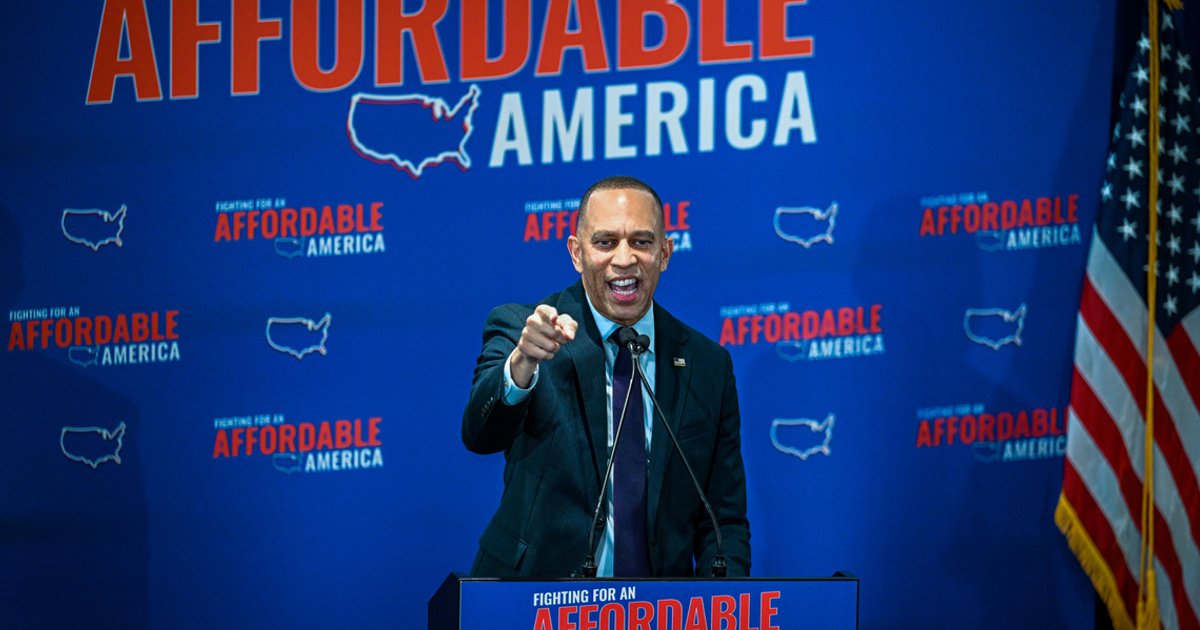
WASHINGTON – Months before Democrats swept the US midterm elections, Republican House Speaker Mike Johnson warned supporters what would happen if his party lost control of Congress.“If we were to lose the midterms, heaven forbid, these Democrats, y’all, impeachment’s not even the big concern,” he told conservative activists on June 26. “They will turn every committee of Congress into an investigative body, and they’ll go after the president’s family, the cabinet, his donors and friends.”Four months later, his warning appears prescient.As Democrats celebrated capturing both chambers of Congress on Nov 3, incoming House Oversight Committee chairman Robert Garcia issued a two-word statement: “Lawyer up.”After their sweeping victory, Democrats face a central dilemma: how much energy to devote to investigating President Donald Trump and how much to easing the economic pressures that propelled them to power.The Nov 3 elections handed Democrats control of both chambers of Congress for the first time during Trump’s second presidency, as voters registered their dissatisfaction with rising prices, the war in Iran and concerns over government corruption.Democrats secured at least 233 seats in the 435-member House and 54 seats in the 100-member Senate, including independents who caucus with the party. Several races remained undecided. The party flipped at least seven Republican-held Senate seats, including in longtime Republican strongholds like South Carolina and Texas. Exit polls point to two voter demands: lower costs and stronger checks on Trump. According to the AP Voter Poll, roughly two-thirds said Trump’s policies worsened the economy, while seven in 10 believed Congress was not doing enough to check presidential power. More than half said government corruption was crucial to their vote, slightly exceeding the proportion who cited the cost of living.But the results also carried a warning: Only about half of all voters viewed Democrats favourably, while roughly one in five Democratic House voters viewed the party itself negatively. The victory, in other words, was as much a rejection of Trump as an endorsement of Democrats.David Hopkins, a political science professor at Boston College, cautioned Democrats against reading their gains as a mandate for their entire agenda.“A lot of voters can vote the same way and have very different aims,” he said. “There’s widespread dissatisfaction with the economic policies of the Trump administration, and we also know that the Democrats as a party are not that popular.” Michael Crafter, 68, a lifelong Democrat from Redford, Michigan, acknowledged that he knew little about the candidates he supported. His motivation was opposition to Trump.“I don’t like the hatred,” he said. “Ever since he came down that escalator, he’s been pushing hatred and racism,” he added, referring to Trump’s 2015 presidential campaign announcement.For Democratic leaders, the challenge is turning that dissatisfaction into support for their agenda. A key priority will be healthcare.Trump’s July 2025 tax-and-spending law tightens Medicaid eligibility, imposing work requirements on many adults in the health insurance programme for low-income Americans starting January 2027. Some 75 million Americans are enrolled in the programme, and 10 million adults could lose coverage due to the new requirements. “We have to put the oxygen mask on the country first,” progressive congresswoman Alexandria Ocasio-Cortez said in a Nov 4 social media post. “One of the first orders of business is saving Medicaid.”House Democratic leader Hakeem Jeffries has established five working groups to tackle affordability in the first 100 days of the congressional term, focusing on healthcare, housing, groceries, energy and caregiving. Democrats hope to restore Affordable Care Act insurance premium subsidies, reverse Medicaid cuts and roll back tariffs. The party can use government funding and appropriations packages as leverage to negotiate restoring health funds. For Malika Wallace, 41, a forklift operator and mother of three in Hamtramck, Michigan, healthcare costs were a deciding factor as she cast her vote. Rising prices have forced her to cut back on groceries as well as her children’s medical visits.“It’s not affordable to take them to the doctor as much as I would want to,” said Wallace, who voted for Democrat Abdul El-Sayed, a physician, in Michigan’s Senate race.But delivering relief will be difficult with Trump in the White House. Democrats hope small gains now will pave the way to an election victory in 2028. Gasoline prices are largely dictated by global oil markets and the war in Iran, leaving Congress with few tools to bring prices down quickly. Republicans have also secured billions in immigration enforcement funding through 2029, limiting Democrats’ ability to curb Immigration and Customs Enforcement operations through budget cuts.Even legislation that passes both chambers faces Trump’s blocking, which Democrats lack the two-thirds majorities in each chamber to override. On election night, Trump drove home the point by posting an image of his signature red MAGA cap emblazoned with a single word: “VETO”.Democrats could instead force Republicans to vote on economic proposals, even if the bills never become law. California congressman Ro Khanna has called for votes on raising the federal minimum wage, paid family leave, Medicare for All and higher taxes on billionaires.Such votes could put Republicans on record opposing measures Democrats say would help working families, while sharpening the party’s economic message ahead of the next election.Democrats also face the risk that high expectations could turn into disappointment before the 2028 elections. Their political fortunes could depend on whether they unite to pass substantive legislation instead of becoming consumed by political infighting, strategist Douglas Heye said. “Democratic leadership right now is saying all of the right things. But we will have to see how much their membership is in sync with that,” he said. “If they pass smart legislation, they’re fine. If they get caught up in DSA-driven infighting, that will be a big problem,” he said, referring to the Democratic Socialists of America, a standalone organisation that often allies itself with progressives in the Democratic Party.Where Democrats have more immediate power is in oversight. Their House majority lets them subpoena officials, demand records, and investigate alleged wrongdoing across the Trump administration.Defense Secretary Pete Hegseth could face an impeachment vote as early as next week, led not by Democrats but by Republican Congressman Thomas Massie, a vocal Trump critic who introduced eight articles of impeachment in September over the war in Iran.On Thursday, Massie vowed to force a House vote unless Hegseth resigns, potentially testing bipartisan opposition to the administration as some Republicans blame the Defense Secretary for the war’s fallout.Meanwhile, Garcia is preparing investigations into alleged Trump family business corruption, immigration enforcement abuses, corporate wrongdoing and the handling of files involving convicted sex offender Jeffrey Epstein.Democrats could also pursue impeachment proceedings against senior officials, although removing them would require a two-thirds Senate majority. Prolonged investigations also risk deepening the partisan battles voters want politicians to move beyond, while distracting from the economic relief they demand.“The strategic lesson for Democrats is that the more they talk about affordability, health, and Social Security, the firmer the ground they stand on,” Hopkins said. The dilemma, he added, is how much to satisfy Democrats who want to spend the next two years seeking vindication.For Joseph Foster Jr., a 71-year-old Detroit veteran and lifelong Democrat, the test will come at the grocery checkout.“You think you’re spending $20 or $30, but you end up with $50 or $60 and you ain’t got nothing but two bags,” he said. Democrats, he said, have to deliver. “You hear everybody talking, but it’s just words,” he said. “I want to see the outcome of something big, a change.”Additional reporting by Taylor Grabowski and Deona Easterson.
‘Put the oxygen mask on first’: Democrats weigh resolving bread and butter priorities against Trump probe
Full Article
Original Source
Read the full article at Straitstimes →KhanList aggregates and links to publicly available news content. We do not host full articles from third-party sources. Always verify important information with original sources.