
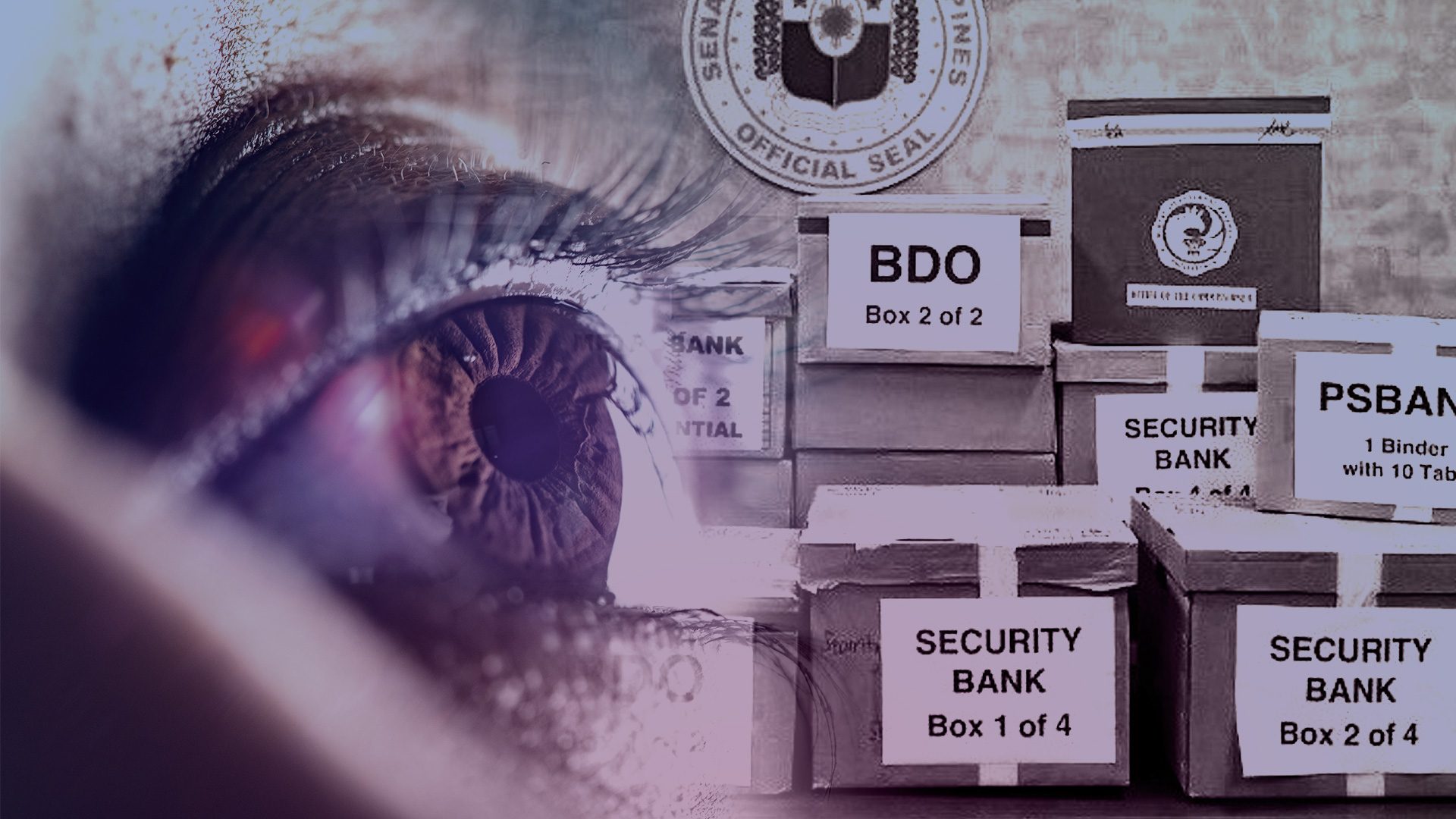
There is something unsettling about a trial in which witnesses initially identified by one side suddenly disappear from the witness stand. The defense of Vice President Sara Duterte has withdrawn 18 of the 24 witnesses it initially listed before the Senate impeachment court. Among them were 16 bank executives from eight financial institutions, including BPI, BDO, LandBank, Metrobank, PSBank, Security Bank, EastWest and UnionBank. Other witnesses, including former law dean Ralph Sarmiento and Quezon City Prosecutor Vimar Barcellano, were also dropped. Withdrawal has only legitimate procedural reason The defense has legitimate procedural reasons for doing so. Some testimony, it said, was no longer necessary or could be covered by stipulation. In the case of BPI senior vice president Paul Roderick Ysmael, counsel explained that his purpose was merely to authenticate a letter whose authorship had already been acknowledged in open court. The testimony of Prosecutor Barcellano was likewise dispensed with after the prosecution agreed to stipulate to the authenticity of the public documents he was expected to identify. (READ: [Puso at Diwa] Foreign currency deposit secrecy: Time for a constitutional rethink) The defense has that prerogative. But an impeachment trial is not an ordinary dispute between private parties. It is a constitutional proceeding involving one of the country’s highest elected officials. Ultimately, it is the Filipino people who must live with the consequences of the Senate’s judgment. Withdrawal of witnesses beyond courtroom strategy That is why the withdrawal of witnesses deserves attention beyond courtroom strategy. A witness may help the defense, hurt the defense, or reveal something neither side expected. That is precisely why witnesses are examined and cross-examined. The most consequential example appears to be the BPI witness. The prosecution wanted to question Ysmael about bank records and an alleged dollar account involving the Vice President. Prosecutors cited a BPI letter indicating that Duterte had dollar accounts and said they wanted to clarify the records and circumstances surrounding them. But the witness was withdrawn before they could ask those questions. That matters because the prosecution has raised a much larger financial issue. Financial forensic expert Alexander Cabrera reportedly placed the Vice President’s alleged unexplained wealth at a minimum of ₱817 million. Yet, according to the prosecution, the defense had not directly challenged that computation by the end of Day 43. Instead, it presented testimony concerning a ₱205,007 Tokyo dinner charged to the credit card of Manases Carpio and a ₱256,882.50 Nike shoe purchase in Kuala Lumpur. Those explanations may be relevant. But they do not, by themselves, answer the larger question surrounding the alleged ₱817 million. Cross-examination indispensable And this is where cross-examination becomes indispensable. The truth is not always found in the testimony one side wants the public to hear. It is often found in the questions the other side is allowed to ask. The defense may reasonably conclude that certain witnesses are unnecessary, redundant or even unhelpful. It is not required to present every witness it initially identified. But once a witness is withdrawn, the opposing side loses the opportunity to test that witness’s testimony and explore matters that documents alone may not resolve. This does not mean that the withdrawal proves guilt. It does not. Nor should the prosecution automatically treat every withdrawn witness as evidence that its allegations are true. Ralph Sarmiento, for example, reportedly declined to testify because he wanted to preserve his independence and impartiality, a reason that deserves respect. Withdrawal not exactly inconsequential But neither should the withdrawal be treated as inconsequential. The issue is not whether the defense has violated a rule. It appears not to have done so. The issue is whether the country is being given the fullest reasonable opportunity to discover the truth. That distinction is important because an impeachment proceeding is ultimately about accountability. If the prosecution’s allegations are weak, let the defense demonstrate why. If the ₱817 million computation is wrong, let the evidence expose the error. If the alleged dollar accounts have an innocent explanation, let the relevant records and witnesses establish it. And if the allegations are substantiated, let the evidence demonstrate that as well. More, not less scrutiny The answer to a serious allegation should not be less scrutiny. It should be more scrutiny. This is also why the withdrawal of 18 witnesses, three-fourths of those initially listed, creates a credibility problem, even if it does not establish wrongdoing. House prosecution panel leader Gerville Luistro noted that the withdrawals could create an impression that witnesses did not want to be identified with the party that intended to present them. She also acknowledged that expectations had been raised for a strong defense presentation. But public perception should not substitute for evidence. Withdrawal prevents testing of evidence The proper response is not to assume that the withdrawals prove anything. It is to recognize what the withdrawals prevent: the fullest possible testing of evidence before the court. And that is ultimately what should concern us. We have seen too many political controversies in which truth becomes hostage to competing narratives, partisan loyalties and social media. One side tells its story, the other tells its story. Each mobilizes its supporters, and the public is left asking what actually happened. An impeachment trial should rise above that. It should be one of those rare moments when politics gives way to evidence—when witnesses testify, documents are examined, claims are challenged, contradictions are exposed, and senators ultimately decide on the basis of what survives scrutiny. That is what gives the Senate verdict legitimacy. If the Vice President is acquitted, the Filipino people should know that the prosecution failed to establish the charges after the evidence was fully tested. If she is convicted, they should likewise know that the conviction was not the product of political persecution but the consequence of evidence that survived rigorous examination. Process matters as the outcome In either case, the process matters as much as the outcome. A conviction reached after a full and fair examination of the evidence strengthens the rule of law. An acquittal reached after the same process strengthens the credibility of the accused and of the institution that rendered the judgment. But a verdict that leaves material questions unanswered inevitably leaves room for doubt. This is why the withdrawal of witnesses should concern not only the prosecution but everyone who cares about truth, justice and democracy. The defense is entitled to manage its case. But the Filipino people are entitled to expect that every reasonable avenue for establishing the truth will remain open. Country wins when truth is allowed to speak Let the witnesses speak when their testimony is material. Let the prosecution cross-examine them. Let the defense explain and rebut. Let the documents be tested. Let contradictions surface. Let the evidence, not the volume of political rhetoric, determine the judgment. For if the ultimate result is conviction, the nation must know that it was earned by evidence, not manufactured by politics. And if the result is acquittal, the nation must know that the allegations were given a full and fair hearing and were found wanting. Either way, the country wins when the truth is allowed to speak. The withdrawal of witnesses may be a tactical decision for the defense. But for the Filipino people, it is also a lost opportunity to test the truth. And in an impeachment proceeding of this magnitude, every lost opportunity to test the truth is an opportunity lost for justice, accountability and democracy itself. – Rappler.com Diwa C. Guinigundo is the former deputy governor for monetary policy and other aspects of central banking. He was a former alternate executive director at the IMF in Washington, DC in 2001-2003. He is the author and editor of several books on political economy, regional crisis and cooperation, debt and economic growth and public policy agenda. He serves as independent director of several corporate and financial institutions with focus on corporate governance, risk oversight and audit. He also serves as principal advisor for New York-based GlobalSourcePartners. He remains in the advisory board of ASEAN Macroeconomic Research Office and Singapore Management University’s Sim Kee Boon Institute for Financial Economics. He is the senior pastor of the Fullness of Christ International Ministries in Mandaluyong. Below are other Puso at Diwa columns by the author:
[Puso at Diwa] A lost opportunity to test the truth in Sara Duterte’s trial
Full Article
Original Source
Read the full article at Rappler →KhanList aggregates and links to publicly available news content. We do not host full articles from third-party sources. Always verify important information with original sources.