
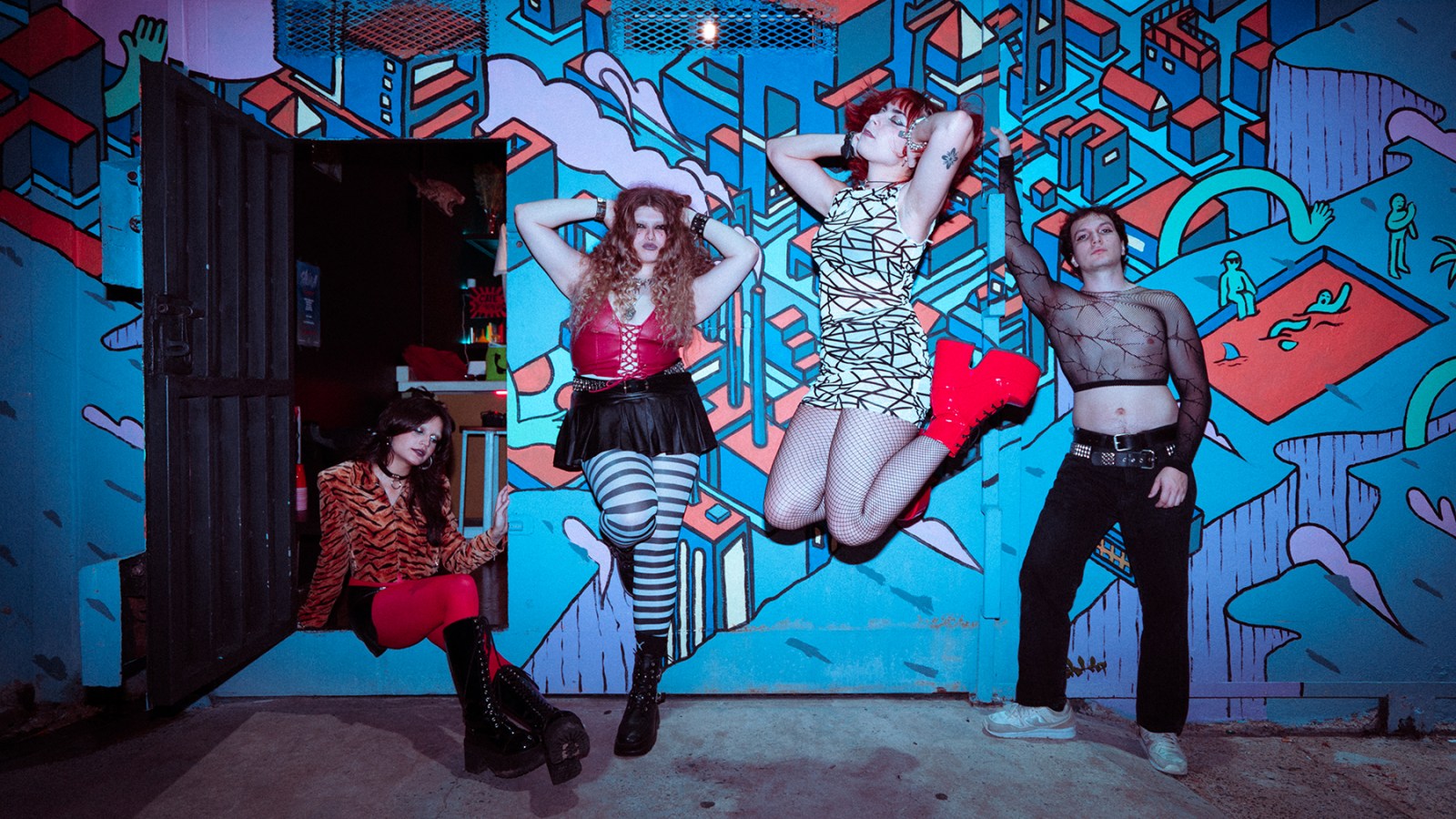
Bands like Puerto Rico's Tapaboka are playing fast and furious, and raising their voice against injustice Punk rock has always been tied to the idea that both artists and listeners are angry — frustrated with the system, furious at injustice. Plenty of music coming from the Caribbean in the past few years has mirrored those feelings, but to the surprise of some, it’s been channeled most prominently via reggaeton, dembow, reparto, and other sounds typically associated with partying. (See, for instance, Bad Bunny’s Grammy-winning, colonialism-critiquing blockbuster Debí Tirar Más Fotos.) In Puerto Rico, though, where punk has had a presence since the early 1980s, there are still lots of bands that are ready, willing, and able to scream it out. Tapaboka, a hardcore quartet that debuted in 2023, are one of the archipelago’s most promising acts. Lead singer Analaura Morales spread flyers around San Juan’s Rio Piedras neighborhod in search of a band before meeting guitarist Sofía Capllonch and bassist Victoria “Vic” Nieves. (Tapaboka’s drummer, Daniel Maymí, joined later.) “At that time I was listening to a lot of punk music and a lot of rock. I immersed myself in that world,” Morales says. “I was just, like, ‘I’m gonna die, so I might as well do something fun.’” Tapaboka’s music is loud, frenzied, and full of fury on topics like navigating controlling relationships (“El Rey”), taking control of one’s own agency (“La Ley”), and exposing rapists (“Puto Violador”). “The scene, it’s male-dominated. It can also be very aggressive and hostile towards women,” Capllonch says. “Our shows tend to be safer spaces. With all the rage of the punk genre, many people forget that the idea is that everyone can have a good time, and they can have a space to enjoy in community.” They’ve heard their fair share of crude outbursts from male audience members, but they use that as fuel. “Usually it enrages me so much that by the time we get to play, I’m screaming really well,” says Nieves. “Every once in a while, I black out onstage. I don’t actually know what the hell I’m saying or what I’m doing. Then when I get offstage and I hear it back I’m like, ‘That was a lot.’ Editor’s picks Many of their biggest musical influences operate on that same incandescent frequency: Die Spitz, Lambrini Girls, and Hole. They also give flowers to Puerto Rican bands they admire, such as Desahuciados, RATAS, Fullminator, and Sikotrópicas. The latter are veterans of the scene, and one of many fan-favorite female-fronted bands that arose during PR’s punk heyday (others include Alarma, Las Clitz, and Cojoba). As detailed in author Yoel Gaetán’s Alcantarillados: 30 Years of Punk in Puerto Rico, the genre began to make serious inroads in the Nineties. Groups like Ardillas, Necronazis, and Los Pepiniyoz would eventually open the door for Dávila 666, who went on to become the standard-bearers for Puerto Rican punk rock. Elsewhere in the Caribbean, a handful of groups have been keeping punk alive in recent years. Cuba has a long history with the genre, especially during the island’s so-called “Special Period” of economic crisis in the Nineties. Recently bands like Kubensi, Rateristas, and Limalla have been the face of the movement there, inspired by “the desire to scream in such a hostile environment, where society has become mute, blind, and deaf,” as Kubensi’s members put it in an interview with the website Cartel Urbano. In the Dominican Republic, acts like Truño and Los Rialengos scratch the itch for fans, while others like Poolpo and Grunjeo offer pop-punk and grunge alternatives. Making music as an independent artist in a place as economically compromised as Puerto Rico is not for the weak, and it gets even harder for bands who have to juggle multiple members, instruments, upkeep, recording sessions, practice, booking and promoting shows. For Tapaboka, support is often scarce from those in positions to help. “Venues don’t value musicians, the arts aren’t promoted as much as they should be, and the government barely provides financial support for music programs,” Capllonch says. “Other areas like sports are always favored — which is also amazing, but that’s a problem [for us.]” Related Content Tapaboka sometimes feel limited, too, by the size of Puerto Rico (about 5,300 square miles, or slightly smaller than the state of Connecticut). “We’re a very small island. It’s more difficult for bands that are not from the metropolitan area to be exposed,” Capllonch continues. She says it’s generally easier for bands from San Juan and its environs to break through; acts from further away find an already uphill challenge becomes even steeper. “And once you’re in the scene, there comes a time when the crowd is very energetic, it’s very awesome — but it’s very familiar as well, because there’s only so much reach you can have within such a small space geographically.” In some ways, though, the hardest problem they face has to do with misconceptions about the breadth of music coming from the Caribbean. “Puerto Rico is a colony of the United States, and we’ve been brainwashed about American ‘ownership,’ ” Maymí says. “When you ask a Puerto Rican, they know all about American culture, but not a lot of them know about South American, Mexican, and even Dominican. These are our next-door neighbors! We’re almost like a slave to the hegemony of the United States.” Even local audiences, he says, sometimes assume that if you want punk or metal or thrash, you need to look to the States. Tapaboka are just one more example, in a long and rich list, of how wrong that is. Going forward, they hope to keep experimenting with their sound, while maintaining the raucous identity fans have embraced. “I hate the concept of the standard job of a punk drummer to just play a fucking D-beat and, you know, occasional halftime feel,” Maymí says. “I want to put some jazz and funk in there.” Trending Stories While the truth of what it takes to break through as a rock band from Puerto Rico is sobering, Tapaboka’s members are optimistic that they’re on the right track. “We hope to release more music, to make more of an impact, get more of our message [out there],” Morales says. “If it’s by writing a song that we feel helps reflect or expose situations, I’d love to continue that vibe we’re on.” This story is part of our Reasons to Love Rock series, with all the sounds, trends, scenes, and artists that have us excited about rock music in 2026.
Punk Rock Is Heating Up Across the Caribbean
Full Article
Original Source
Read the full article at Rollingstone →KhanList aggregates and links to publicly available news content. We do not host full articles from third-party sources. Always verify important information with original sources.