
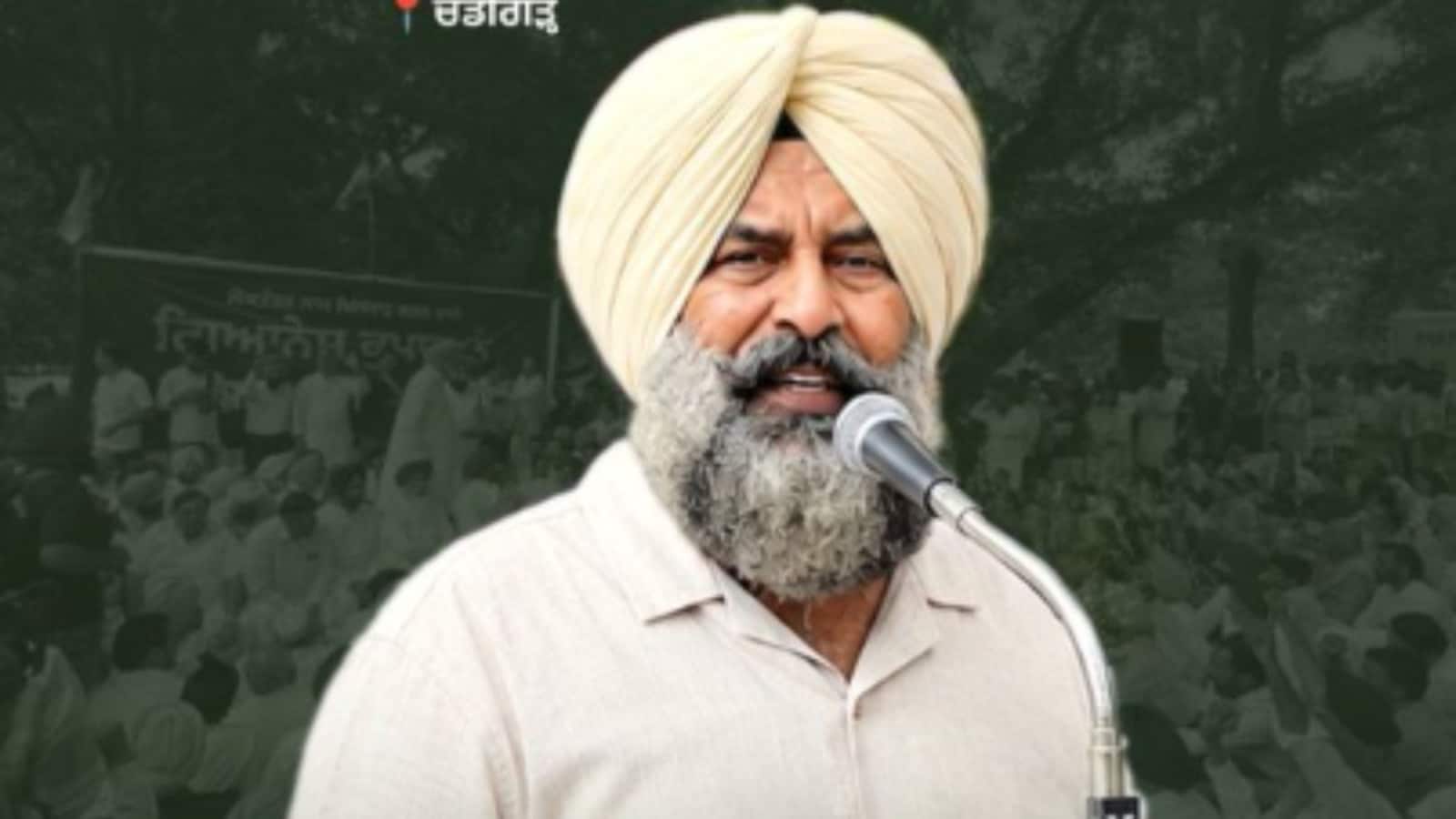
Chandigarh: A direct confrontation has erupted between the Punjab Congress and the Election Commission over the Special Intensive Revision (SIR) of electoral rolls, with state party president Pargat Singh declaring the amended Form 6 "totally illegal" and Congress coordinator Hardeep Singh Kingra asserting that the party never consented to the final electoral rolls.The Congress's stand contradicts Chief Electoral Officer Anindita Mitra's claim that political parties cooperated with the exercise, expressed satisfaction with the process and gave written consent for deletions. The conflicting accounts have brought the legality of the amended form and the Election Commission's claim of political consensus under scrutiny ahead of the 2027 Punjab assembly elections."Regarding Form 6, which was amended, that was neither directed by the Supreme Court nor amended by Parliament. Therefore, it is totally illegal," Pargat said, challenging the legal basis for introducing additional requirements in the voter-enrolment process.He also questioned the Election Commission's earlier justification for the amendment, alleging that Chief Election Commissioner Gyanesh Kumar had claimed the changes were backed by a Supreme Court directive. Pargat further raised concerns over the statutory protections available to the Chief Election Commissioner.The Congress president's objection puts the focus on whether the additional requirements associated with Form 6 were introduced under proper legal authority. However, the claim that the form is illegal remains the Congress's position and should not be treated as a judicial finding.Kingra, appointed by the Congress as its chief coordinator for the SIR exercise in Punjab, rejected the claim that the party had endorsed the final electoral rolls."The Congress appointed me as the chief coordinator for Punjab's SIR. We attend meetings convened by the Chief Electoral Officer, where participants sign the attendance sheet. Nobody signed it," he said.Kingra claimed that he had submitted several written objections, including concerns about possible data manipulation at the Election Commission level, and had sought responses from the authorities. He alleged that an official had assured him a response would be provided the following day. "No consent, written or otherwise, was given," he asserted.His statement directly challenges the CEO's account of the consultation process and raises questions about the records of meetings, the objections submitted by the Congress and the documents on which the Election Commission relies to establish political parties' consent.Chief Electoral Officer Anindita Mitra has defended the revision process, saying it began across Punjab on June 25 with a house-to-house enumeration drive conducted by Booth Level Officers.According to Mitra, the draft electoral roll contained approximately 1.94 crore electors and was made available to the public and political parties for scrutiny. Voters whose names were missing were given a one-month window to submit Form 6 applications seeking inclusion in the final list.After processing the applications, the final electoral roll contained approximately 2.01 crore registered electors, with around eight lakh new voters added compared with the previous roll, she said.Mitra also stated that around 86,000 people had been removed from the draft roll. She maintained that deletions involving deaths, permanent relocation and duplicate entries were made with the written consent of political parties.The CEO said political parties had cooperated with the exercise and expressed satisfaction during a meeting held on Monday.The competing claims, however, leave a central question unanswered: what documentary evidence supports the Election Commission's assertion of consent, and how does it reconcile with the Congress coordinator's categorical denial?The figures cited by the CEO relate to different stages of the electoral-roll process: deletions from the draft roll and additions to the final list compared with the previous roll. They should not be treated as directly equivalent measures.The dispute has given the Congress an opportunity to raise voter rights, transparency and the Election Commission's accountability as political parties prepare for the 2027 assembly elections.For Pargat Singh, the challenge is to establish the legal basis of the party's objections and substantiate concerns over the revised form. For the Election Commission, the immediate task is to demonstrate that the process followed the applicable rules, that deletions were properly documented and that eligible voters had an effective opportunity to seek inclusion.The controversy now extends beyond the preparation of electoral rolls. It centres on the legality of the additional Form 6 requirements and the sharply conflicting accounts of whether the Congress consented to the final list.
Punjab Congress Chief Challenges Poll Body's Claim On SIR 'Coordination'
Full Article
Original Source
Read the full article at Ndtv →KhanList aggregates and links to publicly available news content. We do not host full articles from third-party sources. Always verify important information with original sources.