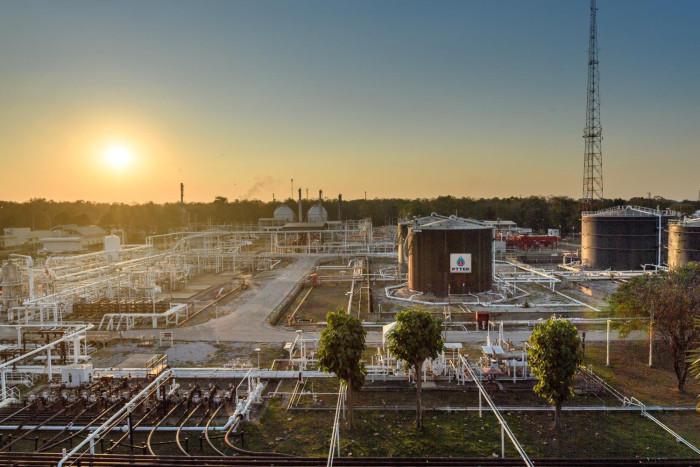
The Sirikit block in Kamphaeng Phet, the country's largest onshore oil field operated by PTT Exploration and Production Plc. Thailand could face a decline in domestic energy supply unless significant regulatory reforms are introduced to attract foreign investment in the upstream petroleum sector, says Kurujit Nakornthap, executive director of the Petroleum and Energy Institute of Thailand.His warning came as energy officials are accelerating efforts to enforce new regulations facilitating petroleum exploration and production (E&P). Mr Kurujit said the current E&P system remains overly complicated. After obtaining licences, investors must navigate a maze of approvals to access drilling areas, particularly onshore blocks. These areas may overlap with land previously designated for agriculture, degraded forests, or near historical sites, requiring additional permits. Investors are also obligated to conduct environmental impact assessments and hold public hearings, while coordinating with multiple government agencies. The process is not only time-consuming, but in some cases plagued by demands for unofficial "extra fees", even before the commercial viability of a site is confirmed, he said. For fields already proven to have production potential, heavy taxation continues to drive up costs, discouraging multinational oil companies from investing, noted Mr Kurujit. "We use more outdated upstream petroleum regulations than our neighbours," he said, pointing to Indonesia, the Philippines and Vietnam, which have successfully attracted numerous E&P investors. Chevron Thailand remains the only major international player, as others exited the nation decades ago. Thailand's licensing framework also poses challenges. Petroleum production licences can only be renewed once for a 10-year period. After expiration, operators must re-enter competitive bidding, often delaying projects. Many fields are now considered "aged", with decommissioning costs further deterring new investors, said Mr Kurujit. Onshore fields such as Sinphuhorm and Sirikit face expiring concessions in 2029 and 2031 respectively, with no possibility of additional renewal under existing law, despite their continued production potential. The lack of reform could force Thailand to rely more heavily on liquefied natural gas (LNG) imports, which are significantly more expensive. With natural gas accounting for nearly 60% of the country's power generation, increased LNG imports would likely drive up electricity prices for consumers. Adding to the uncertainty, Thailand has not discovered new petroleum sources since 2005. The Round 25 onshore petroleum auction has stalled, with results delayed due to last year's parliamentary dissolution and the slow pace of the new government. Similarly, the Round 26 offshore auction in the Andaman Sea has recorded no progress, despite a draft invitation being completed late last year. Mr Kurujit stressed unless regulations are modernised to streamline processes and reduce costs, Thailand risks losing competitiveness in the regional energy industry and faces higher domestic energy prices.
Pundit urges reforms in petroleum sector
Full Article
Original Source
Read the full article at Bangkokpost →KhanList aggregates and links to publicly available news content. We do not host full articles from third-party sources. Always verify important information with original sources.