
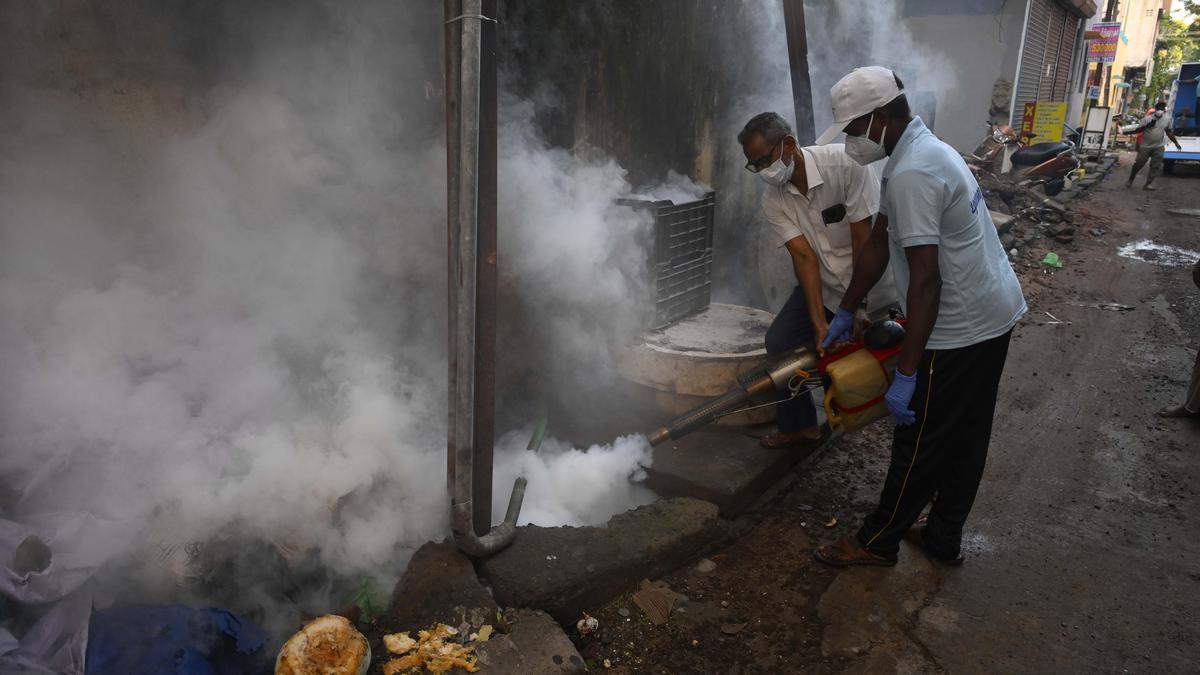
PUDUCHERRYPuducherry has reported an uptick in dengue cases, including four deaths, in the past several weeks. After facing criticism over a lack of early intervention, the government has now launched an emergency response to contain a surging dengue outbreak.The Union Territory has recorded over 1,510 dengue cases till November this year, compared to 902 and 128 cases registered in 2025 and 2024, respectively. Prior to this year’s spike, there was a surge in dengue cases in 2023 (2,790), 2022 (1,673) and 2021 (1,625).Data with the Health Department showed that dengue cases were being reported in double digits every month this year from February to August. The number of cases, which was 59 in August, increased to 151 in September and further to 396 in October.The situation worsened this month with the reporting of four deaths and the number of persons testing positive for the vector-borne disease going up. As on November 25, the territory has registered 476 dengue cases, the highest monthly spike reported so far this year. Prompted by the negative reports emerging on the situation, the government has swung into action with a series of high-level meetings being convened, including two by Chief Minister N. Rangasamy, to adopt measures for bringing down the spread of the mosquito-borne disease.Some of the Opposition parties, including Congress, CPI(M) and VCK, have reacted strongly by arguing that the lethargic approach of the government had led to the increase in cases and the deaths. They are of the view that the Health Department should have acted more promptly in containing the spread when there was indication of an evolving health emergency after cases started reporting in comparatively large numbers before the onset of monsoon itself.Commenting on the situation, a retired doctor from the Health Department said the government should have increased surveillance much earlier after cases started being reported in March, April, May, and June. “We had something like 200 cases reported in those four months. Getting 51 to 56 cases in the peak of summer should have alerted the health department,” the doctor said.In the last three days, the government machinery has went into an overdrive, particularly after the reports of fatalities, with the Local Administration Department engaging several staff to intensify fogging, anti-larval measures, public campaign, cleaning, and surveillance. “We have intensified containment measures, including dry day observance in schools, coordinated source reduction, fever surveillance, and the introduction of larvivorous fish in water bodies. We have constituted Rapid Response Teams involving medical officers, ANMs, ASHA workers, nursing and LAD officials,” a senior official said.Hotspots identifiedThe Health Department has identified places such as Mudaliarpet, Murungapakkam, Kosapalayam, Mettupalayam, Reddiyarpalayam, Lawspet, Gorimedu, urban areas of Villianur and Ariyankuppam as the dengue hotspots based on the spread of the disease , he added.J. Ramesh, Director of the Directorate of Health and Family Welfare Services, told The Hindu that the Government General Hospital and Medical College have been provided with 38 and 72 additional fever beds, respectively. “As of Thursday, all the additional beds in GH are full, and of the total beds in Medical College, 32 are occupied. Except for 34 cases, other admitted patients are treated till now as fever cases. It is an emerging situation, but we are confident of containing the spread,” he said. Dr. Ramesh said people are advised to keep their surroundings at home and at the workplace clean. Anyone developing a fever was advised to report to the nearest government hospital for testing. Timely treatment and detection could help in early medical intervention and saving life,” he said.“The government is taking all steps to ensure the spread of the disease is brought under control. All line departments are working actively at the field level to achieve this goal. People are advised to avoid self-medication and not to take aspirin or ibuprofen without medical advice,” he added.Common symptoms included sudden high fever, severe headache, pain behind the eyes, muscle and joint pain, skin rashes, nausea and vomiting. Warning signs such as abdominal pain, persistent vomiting, bleeding, unusual tiredness and restlessness require immediate medical attention, said a GH doctor.
Puducherry govt. intensifies dengue surveillance, preventive measures amid rising cases
Full Article
Original Source
Read the full article at Thehindu →KhanList aggregates and links to publicly available news content. We do not host full articles from third-party sources. Always verify important information with original sources.