
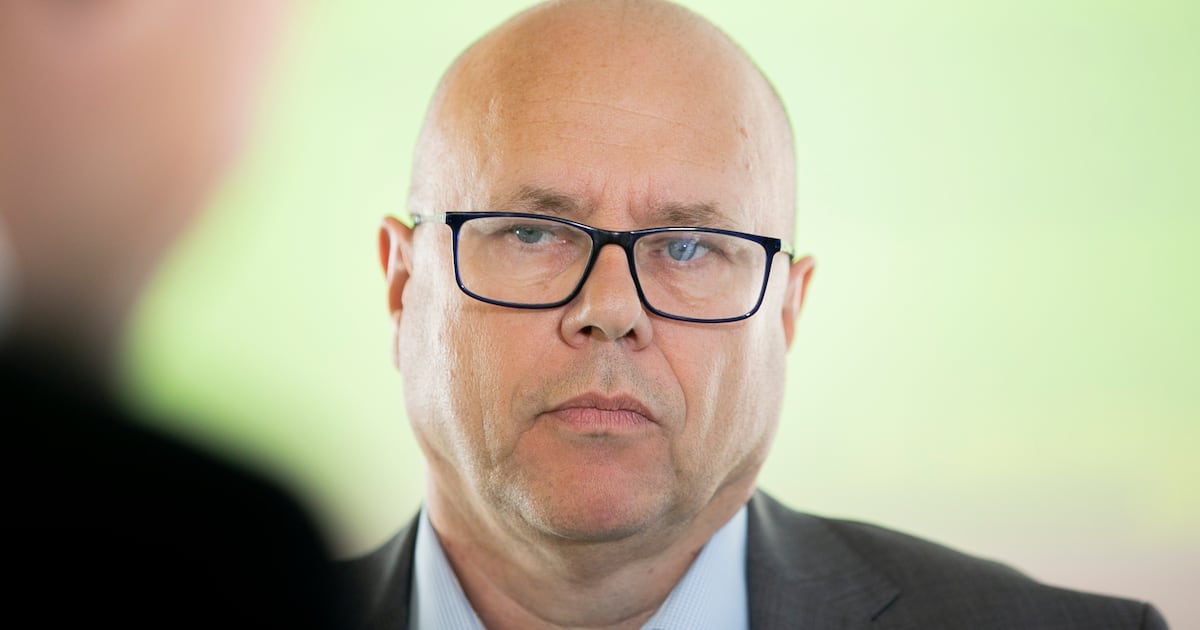
Public service industrial action could be under way by the end of the month over the absence of a new pay deal, the general secretary of Fórsa, the State’s largest public sector union, has said Kevin Callinan said he expected it would be “a very long dispute” and “one that will have very serious effects right across the public sector”.Speaking on Tuesday, after announcing that 96 per cent of Fórsa members who participated in a ballot had backed industrial action, he said it was likely the largest ever Irish trade union ballot on a potential strike.Callinan said Fórsa’s leadership would meet on Wednesday to discuss the next steps. He said there would be talks on Monday with the leaders of Siptu, the Irish Nurses and Midwives Organisation (INMO) and Irish National Teachers’ Organisation, which collectively make up the Irish Congress of Trade Unions public services committee, to co-ordinate wider action.READ MORESiptu public sector members on Monday voted by 97 per cent to 3 per cent to back industrial action. Siptu and Fósa have about 160,000 public sector members between them, more than a third of the total workforce. Several unions have completed ballots that backed industrial action, while the INMO is to announce its result next week. The three teachers’ unions have said they will allow members to vote on the issue in the coming weeks. In Fórsa’s case, 62,276 members voted to take action out of a total poll of 64,481. Callinan said the scale of the majority was a clear indication of the level of anger and frustration among public service workers who were seeing their earnings eroded by inflation.He said the unions have not met anyone from the Government side to discuss the potential for a new deal for two months, but that when they had, it was made clear that public sector pay had fallen behind prices by at least 5 per cent since 2020 and that this would have to be taken into consideration in any negotiations.Callinan, like other union leaders, has noted the Government’s failure to index tax bands in last year’s budget and the decision not to continue providing household energy supports as factors that hit ordinary workers. He said the unions had argued that, on this occasion, it was essential to start the talks process “with how we were going to address the effects of the cost of living crisis” on people. “What we wanted was a formula that would ... make good on the losses in a reasonable way,” he said. “We didn’t, in response, get any firm commitment on that. We felt, in fact, they made it clear they wanted a repeat of what had gone before, and we are just saying, very simply, that that is not going to work on this occasion.”Callinan said “there are no talks” at present and “nor do we expect that there will be talks unless there is a change in the Government’s position ... it does require a willingness on their part to recognise that there is a problem that needs to be addressed.” He said the unions did not want to enter into a process “where they basically have decided what they’re prepared to spend and we have to suck it up. We’re not going to do that any more. So, unless we get a shift in that ... we’re probably in for a long haul, a very long dispute, one that will have very serious effects right across the public sector.”
Public service industrial action could be under way by month’s end, says Fórsa trade union
Full Article
Original Source
Read the full article at Irishtimes →KhanList aggregates and links to publicly available news content. We do not host full articles from third-party sources. Always verify important information with original sources.