
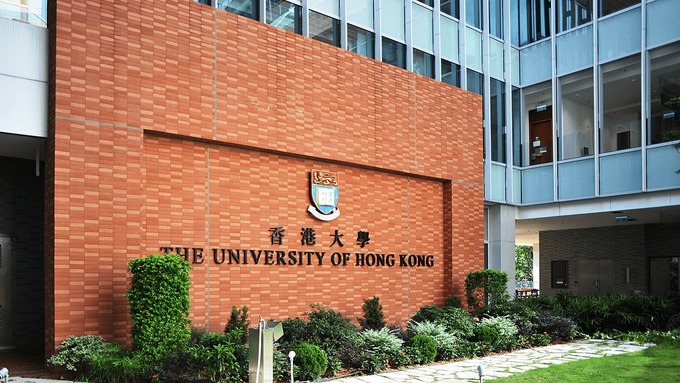
Record numbers of Hong Kong students are entering the city's publicly funded universities on international qualifications from fee-paying schools, while admissions of local exam takers have fallen, prompting calls for a quota. Admissions through routes other than the Diploma of Secondary Education rose 63% over seven years to account for close to 30% of the roughly 15,000 publicly funded first-year places, the South China Morning Post reported on Aug. 24.The newspaper analyzed University Grants Committee figures on first-year first-degree admissions at all eight institutions in the city from 2019-20 to 2025-26, including the University of Hong Kong, which ranks No.1 in QS World University Rankings: Asia 2026.Over the same period, admissions of students who sat the DSE, the route taken by nearly all pupils in the city's public school system, fell 7%, and their share dropped from 82% to 72%.The DSE share of first-year admissions has fallen to around 60% at the University of Hong Kong and the Hong Kong University of Science and Technology, the latter ranked 6th in QS Asia list. The rate is the lowest among the eight institutions.Admissions through other routes at the two universities climbed 156% and 87% respectively."The decrease in places for DSE students results in driving up admission scores," said Ng Po-shing, a student guidance consultant at Hok Yau Club and vice-principal of a secondary school.A growing number of candidates are complaining they missed out on their chosen programs despite matching the median score achieved by the previous cohort, he told the Post.Students on the alternative track largely hold qualifications such as the International Baccalaureate or GCE A-levels, taught at international, private and semi-private schools. Others enter through direct-admission schemes.Annual fees at those schools run from about HKD30,000 to more than HKD200,000 (US$3,800 to $25,500), according to Young Post, the newspaper's student title.Those students come from families with the means to pay, Ng said, giving them an edge in both scores and competitiveness and deepening social inequality.He expects DSE entry scores to rise again in coming admission cycles. A section of the University of Hong Kong campus. Photo courtesy of HKU Graduate School Lee Yi-ying, chairwoman of the Hong Kong Subsidized Secondary Schools Council and principal of Kowloon True Light School, has proposed that at least 80% of publicly funded places be reserved for DSE candidates, the Post reported, arguing that the exam is a homegrown credential universities should place greater trust in.The Education Bureau rejected the suggestion that the DSE is losing standing, telling the Post that the share of students entering publicly funded universities on DSE results remains above 70%.Many high-scoring candidates choose instead to study abroad or at prestigious mainland institutions, the bureau said.Chief Executive John Lee Ka-chiu announced in his September 2025 policy address that the ceiling on non-local undergraduate enrollment at the eight universities would rise to 50% of local places from the 2026-27 academic year.It is the second increase in as many years, after the cap doubled from 20% to 40% in 2024-25.Officials have said the 15,000 places funded for local students are unaffected by that ceiling. The non-DSE candidates counted in the Post's analysis are Hong Kong residents who took international curricula in the city, not recruits from overseas.Education Bureau figures submitted to the Legislative Council showed that 19,262 candidates met the minimum entrance requirement for the eight universities in 2024.Only 11,837 of them, or 61%, received offers through the Joint University Programmes Admissions System, down from 70% in 2023.In the QS World University Rankings 2027, released in June, HKU held 11th place globally while the Chinese University of Hong Kong climbed from 32nd to 18th, the first time two Hong Kong institutions have appeared in the global top 20, RTHK reported.QS named Hong Kong the most improved higher education system in Asia for the second consecutive year.
Public school students are losing spots at Asia's No.1 university
Full Article
Original Source
Read the full article at E →KhanList aggregates and links to publicly available news content. We do not host full articles from third-party sources. Always verify important information with original sources.