
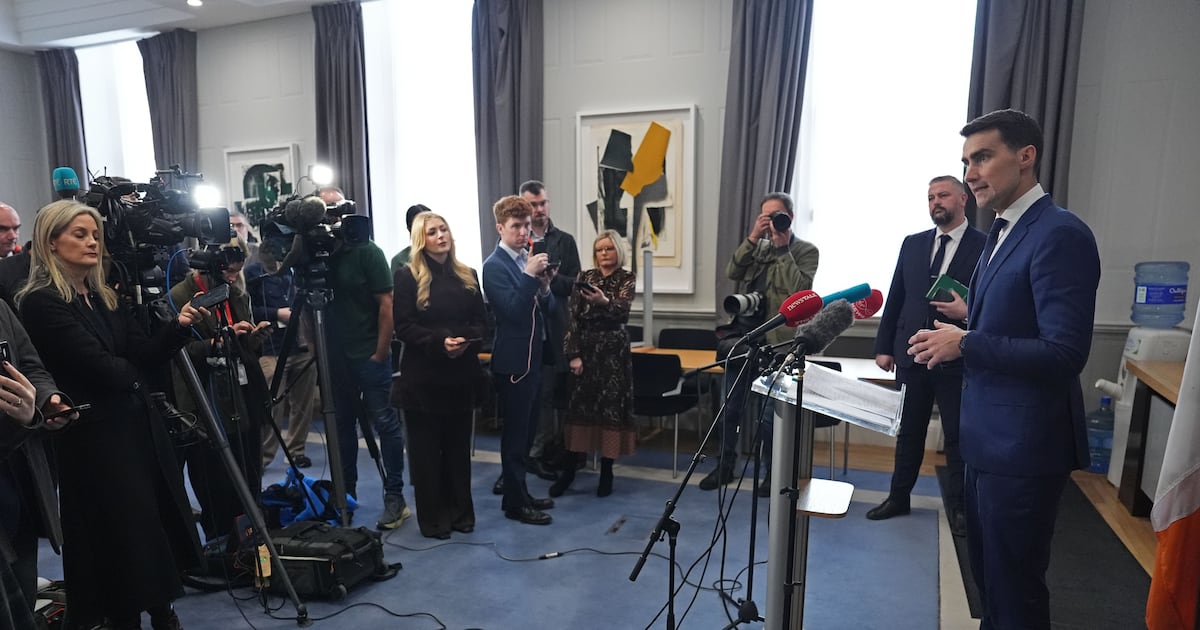
The Government and unions have each insisted the public sector pay deal agreed in the early hours of Friday morning will be up for review in the event of a material deterioration in the economy.The deal provides for increases of 10.75 per cent for about 400,000 staff on the State’s payroll, phased over a 33-month period to March 2029.The deal, on which union members will vote in the coming weeks, led to a planned national strike by staff across the public service – including civil servants, teachers, doctors, nurses and local authority personnel – on Thursday being called off.While the Government insisted the €5.2 billion pay deal is fiscally sustainable, Minister for Public Expenditure Jack Chambers said it would seek to invoke a review clause if there was a “significant contraction” in Ireland’s economy.READ MOREFor their part, unions indicated they would seek a review of the terms of the accord in the event there was a spike in inflation over its duration.The pay deal includes a review clause which can be triggered by either side if economic conditions or inflation rates change “significantly”.Speaking on Wednesday, Chambers said that if there was “a big inflationary spike, obviously the unions would have a legitimate reason to seek review”.When asked, he did not say whether Government would seek a review of the deal if inflation fell in the course of the 33-month lifespan of the agreement.However, he said the Government would seek a review “if there was a significant contraction within our economy and it’s something we couldn’t sustain or afford, which would be clear to everybody”.“I think Government needs that protection as well,” he said, but noted the Department of Finance’s medium-term projections for the economy were strong.“If the economic circumstances change and predictions change, then the review is something that both sides have, and that’s the responsible approach,” he said.Chambers brushed aside any suggestion the deal represented a capitulation to unions, insisting the agreement involved “a real balance”.He said the Government had not changed its medium-term fiscal plan, and that the agreement was “sustainable and affordable for the public finances”.Some €1.2 billion had been earmarked for a deal in the budget for 2027 but funding for the pay agreement will also be drawn from a €1.6 billion contingency fund also announced on budget day. The cost of the pay deal in 2027 will be just over €1.8 billion, Chambers said. [ Is the public pay offer affordable and fair compared with private sector wages?Opens in new window ]“Ultimately, the objective assessment in budgetary terms is: have we stuck to the medium-term fiscal and structural plan which was agreed by Government? We haven’t undermined the budget for [2027].”Chambers also maintained reforms and productivity set out in the deal would facilitate Government plans to drive digital transformation across the public service and also allow for new rostering arrangements.The chief union negotiator, Kevin Callinan of Fórsa, said: “I think, based on what we know about inflation, it is ahead of the projections over the period, so we’re pleased about that.“We’ve made some progress, but we are in uncertain times. And one of the important things in the agreement is that there is a review clause in the event that inflation was to spike again.“This has been a really difficult process. What we have managed to achieve with the better rates for those earning below €60,000 is, I think, an important win for young workers.”Sinn Féin leader Mary Lou McDonald maintained the deal had been reached after the Government had been “dragging their feet for months”. She said: “It is now up to workers to decide whether that agreement goes far enough.”
Public pay deal will be reviewed if economy deteriorates, Government and unions insist
Full Article
Original Source
Read the full article at Irishtimes →KhanList aggregates and links to publicly available news content. We do not host full articles from third-party sources. Always verify important information with original sources.