
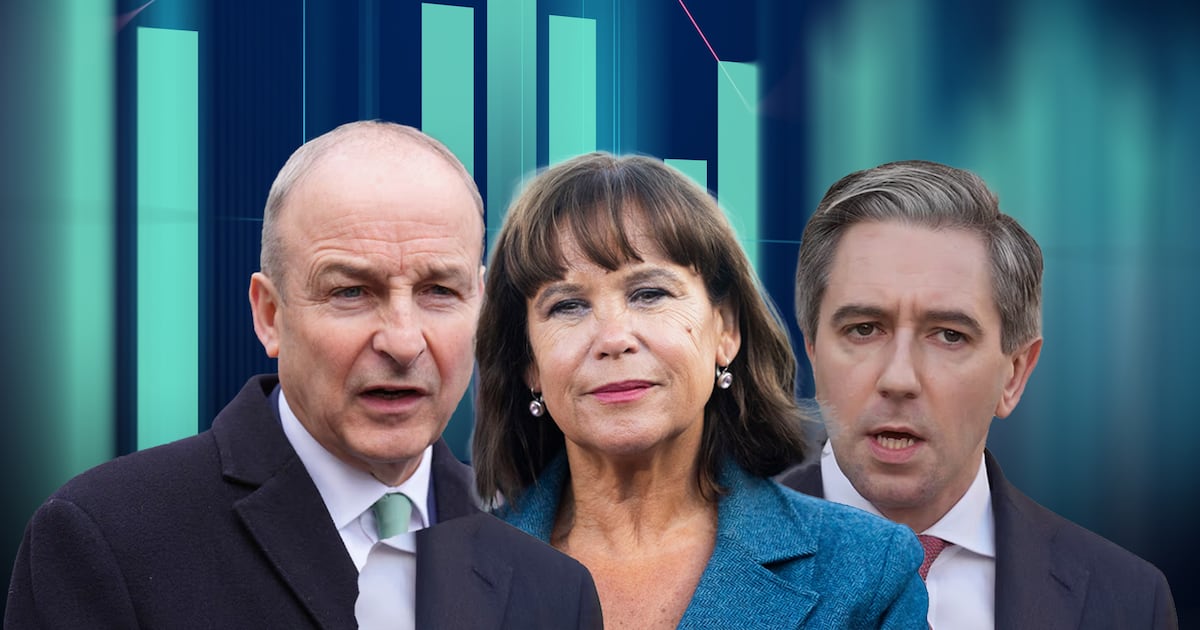
The most noticeable thing about the party support figures in Thursday’s poll is how stable the picture is. Little has changed across the board from the last time The Irish Times gauged support seven months ago. This is our first national poll in the series since February, as the regular June poll was replaced by byelection polls in Galway and Dublin.But the results show little movement in party support since then, with all the ups and downs within the margin of error. Fianna Fáil, Fine Gael and Sinn Féin all see their support levels drop by a point, as do the Green Party and Independents. The Social Democrats are up one, as are People Before Profit. Support for Aontú rises by two points, while Labour and Independent Ireland are unchanged.READ MORESource: Ipsos Since February, we have seen the fuel protests, the byelections and the intensification of cost-of-living pressures as the Coalition faces its second budget, pledging to reduce the runaway growth in public expenditure of recent years, but also buoyed by extra corporation tax revenues. None of this has impacted significantly on the political landscape, however. It is very much a case of “as you were”.[ Irish Times poll reveals what voters want in Budget 2027Opens in new window ][ Analysis: Poll reveals growing fragmentation of the Irish political landscapeOpens in new window ]This sense of quietude should emphatically not be mistaken for contentment on the part of voters. Satisfaction with the Government slips again to 29 per cent, its lowest level since 2020. Taoiseach Micheál Martin sees his approval rating fall by three points to 34 per cent. But even at that relatively low level, he is the most popular of the big party leaders (small-party leaders are not part of the survey). Fine Gael’s Simon Harris is unchanged at 31 per cent, and Sinn Féin’s Mary Lou McDonald drops by four points to 31 per cent.This is McDonald’s second four-point drop in a row and underlines the fact that, despite the Government’s relative unpopularity, the main Opposition party has not made any progress. Sinn Féin is down, its leader is down and its prospects are uncertain.We are, of course, in the middle of the electoral cycle, with an election perhaps three or more years away. But back at the equivalent point in the last election cycle, Sinn Féin was in the mid-30s, dominating the opposition and expected by most people to win the next election and lead the next government. The party is in a very different place now.[ Immigration and climate of lesser concern than housing or living costs, survey findsOpens in new window ]The overall picture painted by Thursday’s numbers is of a public disenchanted with the Government – but not entirely convinced by the alternatives, either. The Social Democrats continue their rise and Aontú has had a good poll, but the Opposition as a whole is completely fractured. Aside from Sinn Féin, six Opposition parties are on less than 10 per cent support, with five of them on 5 per cent or less. Independents are on 14 per cent. Good luck putting together a government without Fine Gael or Fianna Fáil with all that.The reason for the general disenchantment among voters is clear: it’s the cost of living, stupid.This is perhaps the starkest finding in the poll: more than half of all voters (51 per cent) say they are finding it “a lot more difficult to manage financially”, while a further 38 per cent say they are finding it “a little more difficult”. This is the chief dynamic in Irish politics right now: how the political system responds to the pressure of rising costs for households. This presents the Government with an inbuilt advantage – it has the power to spend money. But despite a bulging exchequer, the Coalition cannot totally eliminate the pressure on people. It can help, but only up to a point. That reality presents the Opposition with its opportunity – to be the voice of those who feel the Government’s help is inadequate. These political facts will press the Government towards as generous a budget as it can manage; inevitably, that will come at the cost of more prudent, longer-term management of public finances. The poll outlines the public’s budget preferences – energy and heating supports, help with the cost of housing, spending on services. Tax cuts – despite their ubiquity in the pre-budget publicity – are a minority fixation (13 per cent).Elsewhere in the numbers is another undeniable political fact: in the face of public clamour for action on the cost of living, fiscal prudence is very far down the list of the public’s priorities. Just 3 per cent of respondents say they want the Government to prioritise saving for the future. We want it all, and we want it now.
Public disenchanted with the Government, but not entirely convinced by the alternatives
Full Article
Original Source
Read the full article at Irishtimes →KhanList aggregates and links to publicly available news content. We do not host full articles from third-party sources. Always verify important information with original sources.