
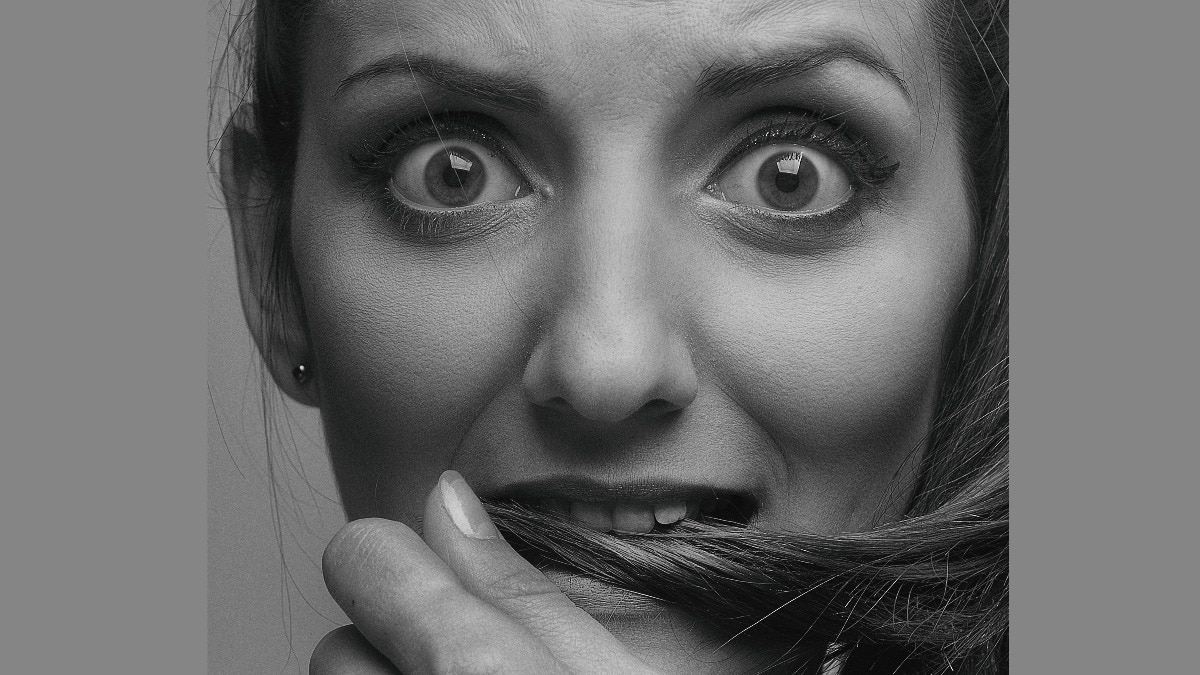
Why do some people laugh during awkward silences, stressful conversations or frightening situations? Psychology suggests nervous laughter isn't always amusement. Emotional regulation, social signalling, stress responses, incongruent affect and tension release can help explain why laughter sometimes appears when people feel uncomfortable.Why do some people laugh during awkward silences, stressful conversations or frightening situations? Psychology suggests nervous laughter isn't always amusement.You are about to give a presentation, everyone is looking at you and suddenly you laugh.Someone asks you a serious question, but you let out a nervous chuckle.An awkward silence stretches across the room, and instead of staying completely serious, you start laughing for no obvious reason.Then comes the embarrassing thought: "Why am I laughing? This isn't even funny." Psychology suggests nervous laughter isn't necessarily a sign that you find something amusing.It can be connected to emotional regulation, physiological arousal, social signalling, tension release and the brain's attempt to manage conflicting emotions.EMOTIONAL REGULATION CAN CHANGE HOW WE RESPOND TO STRESS Psychologist James Gross, known for his work on the Process Model of Emotion Regulation, has shown that people constantly regulate their emotional responses.Not all regulation is conscious.Imagine being called into your manager's office unexpectedly.You are worried about what the conversation might be about, but when your manager asks a serious question, you smile or laugh nervously.The laughter doesn't necessarily mean you're happy. Your brain may be trying to manage an uncomfortable emotional state.In this sense, laughter can become part of how the body responds when emotional arousal becomes difficult to handle.NERVOUS LAUGHTER CAN RELEASE BUILT-UP TENSIONStress activates the body's arousal systems. Your heart may beat faster, your muscles can tense and your attention becomes focused on what is happening.When the stressful moment passes, the body needs to regulate that arousal.This may help explain why people sometimes laugh immediately after a frightening or intensely awkward situation.Imagine narrowly avoiding an accident. Once you realise you're safe, you might laugh, even though absolutely nothing about the experience was funny.The laughter can accompany the sudden shift from intense fear to relief.THE BRAIN SOMETIMES SENDS MIXED SOCIAL SIGNALSLaughter isn't only an expression of happiness. It is also a powerful social signal.Humans use smiles and laughter to communicate friendliness, reduce tension and signal that they don't intend to create conflict.Research into social laughter has shown that people often laugh in response to other people even when nothing particularly humorous has happened.Imagine meeting your partner's parents for the first time. You're nervous, someone makes a mildly awkward comment and you laugh. Part of the response may be social.Your brain is communicating, "I'm friendly, I'm comfortable enough to engage, and I don't want this interaction to become tense."INCONGRUENT EMOTIONS CAN PRODUCE UNEXPECTED REACTIONSSometimes the emotion you're experiencing and the behaviour you display don't appear to match. Psychologists refer to this broadly as incongruent emotional expression.You can laugh while feeling embarrassed. Smile while feeling uncomfortable. Or even laugh during a highly emotional conversation.Consider someone receiving unexpectedly serious news in a group setting. They may smile or laugh briefly before becoming serious again.The reaction doesn't necessarily reveal what they actually feel.Emotional responses can be complicated, particularly when the brain is processing several emotions at once.SELF-MONITORING CAN MAKE AWKWARD MOMENTS EVEN MORE NOTICEABLEPsychologist Mark Snyder's Self-Monitoring Theory offers another useful explanation.Some people are particularly attentive to how they appear to others. They monitor their expressions, words and reactions to make sure they fit the social situation.Ironically, this heightened awareness can increase nervousness.Imagine answering a question during a college interview. You suddenly become aware that everyone is watching you.You start wondering whether your answer sounds intelligent. That extra self-consciousness increases emotional pressure, and a nervous laugh slips out.Now you become aware that you laughed, which creates even more self-consciousness.The reaction can become a loop.LAUGHTER CAN HELP MAKE AN UNCOMFORTABLE SITUATION FEEL SAFERPsychologists also study the role of social buffering, where the presence of other people can influence how individuals respond to stress.A small laugh can sometimes reduce the perceived intensity of an awkward interaction.Imagine two people sitting through an uncomfortable silence. One person laughs softly. The other laughs too. Within seconds, the atmosphere changes.Nobody necessarily found anything funny. The laughter helped signal that the interaction was still socially safe.This is one reason nervous laughter can sometimes spread between people.NOT EVERY NERVOUS LAUGH MEANS THE SAME THINGContext matters.Someone may laugh because they're anxious. Someone else may laugh because they're embarrassed. Another person may use humour deliberately to cope with stress. And sometimes, people simply find something funny despite being nervous.Personality, social expectations and the situation all influence how emotional responses are expressed.This is why nervous laughter shouldn't automatically be interpreted as dishonesty, disrespect or lack of seriousness.SO, WHY DO PEOPLE LAUGH WHEN THEY'RE NERVOUS?Psychology suggests nervous laughter can involve emotional regulation, physiological arousal, tension release, social signalling, self-monitoring and social buffering.The brain isn't necessarily confusing fear with amusement.It may be trying to manage an emotionally intense situation while also maintaining a workable social interaction.That is why you can laugh during a job interview, an awkward conversation or immediately after a frightening experience without actually finding the situation funny.Sometimes the laugh isn't about humour at all. It is simply the brain's way of handling a moment that feels like too much.FAQsWhy do I laugh when I'm nervous?Nervous laughter can be linked to emotional regulation, physiological arousal, social signalling and the release of tension during uncomfortable situations.Is nervous laughter a sign of anxiety?It can occur during anxiety, but nervous laughter doesn't automatically mean someone has an anxiety disorder. People can laugh nervously during ordinary stressful or awkward situations.Why do I laugh during serious conversations?Laughter can sometimes appear when people are experiencing strong emotional arousal or trying to reduce social tension. It doesn't necessarily mean they find the conversation funny.Can nervous laughter be controlled?Becoming aware of the physical signs of nervousness, slowing your breathing and allowing yourself to pause before responding can sometimes make the reaction easier to manage.- EndsPublished On: Aug 26, 2026 09:00 IST
Psychology says people who laugh when they're nervous aren't always amused
Full Article
Original Source
Read the full article at Indiatoday →KhanList aggregates and links to publicly available news content. We do not host full articles from third-party sources. Always verify important information with original sources.