
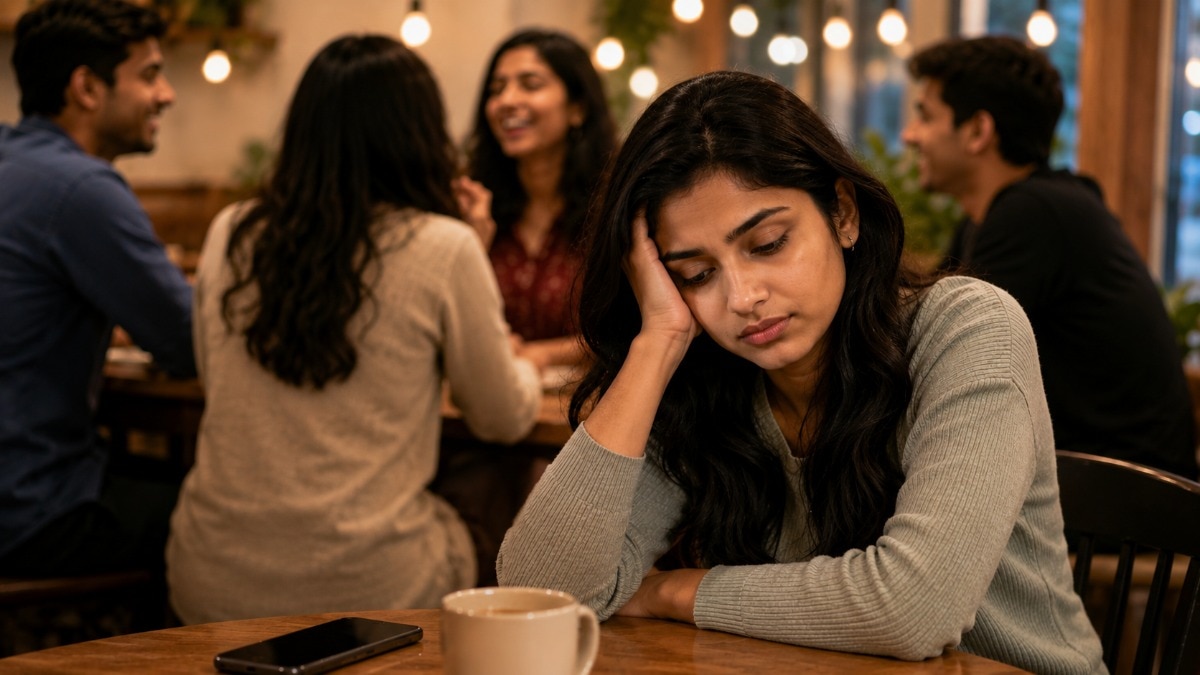
You enjoy meeting people, but afterwards you feel completely drained and need time alone. Psychology suggests this doesn't automatically make you an introvert. Mental effort, emotional regulation, sensory overload and social monitoring can all leave the brain feeling exhausted.You enjoy meeting people, but afterwards you feel completely drained and need time alone. Psychology suggests this doesn't automatically make you an introvert. (AI-generated image)Everyone laughs. The conversation flows easily. You genuinely enjoy yourself.Yet the moment you get home, all you want is silence.You ignore your phone, lie on your bed and hope nobody calls for the rest of the night.Many people assume this means they're introverts. Psychology suggests the answer isn't that simple. Researchers say social exhaustion can be influenced by cognitive load, emotional regulation, sensory stimulation, self-monitoring, personality traits and stress levels, meaning even highly sociable people can feel mentally drained after spending time with others.SOCIALISING REQUIRES MORE MENTAL EFFORT THAN MOST PEOPLE REALISEOne explanation comes from Cognitive Load Theory, developed by educational psychologist John Sweller. Although the theory originally focused on learning, psychologists also use the idea of cognitive load to explain situations where the brain is handling multiple streams of information at once.During a conversation, you're not just listening. You're remembering names, following different topics, reading facial expressions, choosing the right words, watching other people's reactions.Perhaps even wondering whether you've spoken too much.Imagine attending a family wedding where you're introduced to dozens of relatives you've never met before. By the end of the evening, your brain has been processing information for hours without much of a break.That mental effort alone can feel exhausting.EMOTIONAL REGULATION CAN DRAIN YOUR MENTAL ENERGYAnother explanation comes from psychologist James Gross' Process Model of Emotion Regulation.People constantly adjust their emotions during social interactions.You might hide disappointment to avoid hurting someone's feelings, suppress frustration during a meeting, smile politely even when you're tired, laugh at a joke you don't fully understand.These small acts of emotional regulation happen almost automatically, but they still require mental effort.For example, someone working in customer service may spend an entire day appearing cheerful despite dealing with difficult customers.By the time they reach home, emotional exhaustion may feel stronger than physical tiredness.SENSORY OVERLOAD CAN MAKE SOCIAL EVENTS FEEL EXHAUSTINGSocial gatherings rarely involve conversation alone.There may be loud music, bright lights, multiple conversations happening at once, phones buzzing, children running around.The brain has to filter all of this information continuously.Psychologists studying sensory processing have found that people differ in how strongly they respond to environmental stimulation.Imagine spending three hours at a crowded wedding reception. Even if you enjoy every minute, your brain has been processing hundreds of sights, sounds and movements at the same time.It's hardly surprising that many people feel the need for quiet afterwards.SELF-MONITORING MAKES SOME CONVERSATIONS MORE DEMANDINGPsychologist Mark Snyder's Self-Monitoring Theory helps explain why social situations are more tiring for some people than others.High self-monitors constantly adjust their behaviour depending on the people around them.They think about how they're coming across, whether they're speaking appropriately, whether they're making a good impression.Imagine attending your first day at a new workplace. You probably choose your words more carefully than you would with close friends.That constant monitoring requires attention, making the interaction mentally more demanding.PERSONALITY EXISTS ON A SPECTRUM, NOT IN TWO BOXESPsychologist Hans Eysenck, one of the pioneers of personality research, argued that introversion and extraversion exist on a continuum rather than as two completely separate categories.Many people fall somewhere in the middle. They enjoy socialising but also need time alone afterwards.Others love meeting people in familiar settings but become exhausted in large crowds.This means feeling socially drained doesn't automatically reveal your personality type.It may simply reflect the type of interaction, the number of people involved or how mentally demanding the situation was.STRESS CAN MAKE SOCIALISING FEEL MORE EXHAUSTING THAN USUALThe brain doesn't process social situations in isolation.If you're already dealing with work pressure, family responsibilities or poor sleep, social interactions demand even more mental energy.Psychologist Richard Lazarus' Transactional Model of Stress and Coping suggests that stress depends partly on the demands we face and the resources we feel we have available.Imagine attending a birthday party after an exhausting week at work. Normally, you might stay for hours. This time, you want to leave after thirty minutes.The difference isn't your personality. It's the amount of mental energy you had available before you even arrived.SO, WHY DO SOME PEOPLE FEEL EXHAUSTED AFTER SOCIALISING?Psychology suggests social fatigue is rarely explained by introversion alone.Instead, it often reflects a combination of cognitive load, emotional regulation, sensory stimulation, self-monitoring, stress and individual personality differences that place demands on the brain during social interactions.Needing time alone afterwards doesn't necessarily mean you dislike people.It may simply mean your brain has spent hours processing conversations, emotions and sensory information without a chance to recover.Sometimes the desire for solitude isn't about avoiding people.It's about giving the mind enough space to recharge before engaging again.FAQsDoes feeling tired after socialising mean I'm an introvert?Not necessarily. Psychology suggests social exhaustion can result from cognitive load, emotional regulation, sensory stimulation and stress, regardless of personality type.Can extroverts feel socially drained too?Yes. Even highly outgoing people may feel mentally exhausted after long or emotionally demanding social interactions.Why do crowded places leave me feeling so tired?Busy environments require the brain to process large amounts of sensory information while managing conversations and emotions, which can increase mental fatigue.Is it normal to need time alone after spending time with people?Yes. Many people benefit from quiet time after socialising because it allows the brain to recover from sustained mental and emotional effort.- EndsPublished On: Aug 13, 2026 08:00 IST
Psychology says feeling exhausted after socialising doesn't always mean you're an introvert
Full Article
Original Source
Read the full article at Indiatoday →KhanList aggregates and links to publicly available news content. We do not host full articles from third-party sources. Always verify important information with original sources.