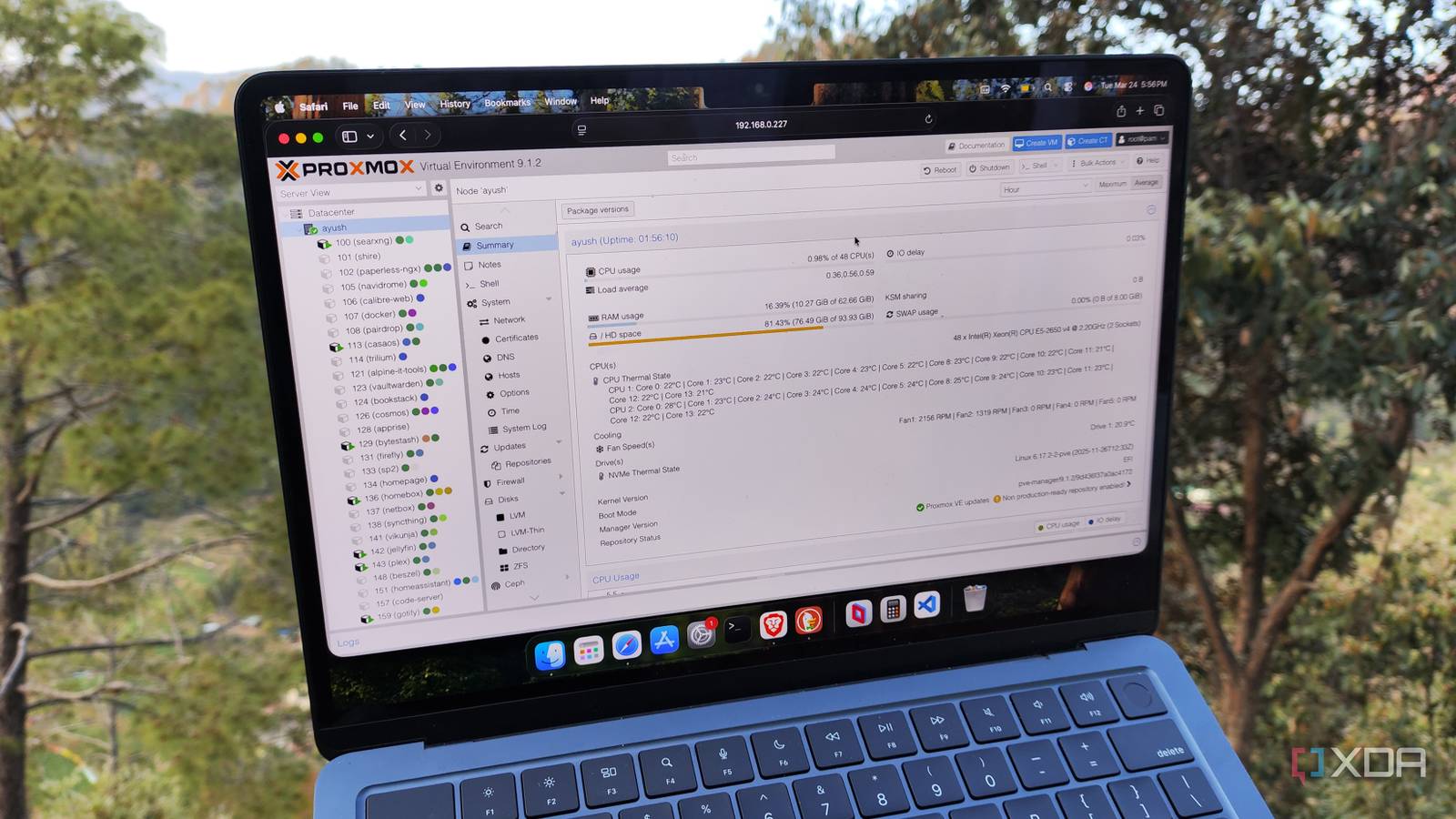
Published Aug 5, 2026, 12:05 PM EDT Simon is a Computer Science BSc graduate who has been writing about technology since 2014, and using Windows machines since 3.1. After working for an indie game studio and acting as the family's go-to technician for all computer issues, he found his passion for writing and decided to use his skill set to write about all things tech. Since beginning his writing career, he has written for many different publications such as WorldStart, Listverse, and MakeTechEasier. However, after finding his home at MakeUseOf in February 2019, he would eventually move on to its sister site, XDA, to bring the latest and greatest in Windows, Linux, and DIY electronics. Sign in to your XDA account Summary Proxmox now officially supports 64-bit Arm architecture with full-release support, not a tech preview. It requires UEFI+ACPI hosts, and VMs must use AAVMF UEFI. SeaBIOS and many x86 features aren't supported. Guests can't cross-migrate, and device-tree SBCs (like the Pi) are unsupported. The Arm version requires a separate subscription. If you've read articles on XDA for any length of time, you'll know that we love our Proxmox implementations here. Proxmox gave us reason to celebrate today after it announced the release of an Arm-compatible version of its software. And while there are a few caveats you'll need to consider before you can tinker with this brand-new version, your efforts will be rewarded with a fully supported Proxmox install that goes above and beyond a simple tech demo. Proxmox officially arrives on Arm architecture There are quite a few hoops you'll need to jump through, though As announced on the official Proxmox forums, you can now grab the Proxmox Virtual Environment on 64-bit Arm devices. Surprisingly, this isn't a tech preview or a taster of things to come; it's a fully supported version of Proxmox that will follow the same release cycle as the other builds. Thanks to Nvidia's support, Proxmox achieved full support for the Grace Hopper and Vera platforms. Proxmox can also offer best-effort support for "other UEFI-based ARMv9-A or newer hardware", saying that "ARMv8-A generally works as well." There are a few catches to this Arm-based version of Proxmox. First, your host hardware has to boot via UEFI and describe its hardware using ACPI. Your virtual machines also boot using UEFI via the Arm build of OVMF (AAVMF), and SeaBIOS isn't supported. AMD SEV memory encryption and Intel GVT-g mediated vGPUs are x86 only, and you can't use an operating-system-level CPU microcode package. A guest can only run using nodes that match their architecture, and they cannot live migrate to a node that doesn't share the same architecture. Device-tree-only single-board computers, such as the beloved Raspberry Pi, aren't supported. Finally, you'll need a separate subscription for the Arm-based version of Proxmox, as an x86-64 subscription doesn't cover it. You can check out all the change notes, instructions on how to request access to the Arm-based version of Proxmox, and all the fine details in the forum link above, so give it a read if this sounds like something you'd like to use.
Proxmox releases full support for the Arm64 architecture, with a few key caveats
Full Article
Original Source
Read the full article at Xda-developers →KhanList aggregates and links to publicly available news content. We do not host full articles from third-party sources. Always verify important information with original sources.