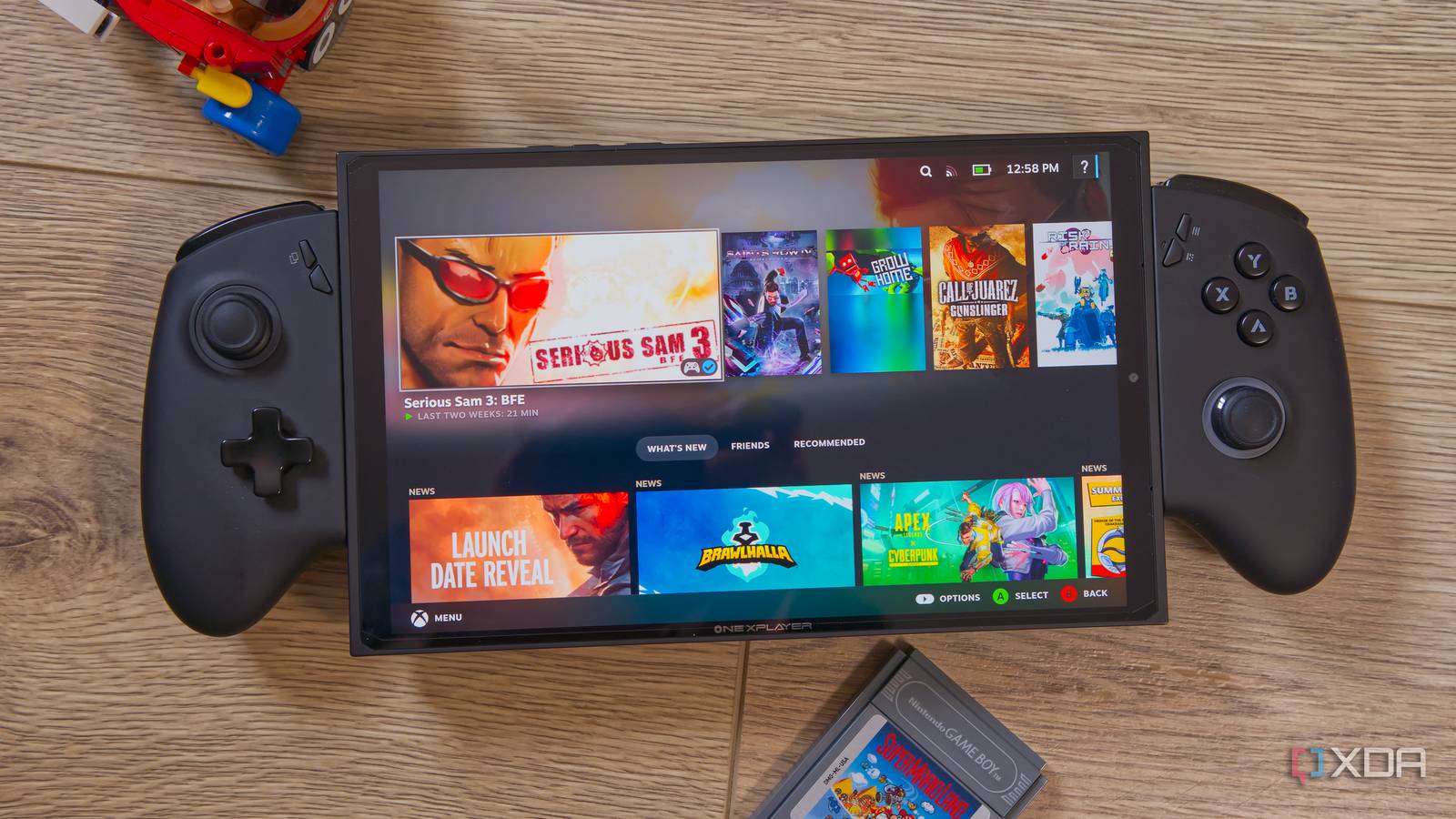
Published Jul 19, 2026, 9:00 AM EDT João has been covering the tech world for over 7 years, with a heavy focus on laptops and the Windows ecosystem. I also love all things tech and videogames, especially Nintendo, which he's always happy to talk about. Prior to joining XDA in 2021, he worked at Neowin: https://www.neowin.net/news/poster/jo%C3%A3o-carrasqueira/ Linux gaming has been a hot topic for the last few years, specifically since the advent of the Steam Deck. Valve's device showed that PC games can run just fine on Linux, and it's easy to forget that a lot of these games aren't actually designed for Linux at all. It's actually quite rare for games to be adapted specifically for Linux platforms, but you wouldn't know it by booting up your Steam Deck. That's all thanks to Proton, Valve's compatibility layer that has made Windows games run on Linux almost as well as they do on Windows, even without any work from the developers. Most games don't have Linux versions Yet they still work Looking through the games on my Steam library, there's no way to tell at a glance whether a game has been specifically developed for Linux platforms or not. I only know of a couple, such as Shadow of the Tomb Raider, that have specific Linux versions, because I looked them up to find the official platform list. But that's just the thing: I only find out that these games are designed for Linux when I go out of my way to look them up. And that says a lot about how good Linux is at gaming these days. Even when a game is designed only for Windows, it runs on Linux just fine. I've played Elden Ring quite a bit on Linux with no issues, as well as older titles like Call of Juarez: Gunslinger, and even games that aren't out yet, like Grip XR, which only has a demo available right now. All of these games run through Valve's Proton layer, but when I play them on Linux, I never think about the fact that they're not designed for Linux. I just install them, launch them, and play them. And it's undeniably impressive how well they manage to run despite running through that compatibility layer. Just for this article, I had to look up if any of the games in my Steam library has a native Linux version, and I landed on Serious Sam 3. I wanted to see if I would feel any differences with this game compared to non-native titles, and I don't. This is an old game that should run smoothly on my gaming handheld, and it does — but so do all the Windows games I tried on the same hardware, and most of them are more demanding than this. In fact, Steam actually defaults to running this game using Proton, I had to manually switch to the Steam Linux Runtime. The Proton version even seemed to run more smoothly. Another title I tried was Grow Home, but for that one, the Linux release didn't even launch. It was better to use the Windows version through Proton. Games often run better on Linux Even through Proton At this point, you may be thinking "well, sure, Windows games may run fine on Linux, but you're probably sacrificing performance", and I'll concede out of the gate, that sometimes, that does happen. But it depends on the game and the hardware you're testing, and that in itself says a lot. We ran numerous tests when the Lenovo Legion Go S was launched with both Windows and SteamOS versions, and we found that titles such as Horizon: Zero Dawn Remastered, Cyberpunk 2077, Returnal, and Marvel's Guardians of the Galaxy all ran better on the SteamOS version of the Legion Go S compared to the Windows variant. None of these games has a dedicated Linux version; they all need Proton. Yet, they ran faster on Linux. In the case of Horizon, Linux came out with up to 75% higher frame rates. That's no joke. Notably, our tests at the time also included Shadow of the Tomb Raider, which does have a native Linux release, and while it was still better on Linux, you wouldn't be able to tell it's a native port just based on the performance numbers. It falls right in line with the games that need Proton. My personal experience is no different. While I haven't captured frame rate data, when playing the Grip XR demo or Saints Row IV, I've had a better experience on Linux compared to Windows, with fewer stutters and freezes. It feels like this shouldn't be possible, yet here we are. Even Windows to be more like Linux What better compliment could there be? Perhaps the best indicator of just how far Proton and Linux gaming have come is the fact that, even though games are designed for Windows first, Microsoft is reportedly aiming to bring Windows gaming up to par with Linux. That's according to a report from Windows Central's Zac Bowden earlier this year, which claims Microsoft is eyeing SteamOS as the benchmark for gaming performance. Again, the majority of these games are designed for Windows first, and somehow we're in a position where Windows is playing catch-up. That's how great Proton is. Of course, Proton can't fix everything, and some developers actively choose to make their games incompatible with the platform, usually due to cheating concerns. Linux gaming still isn't viable for everyone, but that's for no fault of Proton itself. Outside of competitive online games, there are very few barriers in the way of enjoying your games on Linux these days. Gaming on Linux is better than you think It's taken a long time, but thanks to Valve's efforts, gaming on Linux has gotten to a point where it can be just as viable as on Windows, and it's all because of Proton. Developers aren't necessarily creating Linux versions of their games, but this compatibility layer is so good that Linux often ends up running Windows games better than the platform they were designed for. And sometimes even better than the native Linux versions of the same games.
Proton got so good I keep forgetting which of my games were even built for Windows
Full Article
📰 Original Source
Read full article at Xda-developers →KhanList aggregates and links to publicly available news content. We do not host full articles from third-party sources. Always verify important information with original sources.