
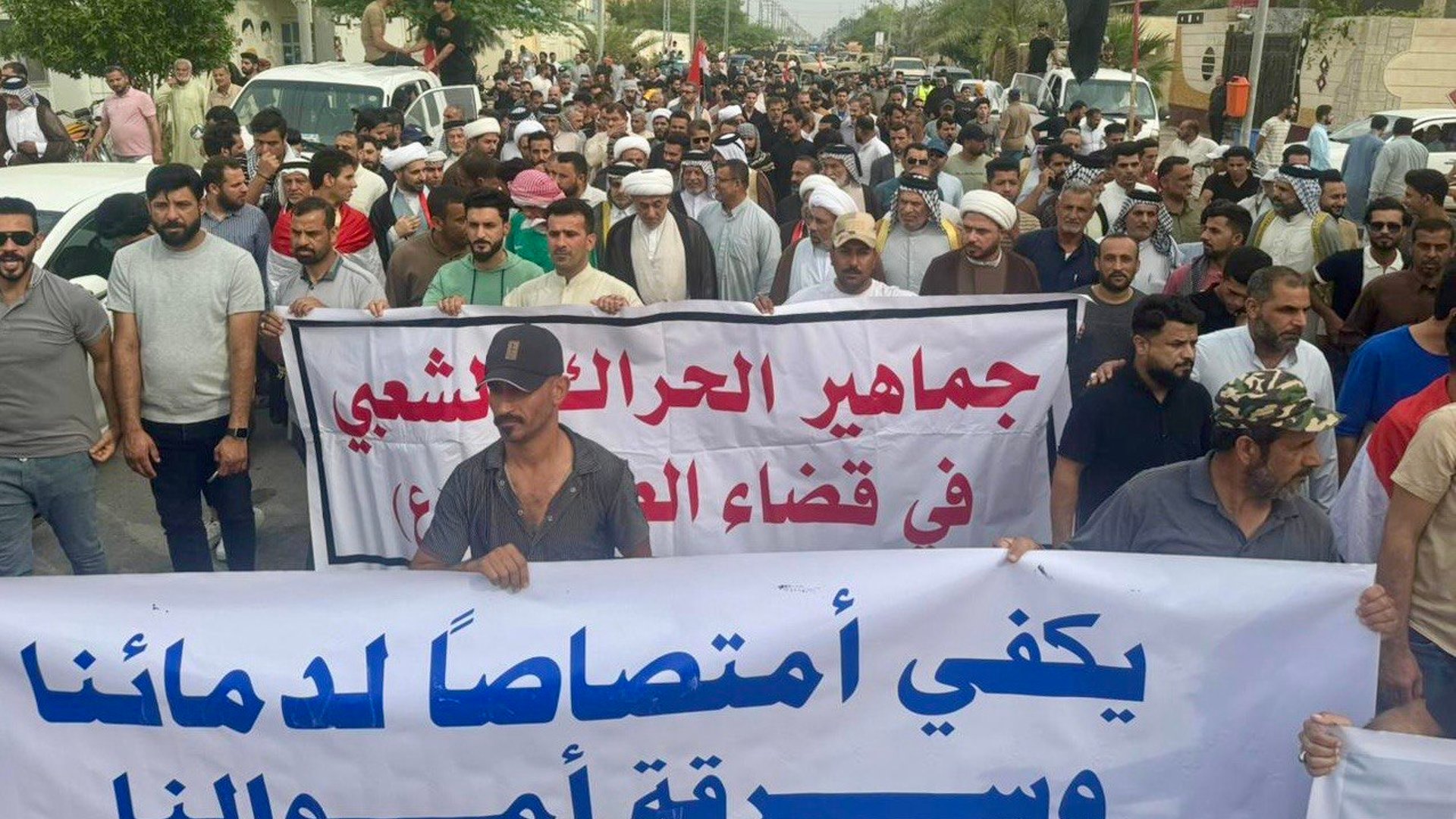
Basra (IraqiNews.com) – Widespread popular demonstrations and open-ended sit-ins have swept across the northern districts of Iraq’s oil-rich Basra Governorate—spanning Al-Sadiq, Al-Qurna, Al-Dair, Al-Nashwa, Al-Suwaib, and Al-Thaghr—since late October and early November 2026. Residents, tribal figures, and local clerics have mobilized near the gates of major strategic oilfields, including West Qurna 1 and Majnoon, demanding immediate public service delivery, infrastructure rehabilitation, local employment quotas, and environmental remediation. Despite sitting atop some of Iraq’s largest crude oil reserves, northern Basra communities cite severe developmental neglect, broken promises, and deteriorating living standards. Protesters—organized largely under the Al-Sadiq Movement alongside coordinated community sit-ins—have framed their demands around several urgent priorities: Infrastructure and Public Utilities: Residents demand the immediate completion of stalled public works, including paving neglected roads, rehabilitating the Qurna–Basra highway, completing the Al-Sadiq–Izz al-Din Salim bridge, expanding potable water and sewage networks, and addressing acute shortages in schools and primary healthcare clinics. Petrodollar and Social Benefit Allocations: Protesters are calling for transparent disbursement of Basra’s statutory petrodollar revenues, border-crossing tariffs, and the mandatory “Social Benefits” (al-Manafi al-Ijtima’iya) funds paid by international oil companies (IOCs) to develop communities hosting extraction operations. Employment and Local Hiring: Facing high youth unemployment, residents are demanding priority hiring for local graduates and laborers within foreign and national oil companies operating in Majnoon and West Qurna. Environmental and Health Crisis: Communities surrounding the fields have raised urgent alarms over rising rates of cancer and kidney failure linked to gas flaring, industrial pollution, and the confiscation of agricultural and tribal lands for oil expansion without adequate environmental safeguards or compensation. The current wave of unrest reignited in late October when the Al-Sadiq Movement re-established sit-in tents outside the entrance of the West Qurna 1 oilfield, protesting the government’s failure to fulfill prior pledges to maintain service-effort machinery (al-Juhd al-Khadami). By November 7 and 8, demonstrations expanded into Al-Dair district, where hundreds of residents led by local clerics including Sheikh Muthanna Al-Rubaie declared an open-ended sit-in. Simultaneously, residents from Al-Jazeera, Al-Nashwa, Al-Suwaib, and Al-Thaghr staged demonstrations directly outside the Majnoon oilfield perimeter on November 9, warning against continued administrative procrastination. In response to mounting pressure near vital export arteries, Prime Minister Ali Faleh Al-Zaidi dispatched a high-level ministerial delegation on November 9—headed by the Minister of Oil alongside the Ministers of Construction and Housing, and Planning—instructing them to conduct on-the-ground inspections across northern Basra districts and submit an actionable report within 48 hours. Following negotiations between protest representatives and federal officials on November 7, organizers in Al-Sadiq agreed to suspend escalatory blockades around oil installations and maintain peaceful sit-ins in exchange for the immediate reactivation of municipal service machinery and street paving operations. Meanwhile, on November 12, Parliament’s Finance Committee convened an oversight session to audit Basra’s withheld petrodollar dues and border-crossing revenue shares, pledging to establish a clear funding roadmap prioritizing strategic development projects across northern Basra districts.
Protests in Northern Basra: Oil wealth vs. service deprivation trigger renewed unrest
Full Article
Original Source
Read the full article at Iraqinews →KhanList aggregates and links to publicly available news content. We do not host full articles from third-party sources. Always verify important information with original sources.