
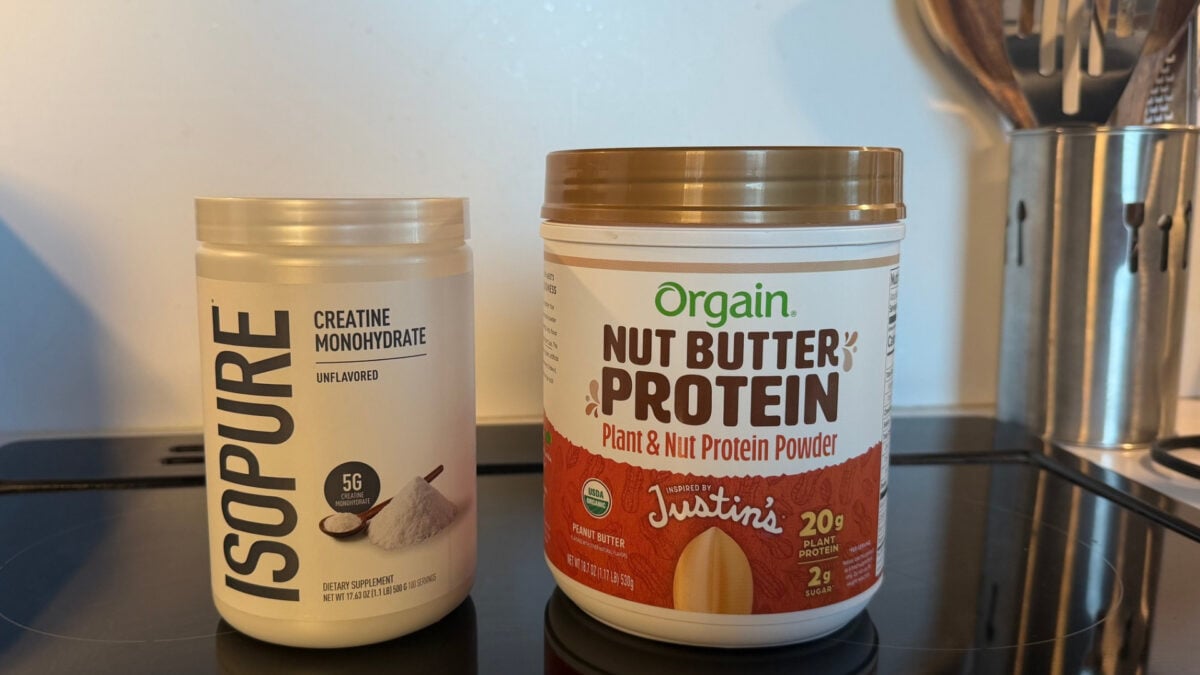
A few years ago, my brother became a committed gym bro. He researched effective workout routines, healthy protein-heavy diets, and the optimal supplement regime. It was in this context that I first heard of creatine, when he announced to the rest of the family that we should all be taking it. And he wasn’t the only one talking about its benefits. It started popping up on my social media. My partner received a creatine pack from one of his sisters. It feels like it’s everywhere. In fact, a study published yesterday in the journal Performance Enhancement & Health confirms that the use of creatine, in addition to protein supplements, among U.S. college and university students has shot up in recent years. Yes, my brother is in college. Creatine is a natural energy source that our liver, kidneys, and pancreas produce and that we also absorb from foods, including red meat, seafood, and animal milk. Some people, however, consume creatine supplements—which come in the form of powders, pills, gummies, and more—to increase strength and support brain health. “Creatine has been well-established in the sports world for decades, but what’s new is the breadth of research. Studies are now exploring potential roles in brain health, mood and aging, in addition to strength and performance,” Yasi Ansari, senior dietitian at the University of California, Los Angeles, Santa Monica Medical Center, said in a UCLA statement. “Social media has also made it more visible to people outside the gym,” she added. And while creatine’s clearest benefit still seems to be improving strength, power, and muscle mass, “emerging data suggests it may also help with cognitive function and fatigue, particularly in people experiencing sleep loss, vegetarians and older adults.” In the recent study, researchers analyzed survey data collected between 2020 and 2025 from 39,986 U.S. college and university students, ages 18 to 30, to track their lifetime use (meaning they had ever used them, even once) of appearance- and performance-enhancing drugs and substances, including creatine and protein supplements. They found that 7.7% of students surveyed in the 2020-2021 academic year had ever used creatine supplements. In the 2024-2025 academic year, that jumped to 13.5%. When they took a look at the use of protein supplements, they also found an increase over that same period, from 23.8% to 28.0%. Perhaps unsurprisingly, student-athletes reported higher use of creatine supplements and protein supplements. “Creatine and protein supplements have become increasingly common among young people, particularly those seeking to build muscle, improve their physical appearance or enhance athletic performance,” Kyle T. Ganson, lead author of the study and associate professor at the University of Toronto’s Factor-Inwentash Faculty of Social Work, said in another university statement. “Our findings suggest that these products are becoming a more prominent behavior among college students, making it important for health professionals to understand why young people are using them and how to support safe and informed decision-making.” Creatine and protein supplements carry potential risks, such as excessive dosing, combining multiple supplements, and use motivated by body dissatisfaction.
Protein Shakes Were Just the Start. College Students Are Now Increasingly Turning to Creatine
Full Article
Original Source
Read the full article at Gizmodo →KhanList aggregates and links to publicly available news content. We do not host full articles from third-party sources. Always verify important information with original sources.