
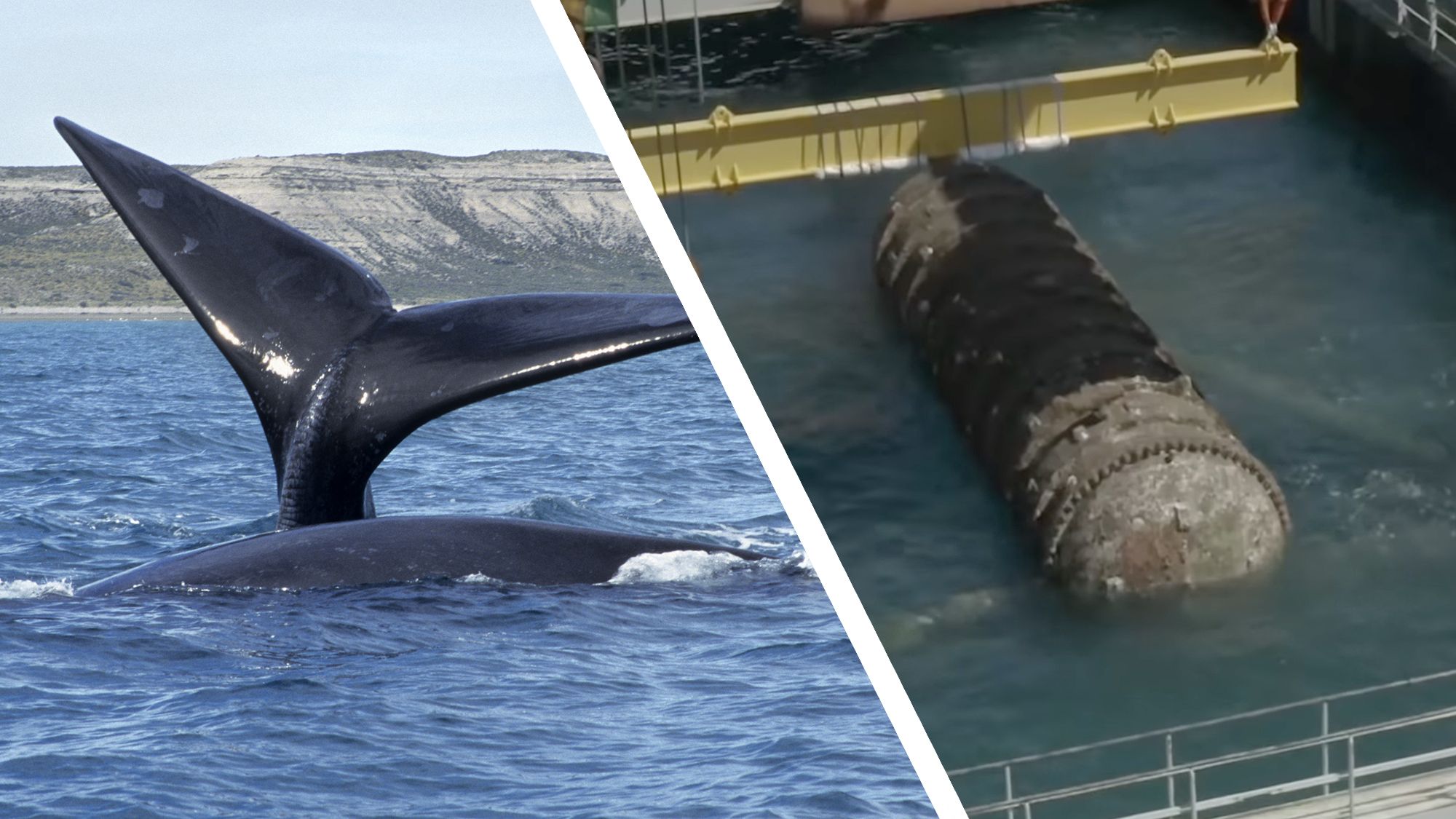
A North Atlantic right whale (left) and an earlier underwater data center experiment from Microsoft's Project Natick (right), which is unrelated to this new DeepGreen controversy. (Image credit: Getty Images / Gilles Martin / Microsoft) AI firm DeepGreen has suggested building data centers underwaterThis would help to keep the locations cool and running efficientlyBut the proposed locations could seriously harm endangered whale speciesAI data centers need an awful lot of water to keep their machines running at optimal temperatures, and that creates a problem: just how do you get that much water on-site? One potential solution seems almost blindingly obvious: why not build them underwater? Yet as residents across the US are discovering, that idea is proving to be highly controversial.Take the recently-pitched $100m underwater data center located off the coasts of Maine and Alaska, for example. AI firm DeepGreen Holdings has proposed building data centers off Western Passage, Maine, and Upper Cook Inlet, Alaska, and they would cover some 1,650 acres and comprise 66 compute pods and 300 tidal turbines.The problem? Both locations are home to endangered whale populations that could be significantly impacted by the developments. In the case of the Maine site, the Gulf of Maine is linked to critical habits for the North Atlantic right whale. As for Upper Cook Inlet, that’s a designated critical habitat for the endangered Cook Inlet beluga whale.Whales rely heavily on echolocation to aid their feeding, navigation and social activities. Construction of enormous data centers of this scale would produce sizable noise pollution that could adversely affect the whale populations, potentially threatening what are already endangered animals.According to researchers (via Gadget Review), the heat produced by the data centers, meanwhile, could scare off the cold-water prey that the whales need to survive.Putting whales at risk (Image credit: datacenterdynamics)As you might expect, these projects have not gone down well with researchers and the public. For instance, Cooper Freeman of the Alaska Center for Biological Diversity described the move as “just really outrageous.” Freeman added that “We’re deeply concerned about all the harms this project could bring,” adding that the proposal lacks an awareness of “how dangerous this is for the inlet.”On Reddit, meanwhile, members of the public seem equally upset at the idea. One described it as “Evil. May these people be judged one day and punished for this level of absolutely evil. Disgusting.” Others were even skeptical that underwater data centers are even feasible in the long run, due to the hardware's longevity.Sign up to the TechRadar Pro newsletter to get all the top news, opinion, features and guidance your business needs to succeed!With AI data centers consuming untold amounts of energy and requiring significant cooling to keep everything humming along, it’s not surprising that some companies are looking to submerge their facilities beneath the waves as a remedy. But when that idea involves worsening the situation for endangered species, perhaps it’s time to find another solution. Follow TechRadar on Google News and add us as a preferred source to get our expert news, reviews, and opinion in your feeds. Alex Blake has been fooling around with computers since the early 1990s, and since that time he's learned a thing or two about tech. No more than two things, though. That's all his brain can hold. As well as TechRadar, Alex writes for iMore, Digital Trends and Creative Bloq, among others. He was previously commissioning editor at MacFormat magazine. That means he mostly covers the world of Apple and its latest products, but also Windows, computer peripherals, mobile apps, and much more beyond. When not writing, you can find him hiking the English countryside and gaming on his PC.
Proposed underwater AI data centers could disrupt endangered whale species
Full Article
Original Source
Read the full article at Techradar →KhanList aggregates and links to publicly available news content. We do not host full articles from third-party sources. Always verify important information with original sources.