
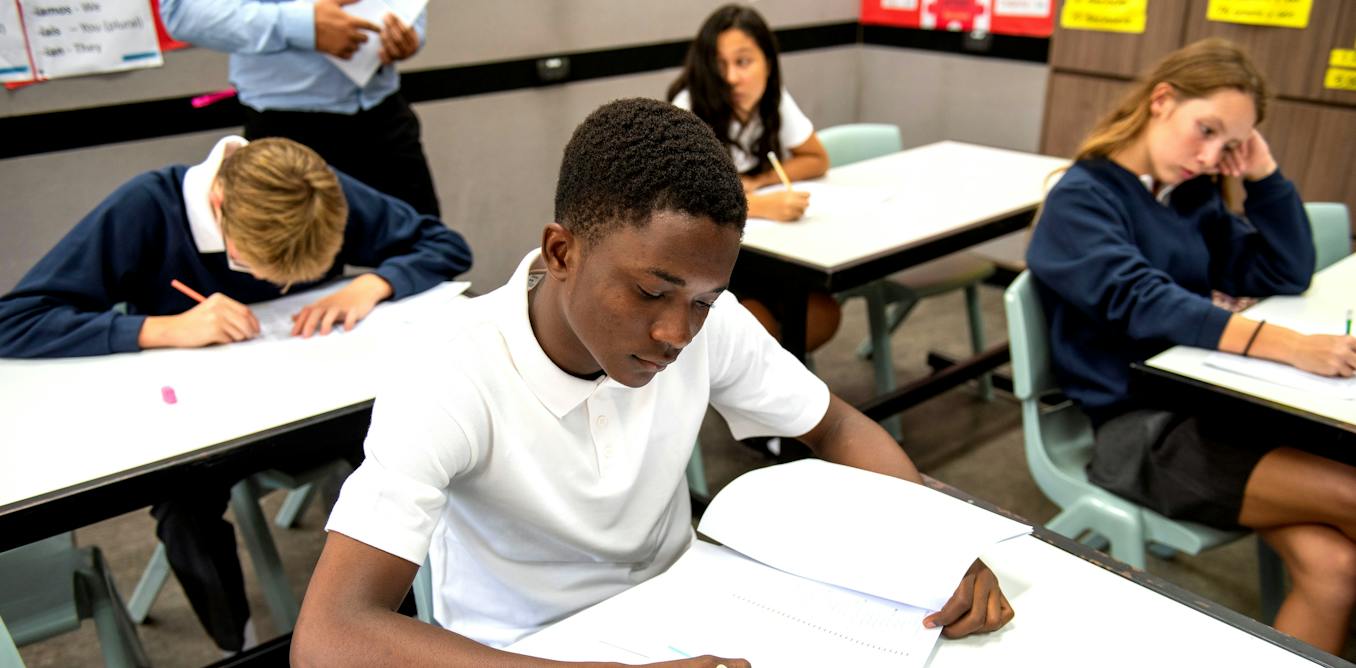
Northern Ireland is in the process of establishing a new curriculum for primary and secondary education. The proposed Northern Ireland Curriculum Framework 2028, TransformED – currently under consultation – sets out a new, knowledge-rich curriculum. Knowledge-rich means a strong understanding of subject-specific content, rather than, for instance, more general skills. There are many similarities with the 2013 educational reforms in England spearheaded by then education secretary Michael Gove, such as the influence of cognitive science and the belief that secure knowledge underpins higher-order thinking. Some of the most far-reaching proposed changes in Northern Ireland are in language teaching. Over the past 20 years, modern languages taught in schools in Northern Ireland have included French, German, Irish and Spanish. When the curriculum was last reformed in the early 2000s, there was a missed opportunity to include statutory languages in the primary school curriculum. This effectively rendered Northern Ireland as having European Union’s shortest compulsory period of language learning. Nevertheless, many of Northern Ireland’s post-primary schools teach [two or three languages]. The current curriculum requires the study of at least one language of the European Union but it provides ample flexibility to study more. The new proposals still do not include modern languages in primary school. They shift to focus attention on “a single core modern language”, only required at secondary school in the 11-14 age range. Teaching practice would be focused on the three pillars of phonics, vocabulary and grammar. This includes concentrating on teaching pupils a high-frequency list of 800 words. In Northern Ireland schools where teaching is in English, Irish is considered a modern language with the same status as French, German and Spanish. In Northern Ireland’s two Irish-medium post-primary schools, pupils learn through Irish and study English and either French or Spanish. This differs from other Celtic jurisdictions, where language provision has been expanded, not reduced. Since 2013, Scotland has offered all pupils the chance to learn at least two modern languages. The Republic of Ireland and Wales have bilingual plus one policies, meaning that all pupils learn Irish or Welsh, plus an additional foreign modern language. In fact, the explicit focus on only one core language from ages 11 to 14 in Northern Ireland is a significant policy shift not seen elsewhere in the British Isles. In England, language study is compulsory from ages seven to 14 and can include ancient languages in the primary phase. Depth of knowledge The argument from the Northern Ireland devolved government is that research evidence supports spending learning time concentrating on “developing depth of knowledge”. Yes, depth of knowledge of languages and linguistics is essential, but there is no peer-reviewed international research which says young people should only learn one language at school or that this should be confined to the 11-14 age range. The proposals prioritise depth of knowledge. Javier Bermudez Zayas/Shutterstock Informed by international research, EU policy sets a goal of all pupils acquiring, before the end of upper secondary, proficiency in the language of schooling and knowledge of two additional languages. It also calls for particular attention to be paid to language awareness in multilingual classrooms. In the UK, this approach has been widely embraced in recent changes to the curriculum in Wales. The word list of 800 high-frequency words, which differ across each of French, German, Irish and Spanish, is an approach that has also been used in England, where, at GCSE level, pupils have defined word lists. But as applied linguist Gianfranco Conti notes, a high-frequency word list tells us how often a lexical item occurs in a corpus a word is used but it does not tell us how useful that word will be to an 11-year-old. The word for “pencil case” may not be in the top 800 words, but it’s still important to a young person in a classroom and worth knowing, not least because it helps to explain gender in languages. The arguments for multilingualism are well rehearsed – and this is a time when Northern Ireland’s schools educate over 21,350 newcomer pupils and are home to speakers of more than 90 languages.. The decisions made now will shape language learning for a generation.
Proposed curriculum in Northern Ireland would restrict children’s language learning
Full Article
Original Source
Read the full article at Theconversation →KhanList aggregates and links to publicly available news content. We do not host full articles from third-party sources. Always verify important information with original sources.