
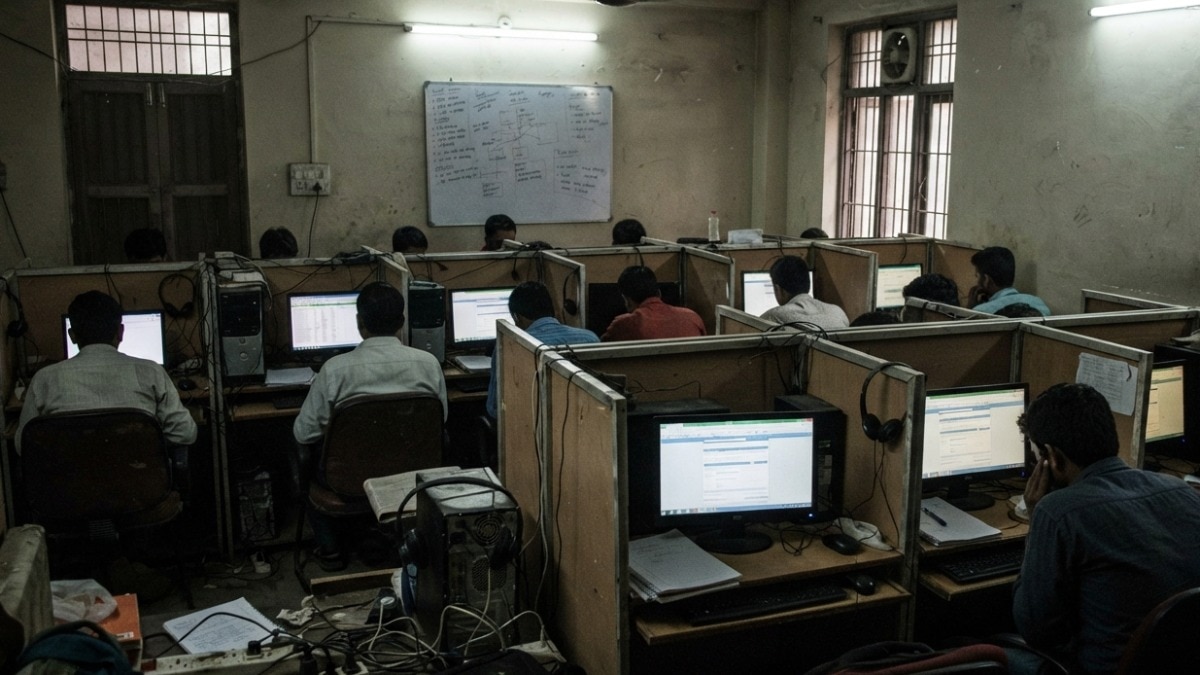
Promises of lucrative jobs in India turned into a nightmare for 164 foreigners, who were trafficked to the country, stripped of their passports and forced to cheat people back home through fraudulent investment schemes, Delhi Police said.In a major crackdown in Noida's Sector 136, the Delhi Police Crime Branch rescued 92 Indonesians and 72 Malaysians from premises being used as a base for an international human trafficking and cyber fraud network.A 25-year-old Malaysian national, Tan Guan Wei, has been arrested in connection with the case. A hunt is on for two key accused currently on the run.Delhi Police said the racket specifically targeted people in Indonesia and Malaysia with promises of attractive salaries and better career opportunities in India. However, after arriving in the country, their passports were confiscated, movements restricted, and they were made to work at a cyber fraud call centre. The Noida crackdown also brings into focus a wider pattern of cross-border cyber fraud, in which people are lured with fake job offers and forced to cheat victims in their home countries. In the past, Indian nationals were taken to South-East Asian countries, including Vietnam, Cambodia, Myanmar and Laos, on the promise of lucrative jobs and made to work in scam centres. POOR FOOD, PHYSICAL ABUSE, CONSTANT MONITORINGAs per the police, the rescued nationals were housed in paying guest (PG) accommodations, where they were served substandard food and prevented from moving around independently. Those who refused to participate in the fraud were physically assaulted to force them into compliance. A senior police officer said investigators had so far learnt that around two people were beaten up for resisting the operation.The network deployed a fleet of around 40 cabs to ferry the foreign nationals between their accommodations and the call centre. The arrangement ensured that their movements remained under the handlers' control."The cabs were deployed to transport them to the call centre and bring them back to their accommodations, ensuring that their movement remained under the control of the handlers," news agency PTI quoted the officer as saying.WRITTEN SCRIPTS, FAKE IDENTITIESPolice said the foreign nationals were trained to carry out a specific pattern of cyber fraud and given written scripts to follow while approaching potential victims, primarily in Indonesia and Malaysia.The operators created fake women's identities and social media profiles to contact unsuspecting people, strike up conversations and build online relationships. Once they gained their targets' confidence, they persuaded them to invest through fraudulent trading and investment platforms."Using these profiles, the foreign nationals were instructed to initiate conversations, develop online relationships and gradually gain the confidence of their targets. Once trust was established, the victims were persuaded to invest money through fraudulent trading and investment platforms," the officer said.The syndicate operated through websites and APK-based applications that promised high returns, making the investment opportunities appear legitimate.The money was then allegedly siphoned off through the network.E-MAIL ALERT LED COPS TO RACKETThe Crime Branch began investigating the operation after receiving an e-mail alert about the racket around a week ago."We got to know about the fraud after the crime branch received an email alert about the alleged racket around a week ago, following which its officers began developing intelligence about the network," a police officer said.Special Commissioner of Police (Crime Branch) HGS Dhaliwal said he constituted a specialised team immediately after receiving information about the operation."As soon as we received information about the cyber racket, I personally constituted a specialised team and directed the officers to take immediate action," Dhaliwal said.Initial intelligence suggested that around 60 to 70 foreign nationals were being held and forced to work in the operation.However, the number of people rescued during the raid turned out to be much higher, at 164.TWO KEY SUSPECTS ON THE RUNInvestigators have identified two men, Sunil Kumar and Sushil Bhati, as key links in the network. They are currently on the run"During the entire investigation, two names -- Sunil Kumar and Sushil Bhati -- cropped up. Bhati used to arrange the PG accommodations and transportation facilities. Both are on the run and will be arrested soon," a police officer said."Teams are conducting search in many states, including Uttar Pradesh, Haryana, Delhi, Punjab, Rajasthan and many other area. Important leads were also received about the whereabouts of Bhati and Kumar."Police have identified certain bank accounts maintained by the two men and used to pay rent and other operational expenses.Investigators are examining the financial trail to establish how the money moved through the network, identify its beneficiaries and trace the proceeds of the alleged fraud.The arrested Malaysian national, Tan Guan Wei, a resident of Negeri Sembilan, is being questioned about his role, his links with other members and his involvement in running the fraudulent platforms.174 PASSPORTS, 355 PHONES SEIZEDThe police seized a substantial amount of digital equipment and other material allegedly used to operate the racket. The recoveries include 355 mobile phones, 168 desktop computers, 26 laptops, 53 SIM cards and 174 passports.Of the 355 mobile phones, 335 were old or used handsets, while 20 were new devices in sealed packaging. The SIM cards included 31 international and 22 Indian connections.The seized passports comprised 95 Indonesian and 79 Malaysian documents.Servers and other electronic material were also recovered.Investigators are examining the devices to identify victims, trace communication channels and establish financial transactions linked to the fraudulent platforms.- Ends
Promised jobs but forced to scam: 164 foreigners trapped in Noida cyber fraud hub
Full Article
Original Source
Read the full article at Indiatoday →KhanList aggregates and links to publicly available news content. We do not host full articles from third-party sources. Always verify important information with original sources.