
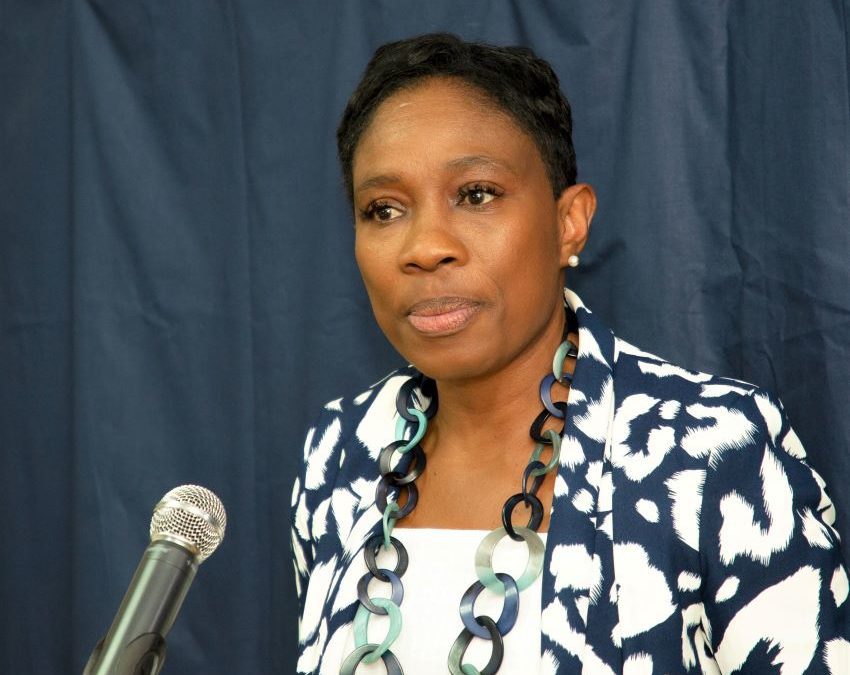
Minister of Agriculture Dr Shantal Munro-Knight. (File Photo) Some 600 families, including 400 drawn from the government’s One Family Programme, are expected to receive livestock, crop materials and technical support under a relaunched project at Deacons Farm, St Michael, Minister of Agriculture Dr Shantal Munro-Knight has announced. The Community Agriculture Response and Empowerment initiative, widely known as Project CARE, was launched on Tuesday to build household resilience, encourage agricultural entrepreneurship, and strengthen national food and nutritional security. Global economic pressures and food-supply challenges made a return to domestic food production and community self-sufficiency necessary, she said. “The intent is to be able to benefit the most vulnerable, those that can least afford it, to make sure that they are able to have affordable and nutritious food.” Under the household component, participating families will receive support covering three key nutritional elements: proteins, carbohydrates, and herbs or seasonings. Beneficiaries will be given choices ranging from broiler or layer chickens to rabbits, alongside sweet potato slips, cassava, yam, and various vegetable seedlings provided in partnership with CARDI and Soil Conservation Services. To address concerns about possible challenges after receiving the assistance, such as pest control, all 600 participating households will have access to Farmer Dave, a specialised mobile application developed by the Barbados Agricultural Development and Marketing Corporation (BADMC) to provide on-demand farm support, the minister said. The ministry will also assign BADMC officers to work directly with participants to help ensure the project’s sustainability. “We are crowding-in all of the assistance that will be needed for households to be able to grow their own food,” Dr Munro-Knight said. “The world and what is happening globally is forcing us to go back to the land—our land. If we do not do that, we will find ourselves sicker and more unhealthy because we are eating imported food that is not good for us, and the cost of living will increase.” You Might Be Interested In To remove barriers to entry, the farm ministry has also pledged that livestock, such as broilers reared at the household level, can be processed free of charge through state-owned abattoir Southern Meats. Participants seeking to expand production will be given space under the national feed programme to move towards commercial production. Beyond the household component, Project CARE will also focus on demonstration farms. Three are scheduled to be established during the current financial year, with the flagship site at Deacons Farm. The Deacons community farm already has a herd of 30 Blackbelly sheep – donated by the ministry – on land cleared by residents. “We are making Deacons our farm for demonstrating the best practices of crop production and livestock,” Dr Munro-Knight said. “We are coming along to support the effort. We will deliver and make sure that they have access to a water tank, fruit trees, and extension officers.” The remaining demonstration sites will focus on advanced agricultural techniques and regenerative farming practices, including soil experimentation, reduced pesticide application and integrated apiculture, the farm minister said as she invited firms to partner with the government, with the long-term aim of establishing at least one community demonstration farm in every parish. The third element of the initiative focuses on youth employment and entrepreneurship through agribusiness development. At Deacons Farm, the ministry is installing a specialised grass-palletising machine to allow young entrepreneurs to process, package and distribute livestock feed commercially. “Why should the ministry be palletising grass and trying to set up structures to sell it, when we can vet that within a community as an agribusiness?” Dr Munro-Knight asked. “We want to work with you to develop a model where you grow the business, distribute it, and sell it. It becomes the community’s own business in agriculture.” The fourth pillar, set for full release in November, involves two national innovation challenges designed to encourage public participation: ‘Carmeta’s Crown’, which invites citizens to submit new value-added agro-processed products for commercial shelf placement through Carmeta’s stores; and ‘Solve it for 60’, which asks Barbadians to propose solutions to five core agricultural challenges. Dr Munro-Knight said the initiative aims to bridge the gap between national agricultural targets and household realities. “Agriculture must touch people—it must touch the hearts, the minds, and the hands of people in a real and tangible way,” she said. “It is about delivering greater employment opportunities for young people and cheaper food for our citizens.” (RR)
Project to bring farming to Deacons Farm, support 600 families
Full Article
Original Source
Read the full article at Barbadostoday →KhanList aggregates and links to publicly available news content. We do not host full articles from third-party sources. Always verify important information with original sources.