
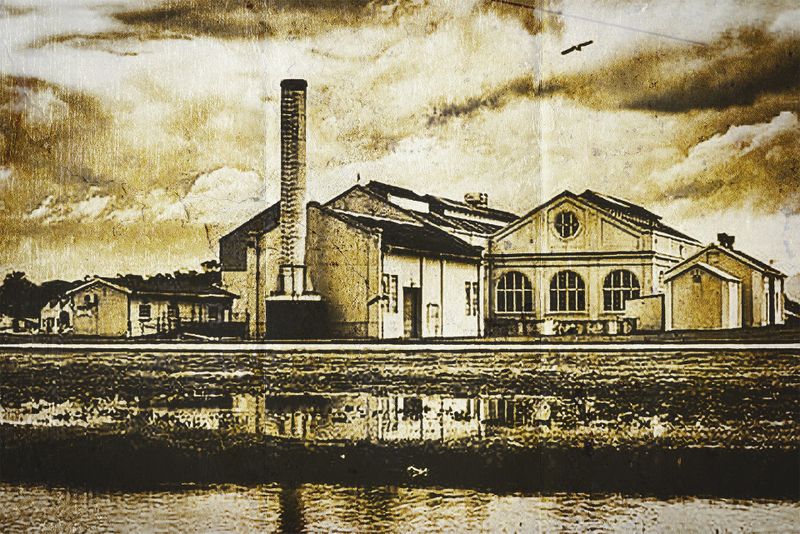
You can read parts 1, 2, 3, 4,5 and 6 here.South Africa signed the Biological and Toxin Weapons Convention (BTWC), the first multilateral treaty to ban an entire class of weapons, on 10 April 1972, and ratified it in November 1975.Fifty-plus years later, and as concerns mount about the use of chemical and possible use of biological weapons in what has become known as grey warfare in Ukraine and elsewhere, it is an appropriate time to reflect on the rise and decline of South Africa’s biological weapons programme, the only country in Africa to develop biological (and nuclear) capabilities.There are profound lessons to be learnt about how to – and how not to – govern the dismantling of high-consequence programmes such as these.In this series, we focus on the biological programmes that went by the benign codename of Project Coast, a covert endeavour that collectively represents some of the worst practices when it comes to building and dismantling a biological weapons programme responsibly. South Africa’s prior history with explosives and chemicals ensured that when the apartheid government initiated the first steps to constructing their own biological and chemical weapons programme in the 1980s, they would be able to look towards experienced experts and previously tested structures as a template to draw upon.Witwatersrand Gold RushIt was a history that began in 1885 in the Witwatersrand, South Africa. Two prospectors, George Harrison and George Walker, had just stumbled upon the first bits of gold of what became known as the Witwatersrand Gold Rush.The event would propel South Africa into becoming the gold capital of the world, with upwards of 40% of the world’s mined gold originating from the region, and it would also encourage the development of a complementary industry: chemical and explosives manufacturing.Mining hard quartzitic gold-bearing rock solely on imports proved expensive and unreliable, leading to a growing demand for domestic production.Early view of the Dynamite Company factory in Modderfontein. (Photo: AECI Dynamite Company Museum) Three major factories were set up: The Dynamite Company in Modderfontein (1896), which was the world’s largest dynamite factory at the time; the Cape Explosive Works in Somerset West outside Cape Town (1903), which was set up to support the burgeoning diamond mining industry under De Beers; and last, the Kynoch and Company factory in Umbogintwini (1909) in today’s KwaZulu-Natal.Chemical productionBy 1911, the explosives industry was by far the largest manufacturing industry in the country, supporting more than 3,000 employees, and giving South Africa an industrial base for high-volume chemical production that no one yet had reason to see as anything but a mining success story.To accommodate the explosives industry, South Africa’s chemical production also expanded. Interest in substituting nitroglycerine with the cheaper ammonium nitrate resulted in the construction of a synthetic ammonia plant and oxidation plant in Modderfontein in 1932. The explosives and chemicals facilities in South Africa would also be consolidated under the African Explosives and Chemical Industries (AECI).The period saw the establishment of an increasingly hawkish government, especially with the appointment of Oswald Pirow as Minister of Defence in 1933, who was a fervent anti-communist and nationalist.Pirow wanted to expand South Africa’s sphere of influence to encompass much of South and Central Africa. Thus, in both the 1933 and 1936 Imperial Defence conferences, Pirow would advocate for the production of chemical weapons and ask for British assistance. In order to bolster South African defence, the British, in collaboration with AECI, approved the building of two facilities in Klipfontein and Firgrove that would produce mustard gas in 1940.Along with the facilities, Britain and later the United States would provide experts to oversee the programme and instruct their South African counterparts. Despite friction between South Africans and their allied counterparts, the programme was successful, with the capacity of the Klipfontein plant being rated at 300 tons per month by the end of 1944. Although the programme and facilities would be shut down by the end of the war, South Africa would seek to preserve the expertise and research gained. The CSIR and defence-related scienceAs a result, in October 1945, the Council for Scientific and Industrial Research (CSIR) was established. It was a state-funded body that conducted directed research in the national interest, either independently or in cooperation with private and public sector partners, with the explicit goal of fostering the country’s industrial and scientific development.Although it was conceived initially as an honest tool for industrial and scientific development, the government realised that the CSIR’s purpose was broad enough to encompass low-level defence-related science.By doing so, South Africa ensured that the experience and personnel expertise gained from World War 2’s chemical weapons programme wasn’t lost but merely redirected to other projects. Specifically, the Applied Chemistry Unit, later renamed Mechem in the late 1960s, was particularly involved with defence research, looking into chemical weapons.In the 1970s, the head of Mechem at the time, Dr JP de Villiers, would publish several papers with other Mechem scientists that documented Mechem’s findings. The CSIR showed how a mandate as broad as “national interest” could keep expertise in chemical weapons alive for decades without anyone ever having to say so.Birth of SasolWithin the private sector, South Africa continued to expand its chemicals industry as a way to skirt around geopolitical isolation. South Africa had a vested interest in decoupling itself from global imports of oil and becoming more energy self-sufficient. With a lack of domestic oil deposits, the petrochemical company, Sasol, was established to meet energy demands by converting the country’s abundant coal to liquid fuels. As of 2015, Sasol produces almost 160,000 bbl/day (barrels per day) of liquid fuels and serves 40% of the South African market. Along with petrochemicals, South Africa also moved into manufacturing synthetic rubbers and plastics. In 1967, Sentrachem was established from the merging of several large chemical companies.Sentrachem would undertake several major projects, including joint ventures to produce synthetic rubber chemicals and plastics. By the 1970s, South Africa’s chemical sector had given the country large industrial capacity and a diversified chemical economy, but also the foundation to make a chemical weapons programme possible.Template for Project CoastSouth Africa’s prior history with explosives and chemicals ensured that when the apartheid government initiated the first steps to constructing its own biological and chemical weapons programme, Project Coast, in the 1980s, it would be able to look towards experienced workers and previously tested structures as a template to draw upon.In fact, Sentrachem would absorb Delta G Scientific in 1993, which was one of the front companies for Project Coast, further demonstrating how the line between state and private companies blurred. South Africa did not have a weapons programme waiting to happen. The responsibility lies with the people who made the deliberate decision to use such infrastructure for nefarious purposes.This is not a justification for why scientific and industrial development should be purposely neglected. This is a lesson in accountability and responsibility. Someone must be willing to ask what their research and industry will eventually make possible, or else the next Project Coast will look, at every step, just as reasonable as the last one did. DMBrendan Beng was a 2025 and 2026 summer intern, Andrea Uhlig a Research Associate and Wilmot James, a former MP (South Africa), Professor at the School of Public Health, Senior Adviser to the Pandemic Center and Director of the Africa Initiative at Brown University, Providence, Rhode Island. James is also a member of the Advisory Panel to the Signature Initiative to Mitigate Biothreats in Africa (Simba), a collaboration between the G7-led Global Partnership Against Materials and Weapons of Mass Destruction and the Africa CDC. We are grateful to Razie Salie of the Nelson Mandela Foundation and Jessica Saunders of the Churchill Archives Centre, Cambridge University, for their archival support.
PROJECT COAST: From humble beginnings, an SA weapons programme takes advantage of a growing chemical industry
Full Article
Original Source
Read the full article at Dailymaverick →KhanList aggregates and links to publicly available news content. We do not host full articles from third-party sources. Always verify important information with original sources.