
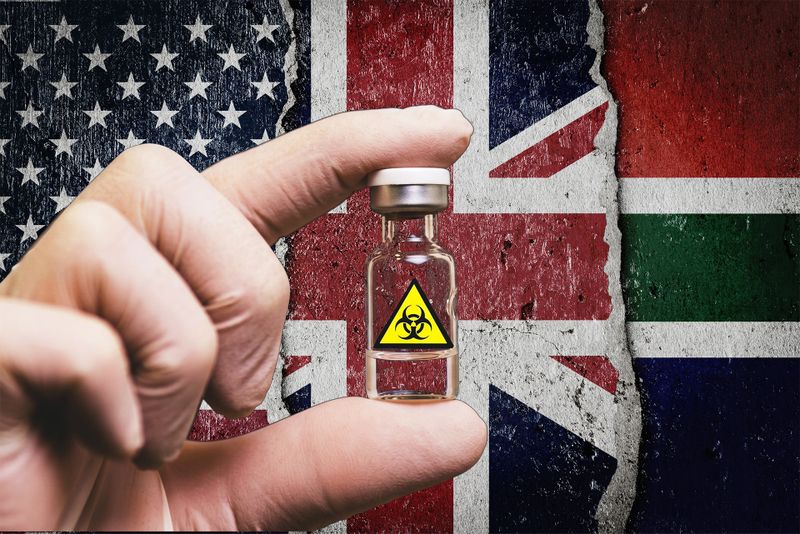
On 10 April 1972, South Africa (SA) signed the first multilateral treaty to ban an entire class of weapons, the Biological and Toxin Weapons Convention (BTWC), and ratified it in November 1975.Fifty-plus years later, as concerns mount about the use of chemical and possible use of biological weapons in what has become known as grey warfare in Ukraine and elsewhere, it is appropriate to reflect on the rise and decline of SA’s biological weapons programme – the only country in Africa to develop biological (and nuclear) capabilities. On 11 April 1994, the British Ambassador to South Africa Sir Anthony Reeve and US Ambassador Princeton Lyman, instructed by their respective governments, delivered a démarche, the formal diplomatic step by which one government expresses its concerns to another, to the last South African president of the apartheid era, Frederik Willem de Klerk. Dismantle ‘Project Coast’The UK and US demanded full and complete dismantling of the late-stage apartheid government’s covert offensive chemical and biological weapons programme called Project Coast, started by De Klerk’s predecessor PW Botha and his Minister of Defence, Magnus Malan. The British and Americans were fearful that Project Coast’s lethal technology and programme secrets would proliferate to rogue states and/or terrorist groups just as Nelson Mandela and the ANC prepared itself for the first democratic elections to be held on 26-29 April 1994, having the expectation of taking power, which it did with 62.9% national support. De Klerk ordered the dismantling of SA’s six completed and one partially completed Hiroshima-style nuclear weapons on 26 February 1990. He also ordered the shutting down of the offensive aspects of the chemical and biological weapons program.FW de Klerk was heavily invested in returning SA, then suffering the consequences of boycotts, disinvestment and punishing restrictions, to the Western family of nations. After the nuclear weapons were dismantled, South Africa acceded to the Nuclear Nonproliferation Treaty (NPT) on 10 July 1991. The Chemical Weapons Convention was likewise signed on 14 January 1993. SA had also been one of the original signatories to the 1972 Convention on the Prohibition of the Development, Production and Stockpiling of Bacteriological and Toxic Weapons and their Destruction (the BTWC, ratified on 3 November 1975), but Project Coast’s offensive components deceitfully violated its provisions, which had to be remedied. Controlling weapons of mass destructionThe Non-Proliferation of Weapons of Mass Destruction Act (No. 87 of 1993) was passed by the so-called Tri-Cameral Parliament (representing white, coloured and Indian minorities) on De Klerk’s watch. The legislation provided for control over all weapons of mass destruction and for the establishment of a Council for Non-Proliferation that today is lodged in the Department of Trade, Industry and Competition (DTIC), its work subject to Parliamentary oversight. Mandela, a longstanding advocate of non-proliferation, as well as the broader ANC leadership, supported de-nuclearisation and the termination of Project Coast, though some felt that the ANC should have taken more of the lead – and received credit for – taking these bold steps.Mandela was a firm supporter of disarmament, demilitarisation and a world free of weapons of mass destruction. In the aftermath of WW2 and the start of the Cold War he railed (in 1951) against warrior leaders “who attempted to create conditions under which common men might be inveigled into supporting the building of more and more atomic bombs, bacteriological weapons, and other instruments of mass destruction”. US Ambassador James Joseph, appointed by President William J Clinton to succeed Lyman in 1996, remarked that “in the international area, he [Mandela] was an especially important voice in efforts to maintain the nuclear non-proliferation edifice”. Upon assuming the presidency in 1994, as a committed multilateralist, Mandela worked energetically to return SA to the United Nations as an active, principled and committed member state. Nelson Mandela and President FW de Klerk receive the Nobel Peace Prize at City Hall in Oslo, Norway on 10 December 1993. (Photo: David Levenson/Getty Images) Mandela and De Klerk in Oslo on 10 December 1993. (Photo: David Levenson/Getty Images) SA’s democratic transitionLike life, things are never straightforward, and SA’s transition to democracy was particularly vexed. It should not be forgotten that South African democracy was a result of a negotiated settlement between a militarily strong but morally compromised apartheid state and a morally credible but militarily weak anti-apartheid partnership alliance led by Mandela’s party, the ANC. As a result, a balance had to be maintained: keeping the democratisation momentum going without driving the security forces to take an anti-constitutional and anti-democratic – or in the parlance of the left – counter-revolutionary posture.How to find, keep and maintain that balance defined the difference between Mandela and his successor Thabo Mbeki. It also created the conditions for the first financial corruption scandal of the democratic era – the so-called “arms deal” to strengthen the defence forces – to occur on Mbeki’s watch, shaping the modern history of SA ever since. I was a participant in and not simply an observer of that history, and I carry both the pride of our achievements, and blemishes (plus a scar or two) of our failures. South Africans dug themselves out of the dead-end created by apartheid, supported by many thousands who were part of the international community, and voluntarily dismantled the country’s weapons of mass destruction. Leadership But, as much as change in SA was people-driven (with our mass democratic movement it certainly was), as American historian Arthur J Schlesinger Jr once remarked, leadership is really what makes the world go round. Nelson Mandela and FW de Klerk rose to the occasion, becoming the gold stars of our transition, rightly receiving the Nobel Prize for creating peace in a country many believed, with good reason, to be on a road to racial conflagration. We had a choice to either continue with a so-called military solution (and if we did, we likely would look like Syria or Gaza today), or to find a political solution. It was a choice, and we chose the latter.In what seemed like a sensible division of labour at the time, Mandela left domestic governing to his deputy and ultimate – if not first-choice – successor, Thabo Mbeki, assisted initially by De Klerk in a government of national unity that ended in June 1996. Mbeki, who had spent 1969 to 1971 in the Soviet Union for training, navigated the secret world of exile politics for decades. He adhered to a concept of democracy closer to Lenin than de Tocqueville, combined with his guarded disposition about the ANC-in-exile human rights transgressions that infuriated Mandela, a coddling of the country’s defence forces, a dislike of the TRC’s work, and interventions that impacted the dismantling and rollback of Project Coast. DM Wilmot James, a former South African MP, is a professor at the School of Public Health, Senior Advisor to the Pandemic Centre and Director of the Africa Initiative at Brown University, Providence, Rhode Island. He is also a member of the Advisory Panel to the Signature Initiative to Mitigate Biothreats in Africa (SIMBA), a collaboration between the G7-led Global Partnership Against Materials and Weapons of Mass Destruction and the Africa CDC. Brendan Beng was a 2025 and 2026 summer intern, and Andrea Uhlig a Research Associate at the Pandemic Center. James is grateful to Razia Saleh of the Nelson Mandela Foundation and Jessica Saunders of the Churchill Archives Center, Cambridge University.
PROJECT COAST: Apartheid’s covert operation that built and dismantled SA’s biological weapons programme
Full Article
Original Source
Read the full article at Dailymaverick →KhanList aggregates and links to publicly available news content. We do not host full articles from third-party sources. Always verify important information with original sources.