
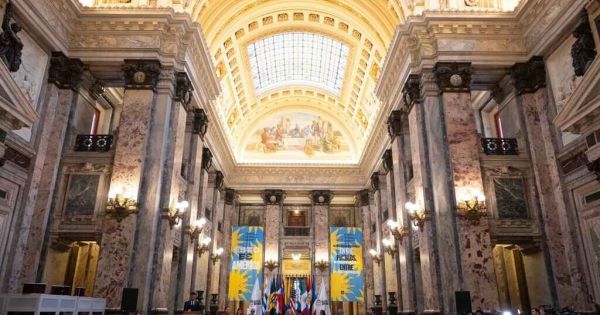
Saturday, August 22nd 2026 - 08:28 UTC Participants questioned Washington's conduct in the region, citing that intervention, strikes on vessels in the Caribbean and sanctions on Cuba, and called for greater regional autonomy The opening session of the third Pan-American Congress, held on Friday at the Legislative Palace in Montevideo, combined criticism of United States policy towards Latin America with calls for self-criticism within progressive forces. More than 150 lawmakers, former presidents, ministers and political figures from fifteen countries are taking part, according to organisers. Former Chilean president Gabriel Boric delivered the most widely noted speech, calling for consistency between political discourse and action. He criticised what he described as a “new imperialism” driven by Donald Trump and said the major powers “today do not speak of democracy, but directly of oil at the expense of a people.” He then turned a demand on his own allies: “We do not believe that violating international law is the way to intervene illegitimately in another people, but we also have to say very clearly that Maduro had stolen the elections and that his presidency at that time was also illegitimate.” He warned that if the left fails to acknowledge such distinctions, it will struggle to persuade its own electorates. Nicolás Maduro was captured in Caracas on January 3 during a US military operation and remains in custody in the United States. Delcy Rodríguez has since served as Venezuela's acting president. Participants questioned Washington's conduct in the region, citing that intervention, strikes on vessels in the Caribbean and sanctions on Cuba, and called for greater regional autonomy. Former Colombian president Ernesto Samper urged a revival of Latin American integration and closer ties with the Global South, arguing the region holds strategic water, food and mineral resources but lacks the political coordination to defend its interests. US Representative Pramila Jayapal shifted the debate to her own country, saying opposition is growing to taxes being spent on military operations abroad rather than on health services and living standards. She defended a foreign policy based on dialogue and diplomacy as the only route to “a lasting peace.” Uruguay's vice-president, Carolina Cosse, focused on disinformation and the contest for public attention. “Indifference to truth leads inexorably to totalitarianism,” she warned. Mexican Morena official Carolina Rangel proposed combining economic growth with social rights and called for an agenda covering care policies, energy transition, productive integration and digital sovereignty. The forum, created in Bogotá in 2024 on the initiative of then Colombian president Gustavo Petro, is organised this year around four themes: peace, security and multilateralism; sustainable development and regional integration; digital sovereignty and artificial intelligence; and wellbeing and care. Sessions continue until Sunday and will conclude at the Parlasur headquarters.
Progressive leaders gathered in Uruguay denounce US interference and acknowledge their own mistakes
Full Article
Original Source
Read the full article at En →KhanList aggregates and links to publicly available news content. We do not host full articles from third-party sources. Always verify important information with original sources.