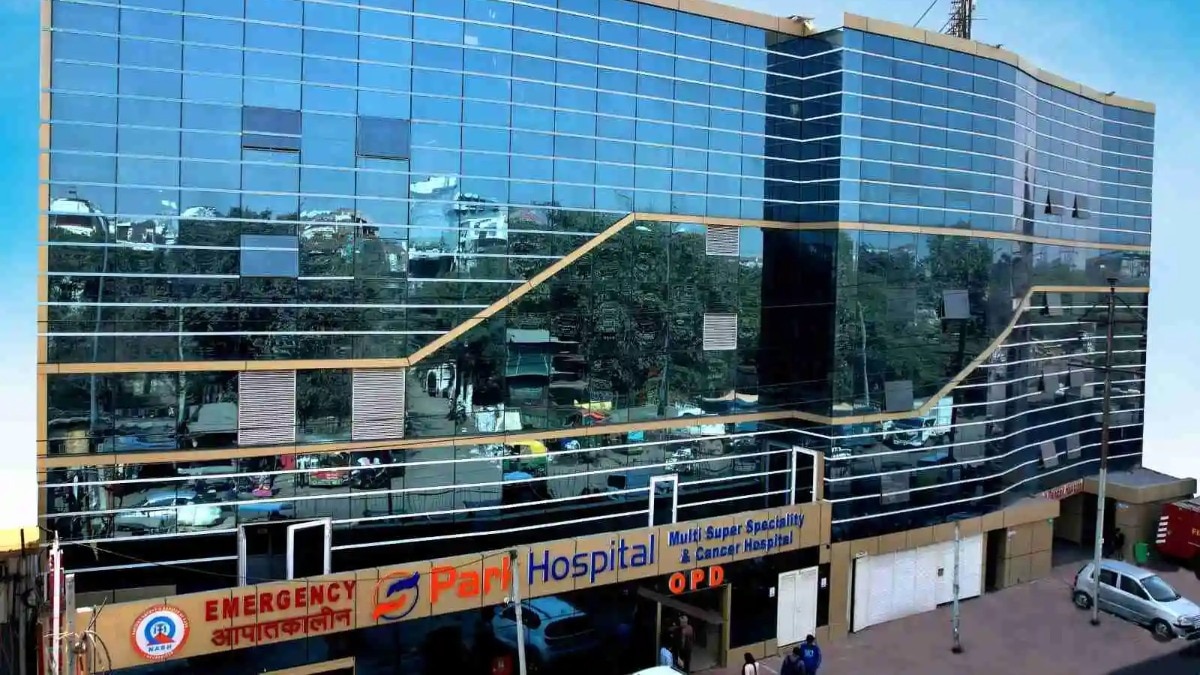
A parliamentary panel has proposed linking basic private hospital room charges in large metros to nearby three-star hotel tariffs. Private hospitals say the move ignores clinical costs and could disrupt pricing, transparency reforms and medical tourism.Pic only for representative purpose The parliamentary recommendation to benchmark basic room charges at private hospitals in large metropolitan cities against the average tariff of nearby three-star hotels has opened a fresh front in the long-running battle over healthcare costs – and private hospitals are preparing to push back.The Association of Healthcare Providers – India (AHPI), which represents a large network of private and corporate hospitals, plans to make a detailed submission to the parliamentary committee arguing that an across-the-board cap on room rates could be counterproductive. Its central argument is that a hospital room cannot be treated as a hotel room simply because both provide accommodation.The association, in its submission reviewed by India Today, says the price of a hospital room reflects far more than the physical space occupied by a patient.It includes the infrastructure around that room, staffing, monitoring equipment, infection-control requirements, emergency support and the clinical complexity of patients being treated. The parliamentary panel, in its 176th report on “Affordability and Accessibility of Healthcare Facilities in Public and Private Sector”, has last week nevertheless sought an external benchmark for basic rooms in private hospitals in large metros.The recommendation is part of a wider push for greater transparency in private healthcare pricing, including regulation of charges for essential procedures and diagnostics, comprehensive cost estimates before major treatments and mechanisms to address billing disputes.WHY HOSPITALS OPPOSE CAP AHPI's submission argues that room pricing is already subject to restrictions in several segments of the healthcare market, including insurance, Ayushman Bharat Prdahan Mantri Jan Aarogya Yojana (AB-PMJAY) and Central Group Health Insurance Scheme (CGHS).Its contention is that patients paying privately, or medical tourists, should retain the choice of paying for higher-end accommodation if they can afford it.Giridhar J Gyani, director general of AHPI, put the argument in stark terms: “Why can't patients have an option of choosing the room category they can afford?”The association's larger concern is that medical tourism could be hit if hospitals are forced into a uniform basic-room pricing structure. India has positioned itself as a destination for patients seeking advanced procedures at relatively competitive costs, and private hospitals say part of that proposition includes high-end facilities and accommodation.Gyani's point is essentially that a patient travelling from abroad for complex treatment is not necessarily looking for a bare-bones hospital room. AHPI believes hospitals should be able to offer different categories, with the price reflecting the facilities and services attached to each category.The association also argues that the economics of private healthcare are more complicated than the headline room tariff suggests.According to its planned submission, revenues from medical tourists, cash-paying patients and those covered by private insurance are used to cross-subsidise patients covered under government schemes, particularly PM-JAY, CGHS, Ex-Servicemen Contributory Health (ECHS) and Employees’ State Insurance (ESI).Its argument is that government health schemes often reimburse hospitals at package rates that are substantially below what providers describe as market rates. Revenue from other categories of patients, AHPI says, helps make participation in such schemes viable.This is also why the association is expected to argue that pricing interventions need to consider the financial ecosystem of a hospital rather than regulate one component of the bill in isolation.PATIENTS SEE ANOTHER PICTUREThe pushback from hospitals comes against a backdrop of considerable public dissatisfaction with private healthcare bills.A new LocalCircles survey which collected 23,084 responses from citizens across 306 districts and found that 68% of respondents who had used private hospital services in the previous three years said they had faced excessively high treatment prices. Another 63% complained of excessively high prices for tests.Room and ICU charges themselves were flagged by 56%, while 51% pointed to expensive medicines and consumables. Forty per cent reported overbilling of medicines or consumables and another 40% encountered unexpected or unexplained charges. Only 14% said they had not experienced any of the listed billing problems.The survey does not, by itself, establish that every charge was unjustified. But it captures a perception that is increasingly central to the policy debate: patients often struggle to understand what they are being charged for and why.That concern overlaps with the parliamentary committee's broader recommendations on billing transparency. The panel has called for hospitals to disclose rates more clearly and for tertiary-care hospitals to provide comprehensive estimates of likely treatment costs before major procedures.The affordability gap is also visible in official expenditure data. The 80th round of the National Sample Survey, covering January-December 2025, put the average cost of hospitalisation at Rs 6,631 in government hospitals against Rs 50,508 in private hospitals - nearly an eightfold difference.For childbirth, average out-of-pocket expenditure was Rs 37,630 in private hospitals compared with Rs 2,299 in government facilities.A RATE CALCULATOR THAT VANISHEDThe current argument over whether healthcare prices can -or should - be regulated has a striking precedent.When rules were being framed under the Clinical Establishments (CE) Act, 2010, a provision was included in 2013 to define a range of rates for procedures and services.In 2014, the Union health ministry constituted three committees: one to list procedures and services, another to examine existing rates and a third to develop a methodology for costing them.Dr Arun Gadre, an activist-doctor associated with the Alliance of Doctors for Ethical Healthcare (AEH) and Jan Swasthya Abhiyan, was tasked with developing a “rate calculator” that could serve as a guiding framework for private hospitals.The idea was not simply to impose arbitrary prices.Dr Gadre's framework attempted to factor in the costs involved in providing medical services and even left room for hospitals to earn a reasonable profit. The larger objective was to give patients some indication of what a procedure should broadly cost and reduce the possibility of surprise bills.The experiment, however, did not reach implementation. In 2016, the Centre changed course, telling the committees that health was a state subject and that the Centre should not attempt to regulate private hospitals directly. The committees were subsequently disbanded.The episode is relevant today because it shows that the question of hospital pricing is not new – nor is the difficulty of translating the principle of affordability into a workable national formula.'CORPORATISATION AT HEART'For Dr Gadre, however, the three-star benchmark is not the central issue.“I don't make much of the committee report because it scratches only the surface when the issue is much larger,” he said, arguing that the deeper problem is the growing corporatisation of healthcare.Dr Gadre's concern is that merely regulating room rents will not address practices such as unnecessary procedures or overcharging and other malpractices if corporate healthcare entities are allowed to pursue profits without sufficiently clear regulations and enforceable treatment protocols.He also pointed to the distinction between ethical obligations imposed on individual doctors and the absence of comparable norms governing corporate entities.He is also sceptical about how much weight parliamentary recommendations ultimately carry.Dr Gadre cited the example of a recommendation on rationalising trade margins for drugs sold through hospital pharmacies, which he said was made years ago and widely welcomed but has still not been implemented.- EndsPublished On: Aug 12, 2026 16:15 IST
Private hospitals push back against hotel-linked room charge benchmark
Full Article
Original Source
Read the full article at Indiatoday →KhanList aggregates and links to publicly available news content. We do not host full articles from third-party sources. Always verify important information with original sources.