
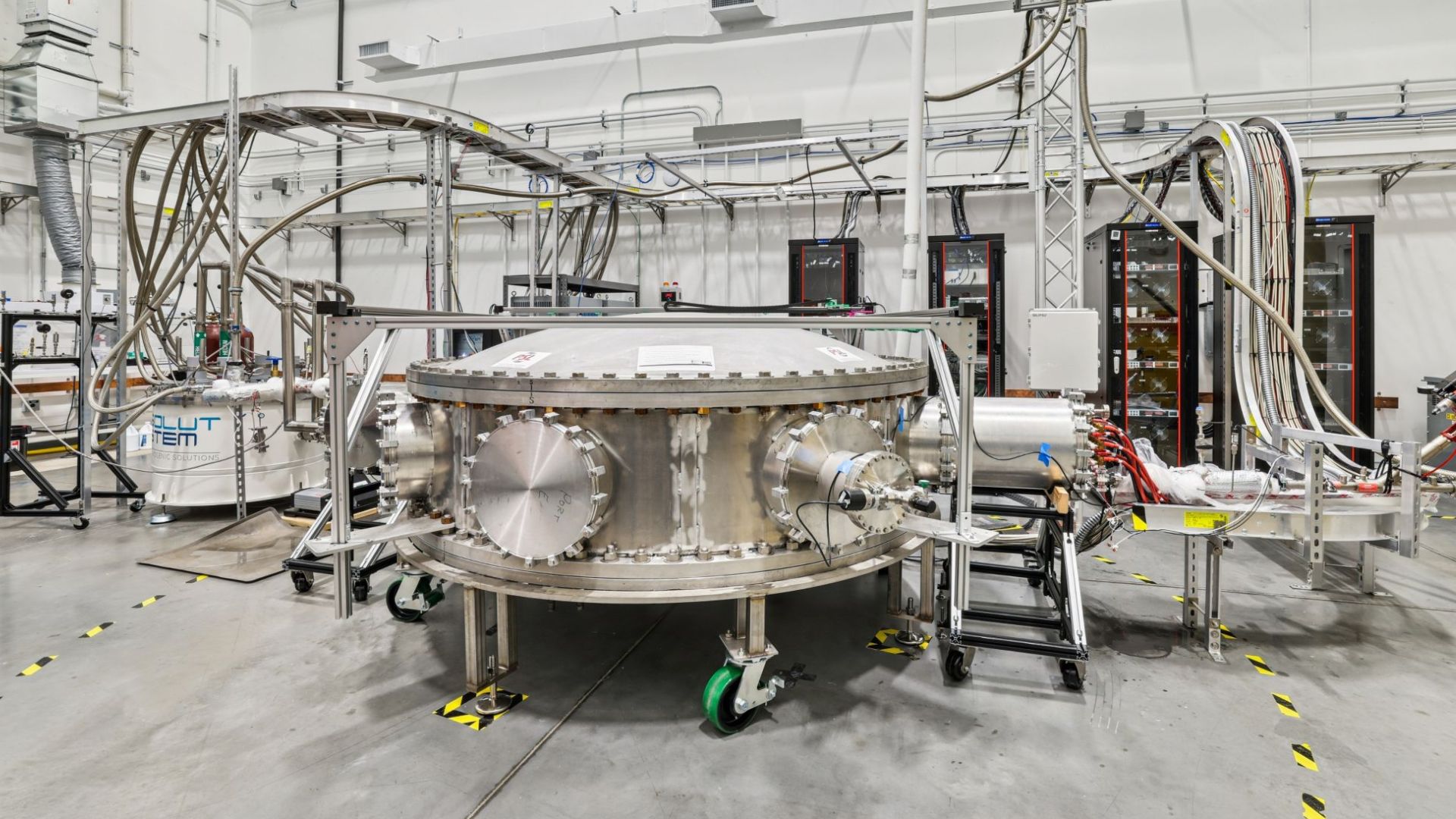
Thea Energy has completed an extension of its Series B financing round to support the engineering and manufacturing of its nuclear fusion systems. The expanded round adds backing from Brevan Howard Macro Venture, Aloniq, ALJ Investments, Beyond Earth Ventures, and other global institutional participants. These funds build upon a previous 100 million dollar investment round led by the US Innovative Technology Fund. The capital is designated to establish a second operating facility in Northern New Jersey, scale domestic magnet manufacturing lines, and accelerate development of the company’s demonstration hardware. Nuclear fusion aims to generate clean, baseload electricity by heating light atomic nuclei into a plasma until they fuse and release energy. Because plasma operates at extreme temperatures, power plant designs must keep it contained inside a vacuum vessel using strong magnetic fields. In the arena of nuclear fusion, magnetic confinement systems have relied on two primary configurations; they are tokamaks and stellarators. Tokamaks generate magnetic fields by driving strong electric currents directly through the plasma itself. While tokamaks are widely studied, these internal currents can cause sudden plasma turbulence and operational disruptions. Solving problems with stellarators Stellarators solve this problem by generating all necessary magnetic fields from external coils surrounding the vessel. This external approach maintains plasma stability without internal currents. This, in turn, allows the system to operate continuously in a steady state. However, manufacturing standard stellarators is full of hurdles. Conventional designs rely on large, non-planar magnetic coils with complex, twisted geometries. To solve this manufacturing bottleneck, Thea Energy—a spinout from Princeton University—has redesigned the stellarator using flat, high-temperature superconducting magnets. Instead of forcing physical metal coils into complex shapes, the company arranges modular arrays of flat coils around the reactor. Software algorithms then dynamically adjust the electrical inputs to shape the magnetic field computationally. This modular planar architecture allows the hardware components to be built using standard, high-volume production techniques. The company has spent two years developing and validating this magnet architecture. Recent testing confirmed that the planar shaping coils consistently reach the required magnetic strength and spatial precision targets. The company’s first integrated system, named Eos, will incorporate approximately 300 of these planar superconducting coils to sustain steady-state fusion conditions. Engineering teams are currently evaluating prospective sites for the Eos facility. Modeling plasma behavior To model plasma behavior prior to physical construction, Thea Energy launched a joint initiative with NVIDIA, Synopsys, Argonne National Laboratory, and the Princeton Plasma Physics Laboratory. The group is building a digital twin to simulate field interactions and plasma dynamics in real time. These development stages support Helios, the company’s planned commercial power plant design. The preconceptual architecture for Helios was certified by the US Department of Energy through its Milestone-Based Fusion Development Program. In parallel, the company secured a 20 million dollar award from the Department of Energy’s ARPA-E SCALEUP program to expand domestic manufacturing for its modular coils. Alongside these technical milestones, the company is conducting early talks with utilities, hyperscalers, and energy buyers. Get the latest in engineering, tech, space & science - delivered daily to your inbox.An active and versatile journalist and news editor. He has covered regular and breaking news for several leading publications and news media, including The Hindu, Economic Times, Tomorrow Makers, and many more. Aman holds expertise in politics, travel, and tech news, especially in AI, advanced algorithms, and blockchain, with a strong curiosity about all things that fall under science and tech.
Princeton’s nuclear fusion reactor spinout scales flat superconducting magnets for commercial plants
Full Article
Original Source
Read the full article at Interestingengineering →KhanList aggregates and links to publicly available news content. We do not host full articles from third-party sources. Always verify important information with original sources.