
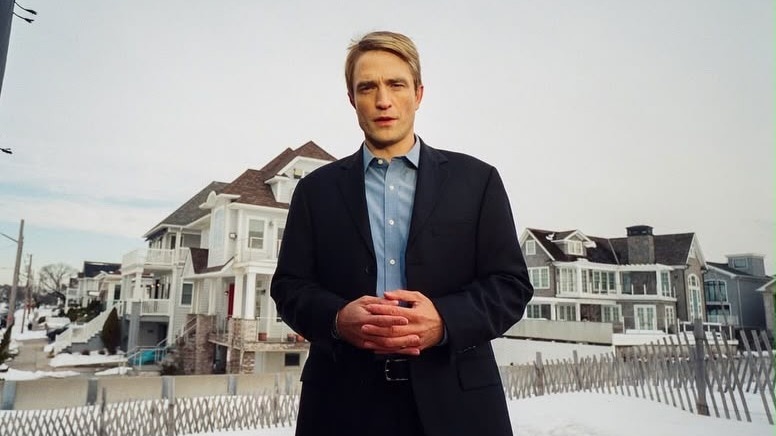
Writer Ajon Singh [of Indian origin] is elated with the response to Primetime [his first feature film], followed by unanimous praise for Robert Pattinson’s performance and the growing awards buzz around the actor. Singh says he hopes Pattinson gets the recognition he deserves for his performance. In an interview with India Today, Ajon discusses how Pattinson came on board as an actor for Primetime, why the film takes a heightened approach to its subject, and what inspired him to portray Chris Hansen as a complicated figure rather than a straightforward villain.“It’s hard to even wrap my head around. With awards, the business is so out of your control. All you can control is the actual piece of work,” Singh tells India Today exclusively when asked if the pre-buzz around Rob and Oscar nominations has got his expectations high.Ajon, who makes his feature debut with Primetime, is keen to see Pattinson receive recognition for a career that has seen him move between independent cinema and major studio productions. “Beyond anything related to me, we really wanted Rob to get recognition because he’s had such a storied career and has never even received a nomination. Our hope is that he gets some recognition for this film because, in my opinion, there are very few people, if any, doing it better than him right now. He is in rarefied air,” he says.While awards remain uncertain, the warmth Singh has received from Indian audiences has been a welcome constant. The writer, who is of Indian origin, says viewers have reached out from across the country, sharing photographs and messages that have made the film’s reception feel personal.How Robert Pattinson came on board Pattinson’s involvement in Primetime began with a conversation about producing the film rather than starring in it. “When I write, I generally imagine three or four different actors delivering the lines. That’s my practice for hearing the dialogue and seeing whether it sounds realistic and natural, or heightened in the way I intended. When I first met Rob, I asked him if he would consider acting in the movie because I thought we could do something really special. He said he wanted to produce it instead. He felt it was a little too controversial for where he was in his career,” Singh recalls. BTS stills from Primetime. Credit: A24/Lionsgate Movies Finding a producer had been a challenge, with the subject matter making potential backers hesitant. Pattinson’s decision to come on board as a producer was therefore significant, even before the possibility of him playing Hansen resurfaced.“I needed a producer anyway, and I couldn’t find one. Nobody wanted to produce the film because it was so controversial, so Rob coming on board as a producer was great,” Singh admits.The turning point came during a dinner attended by Pattinson, his producing partner Brighton, director Lance Oppenheim and Singh. What began as a discussion around the project gradually became a conversation about the character himself.“Then we had this epic dinner with Rob, his producing partner Brighton, director Lance Oppenheim and me. We stayed up very late at his house, and by the end of the night, Rob was reciting lines from the script. He was also talking about how he would run around a reservoir in Los Angeles listening to Chris Hansen’s podcast. I thought he was considering acting in the movie,” Singh says.That was enough to prompt Singh and Oppenheim to revisit the script with Pattinson in mind. The writer quickly reworked the character, tailoring the role to the actor’s voice and interpretation.“Lance and I spoke for a few days, and I quickly rewrote the character for Rob. Instead of using some kind of amalgamation of voices, I used only his voice. I sent the script to him with Lance, and we really hoped he would say yes because we thought he could do a transcendent job. He read it and agreed. Little did we know he was doing about 100 other films in one year, but we were happy to have him,” he says. BTS stills from Primetime. Credit: A24/Lionsgate Movies From political thriller to mythological dramaPattinson’s casting also helped shape the film’s creative direction. What Singh initially conceived as a political thriller gradually evolved into a more heightened, almost mythological interpretation of Hansen and his place in popular culture.“When I originally wrote the script, it was more of a political thriller. Once Rob and Lance came on board, it became a mystical, mythological story. Rob would almost talk about Chris as an angel of punishment. You see him descend the stairs at the beginning of the film, and everything he does is even more dramatic than the way the show would present it,” Singh says.“We didn’t want to simply recreate the show or resort to mimicry, because then people could just watch the show. We wanted to offer an extreme dramatisation of the entire experience, something heightened and almost magical about Chris Hansen because he was such a larger-than-life figure in popular culture,” Singh explains.That approach also informed the film’s relationship with reality. Rather than attempting to recreate every detail with documentary-like precision, Singh wanted the story to take creative liberties while remaining grounded in research.“Some people make biopics that are photorealistic, trying to recreate reality exactly. That was never our goal. We wanted to do something much bigger than a biopic. That said, we did a lot of research, and reality was very important to us. We wanted to find a way to create a sense of cosmic drama out of it,” he says. BTS stills from Primetime. Credit: A24/Lionsgate Movies Why Primetime refuses to villainise Chris HansenBeyond Pattinson’s performance, the central question was not simply whether Hansen should be viewed as a hero or a villain, but why the programme resonated with viewers in the first place.“We never wanted to villainise him because, on some basic level, he is dealing out justice. He is putting a lot of bad people in prison. Our focus while developing the project was to turn the spotlight on the culture of the moment,” Singh says.He believes the programme’s appeal was connected to a broader frustration with people in positions of power appearing to escape accountability. “Why was this show so popular? Why don’t people feel that justice is being served when they see government officials or people in power? They never seem to have to pay for their crimes. The elite seem to get away with whatever they want,” he adds.The film also considers how the culture surrounding online investigations has changed. Singh points to the more aggressive tactics adopted by people who have followed in Hansen’s footsteps, arguing that the original television personality can appear relatively restrained by comparison.“Perhaps that is why people watched a programme where justice was delivered steadily and constantly. Compared with today, Chris Hansen also has many copycats who are extremely violent. In comparison with what we see on the internet now, Chris Hansen looks very docile,” he says.“We wanted to show a complicated figure, and I think we successfully did that because Chris Hansen is a complicated person. I don’t consider him a villain. I consider him many things,” he adds.Primetime released in India on September 25, 2026.- Ends
Primetime writer hopes Robert Pattinson gets his 1st Oscar nomination |Exclusive
Full Article
Original Source
Read the full article at Indiatoday →KhanList aggregates and links to publicly available news content. We do not host full articles from third-party sources. Always verify important information with original sources.