
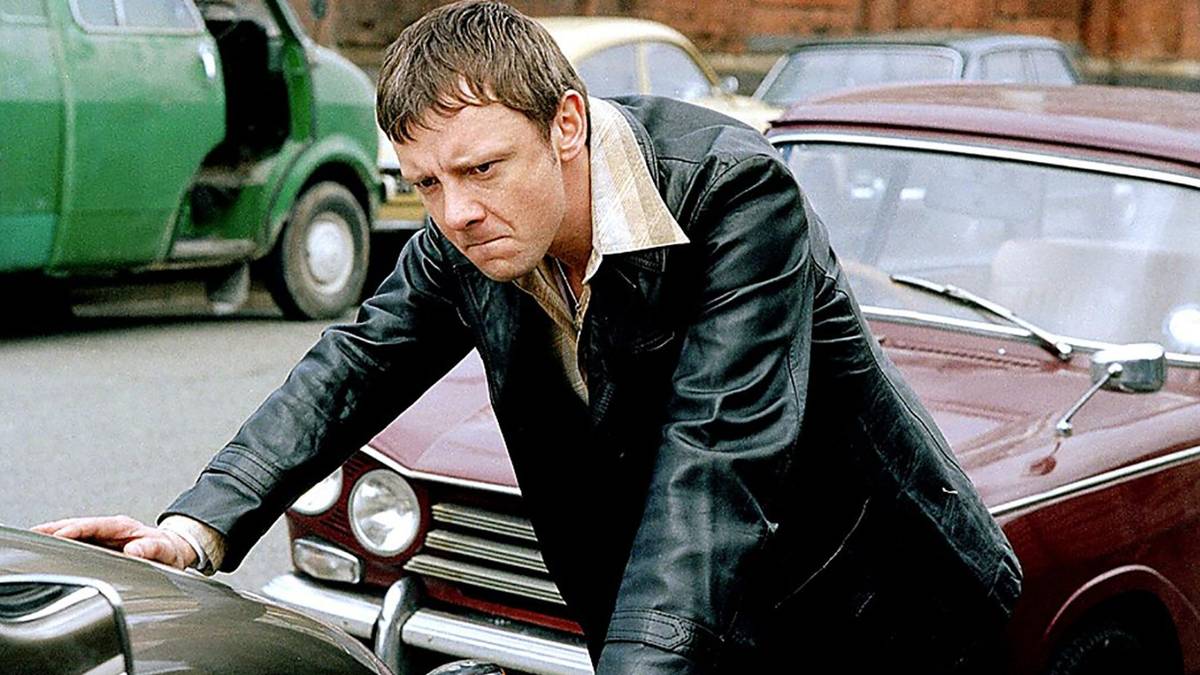
Image via BBC Published Nov 22, 2026, 7:48 PM EST Roger is passionate about movies and TV shows, as well as the drive-in theater. Aside from hosting and producing three podcasts and a monthly live show, he also collects comic books, records, VHS tapes, and classic TV Guides. Currently, he's gotten into restoring cars and enjoys many of the shows on the Motortrend channel. Sign in to your Collider account Time travel on television usually leans one of two ways. It’s either about fixing timelines with clean narrative arcs and moral clarity — or about breaking them apart and letting the paradoxes bleed. But in 2006, a British TV series called Life on Mars took things in a stranger, more unsettling direction. It managed to take nostalgia — you know, the warm, fuzzy feeling we get when we think of the past that makes us feel safe — and turned it into something scary. It’s like a dream you can’t wake up from. For those who had always heard that Life on Mars was a slightly surreal show about a police detective who’s thrust back to the 1970s, they only got part of the story. The show isn’t just about Sam Tyler (John Simm) getting hit by a car in 2006 and waking up in 1973. It’s about how the past is no longer really the past. In 'Life on Mars,' the Time Travel Story Feels Like 'The Twilight Zone' Most time travel series have a clear set of rules. Cause and effect become the main concern, and any change to the past could drastically affect the present. But Life on Mars plays like a time travel story in the Twilight Zone. There’s no DeLorean or TARDIS to move through space and time. Just Manchester that seems built out of Sam’s idea of 1973 — not the real thing. It’s the 1973 he thinks he remembers from reruns, cultural hand-me-downs. COLLIDERInteractive Long-range scan active Movies/Science Fiction/Survival Assessment Collider Survival Assessment Which Sci-Fi WorldWould You Survive? 8 questions · 5 worlds · one honest verdict Five of the great screen futures, and not one of them is built for comfort. Answer eight questions about instinct, loyalty and the line you would cross, and the scan will tell you which one you would still be standing in. Worlds in range ▦︎The Matrix ◈︎Mad Max ◑︎Blade Runner ▲︎Dune ✦︎Star Wars Begin the scan Question 01 of 08INSTINCT The world as you know it ends overnight. What is your first move? No wrong answer. There is a wrong hesitation.AFind out what is really going on behind all of it BGrab a vehicle and as much fuel as you can carry CKeep your head down and show up to work anyway DLearn the rules of whoever is in charge now EFind other people and start organizing ← Back Keys 1 to 5 or A to E · Enter to advance Next Question 02 of 08RESOURCE You can stockpile exactly one thing. What is it? Choose carefully. You are not getting a second run.AInformation nobody else has BFuel CClean money and cleaner documents DWater EA ship that can get you off-world ← Back Keys 1 to 5 or A to E · Enter to advance Next Question 03 of 08THREAT Which kind of enemy scares you the most? Be honest about what keeps you up.AOne that can be anywhere, wearing anyone's face BA convoy of people who want what you are carrying CSomeone who looks exactly like you DA rival family that has been planning your downfall for generations EAn empire with unlimited resources and no patience ← Back Keys 1 to 5 or A to E · Enter to advance Next Question 04 of 08AUTHORITY How do you handle the people in charge? Every world has them. Even the ones that pretend otherwise.AAssume they are lying and work around them BNobody is in charge where I am CFollow the orders, file the report, stay invisible DStudy them, get close to them, outlast them EJoin whoever is fighting them ← Back Keys 1 to 5 or A to E · Enter to advance Next Question 05 of 08ENVIRONMENT Pick the place you would rather wake up in: You will be there a while.AA grey city that feels slightly too perfect BAn endless desert highway CA rainy neon street at three in the morning DA dune sea with a fortress on the horizon EA crowded spaceport full of strangers ← Back Keys 1 to 5 or A to E · Enter to advance Next Question 06 of 08ALLIANCE Who do you want standing next to you? Pick one. You only get one.AA guide who knows far more than they are telling you BOne person you trust and nobody else CNobody. You work alone DA loyal circle you grew up with EA crew of misfits who argue the whole way ← Back Keys 1 to 5 or A to E · Enter to advance Next Question 07 of 08MORALITY Which line would you cross to survive? Everybody crosses one.ALying to the people closest to you BTaking what you need by force CLooking the other way DPlaying a long game that costs other people dearly EBlowing something very expensive up ← Back Keys 1 to 5 or A to E · Enter to advance Next Question 08 of 08PURPOSE What are you really fighting for? Last question. Make it count.AThe truth, whatever it turns out to be BTomorrow. Just tomorrow CSomething that finally feels like a real life DYour family's name EEveryone who cannot fight for themselves ← Back Keys 1 to 5 or A to E · Enter to advance Run the scan Scan completeYou would survive ▦︎ The Matrix The Resistance, Zion You take the red pill, you stay in Wonderland, and I show you how deep the rabbit hole goes. You would survive The Matrix because you were never fully sold on the version of reality you were handed. You notice the seams. You ask the second question. In a world built to keep people comfortable and incurious, that instinct is the whole fight, and it is why Morpheus would have found you long before you found him. From the Collider file The Wachowskis' 1999 film won four Academy Awards, including Visual Effects and Film Editing. Bullet time was shot with a rig of roughly 120 still cameras firing in sequence around the actors. Keanu Reeves trained in martial arts for about four months before a frame was shot, recovering from neck surgery the whole time. It opened the same year as Fight Club and eXistenZ, in a run of films about not trusting the world in front of you. Red pill energy Pattern spotter Built to question ◈︎ Mad Max The Wasteland Oh, what a day. What a lovely day. You would survive the Wasteland because you do not waste energy mourning the world that ended. You move, you improvise, and you are very good with whatever is bolted to the thing in front of you. Furiosa would let you drive. That is not a compliment anybody earns easily. From the Collider file Mad Max: Fury Road won six Academy Awards in 2016, more than any other film that year. George Miller storyboarded the entire film as roughly 3,500 panels before there was a script. The chase was shot almost entirely practical in the Namib Desert, with real vehicles and real stunt performers. Anya Taylor-Joy and Chris Hemsworth carried the prequel, Furiosa: A Mad Max Saga, in 2024. Keeps moving Improviser Good with engines ◑︎ Blade Runner Los Angeles, 2049 All those moments will be lost in time, like tears in rain. You would survive 2049 because you know how to be small in a very loud city. You keep your head down, you do the job, and you hold onto one private thing that belongs only to you. That quiet stubbornness is exactly what both Deckard and K run on, and it is what keeps either of them going when the case stops making sense. From the Collider file Blade Runner 2049 won Roger Deakins his first Oscar for cinematography, on his fourteenth nomination. The film also took Best Visual Effects, 35 years after Ridley Scott's 1982 original. Villeneuve shot it on large-format film and kept the fog and rain practical on set wherever he could. Three short films by Luke Scott and Shinichiro Watanabe bridge the 30-year gap between the two movies. Keeps her head down Private Noir soul ▲︎ Dune Arrakis Fear is the mind-killer. Fear is the little-death that brings total obliteration. You would survive Arrakis because you think in decades while everyone around you thinks in weeks. You read the room, you learn the customs, you wait. The desert does not reward speed. It rewards people who understand that patience is a weapon, which is the one lesson the Fremen never had to be taught. From the Collider file Denis Villeneuve's Dune won six Academy Awards in 2022, including Cinematography and Original Score. Hans Zimmer turned down Christopher Nolan's Tenet so he could score Dune instead. Dune: Part Two arrived in 2024 and brought in Austin Butler, Florence Pugh and Christopher Walken. David Lynch's 1984 version and Alejandro Jodorowsky's unmade one are both their own legends by now. Plays the long game Reads the room Patient ✦︎ Star Wars A Galaxy Far, Far Away Rebellions are built on hope. You would survive the galaxy because you never try to survive it alone. You collect people. You end up in the middle of other folks' problems and you stay anyway. Every version of this story, from the Falcon's crew to the Ghost's, runs on somebody exactly like that holding the group together. From the Collider file The 1977 original won six Academy Awards plus a special achievement award for sound effects. John Williams' score was recorded by the London Symphony Orchestra and became the best-selling symphonic film soundtrack ever. Andor took the galaxy somewhere colder and earned Emmy nominations for drama series in both seasons. The saga now runs across eleven feature films and a growing shelf of series on Disney+. Collects people Shows up Hope merchant Compatibility readout · top three 1 2 3 ↻ Retake the quiz Copied to your clipboard Scan filed byCOLLIDERCollider.com · The Sci-Fi Desk That’s what makes the show quietly radical. It doesn’t recreate the era as a stable diorama. It turns it into something unstable, slippery, alive. Televisions in the corner flicker on their own. A girl from the Test Card — the real BBC Test Card image with its unsettling grin — speaks to him through the static. Broadcasts cut in like messages from an absentee god. And through it all, Sam walks around in a world that shouldn’t be real…because it isn’t. He’s not visiting 1973 — he’s being swallowed by it. 'Life on Mars' Turns Nostalgia Into a Haunted House Image via BBC Most period pieces treat the past like a museum exhibit. You get lovingly recreated sets, accurate clothes, vintage pop hits — a sense that the past is something you can step into and recognize. But Sam’s 1973 is just a half-remembered dreamscape built out of the way culture remembers itself. The Test Card Girl isn’t just an eerie stylistic flourish. She’s the embodiment of nostalgia. She knows Sam’s name. She’s a child of the broadcast signal, reminding both him and us that memory isn’t a vault. It’s a transmission, one that can distort. Sam doesn’t know if he’s really back in time, in a coma in 2006, or insane. When televisions talk to him, or radios seem to hum his fears back to him, the show isn’t just being weird for the sake of being weird. It’s laying out a map of how mediated our memories of the past actually are. We don’t remember history as it was lived. We remember the way it was packaged and played back to us. That’s a deeply unnerving concept — and the show leans into it, hard. Sam Tyler’s personal story on learning what happened to him is also generational. The world he’s trapped in is both too familiar and completely foreign. It’s built out of cultural shorthand, television tropes, and the echoes of a time period he never actually inhabited in the way it’s presented. Sam’s never just walking through Manchester in 1973; he’s walking through the way 1973 has been remembered, stylized, flattened, and now turned against him. 'Life on Mars' Gives a Totally New Take on Sci-Fi Time Travel Image via BBC When Life on Mars aired, we didn’t yet live in the total retro remix culture we do now. Nostalgia was still mostly linear — people watched old shows on DVDs or cable reruns. Now, entire digital spaces are built on looping fragments of the past. We live in memes, TikToks, remastered music drops, vintage filters, “throwback Thursdays,” and algorithmically-boosted comfort rewatches. That means the show’s thesis lands even harder today than it did 19 years ago. Sam Tyler’s panic isn’t just a story about a man trapped in the past. It’s about what it feels like to live inside the flicker; to have our idea of the past curated and mediated for us until we’re no longer sure what’s real and what’s just a good edit. What makes this series feel timeless — ironically, for a show about time travel — is how it understood that cultural memory is slippery. The 1970s Sam inhabits isn’t real. But neither is the 1970s we remember. And that makes the uncanny sequences, the talking screens, the too-quiet moments between bursts of static, resonate with an intensity that most shows of its era couldn’t touch. The Beauty of a Flickering Signal Even with all its unnerving edges, Life on Mars is an extraordinary piece of television to binge. It’s a truly engaging police procedural wrapped in a slow-burning existential mystery. Simm’s performance as Sam is nothing short of phenomenal. His boss in 1973, Gene Hunt, played with aplomb by Philip Glenister, embodies the brash and morally questionable cop that we used to see all the time back then. He helps balance Sam in a world that’s both brutally tactile and completely unreal. But beneath the cop stories and the fish-out-of-water banter, the show is doing something almost literary. It’s giving us a ghost story where the ghost isn’t a person. It’s memory itself. Every time a television screen lights up on its own, every time the Test Card Girl tilts her head just a little too knowingly, we’re reminded that Sam isn’t being haunted by some supernatural entity. He’s being haunted by the past as broadcast. And isn’t nostalgia just a transmission that feels like home, but isn’t? Life on Mars is the perfect weekend binge because of the many layers it has. Viewers might enjoy the police procedural and its engaging mystery, while others will reminisce about how cops were allowed to get away with much more brutality back then. Audiences will also marvel at the story, which sends a chilling message that our sense of the past is fragile. You can tear through the series in a couple of days — and you probably will — but it’s the aftertaste that lingers. But at the end of the day, there's still a creepy feeling that the show is full of nostalgia made out of a hall of mirrors, with Sam still trying to escape. It’s a time-travel story that isn’t concerned with rules. Rather, it’s a compelling and brilliant tale that deserves a top spot on your weekend watchlist. Just be warned that once you’re sucked into its 1973, you might not want to come home. Don't get us started about its sequel series, Ashes to Ashes. Release Date 2006 - 2007-00-00 Network OCN Directors Lee Jeong-hyo
Prime Video’s Eerie 2-Part Sci-Fi Series Is Perfect From Start to Finish
Full Article
Original Source
Read the full article at Collider →KhanList aggregates and links to publicly available news content. We do not host full articles from third-party sources. Always verify important information with original sources.