
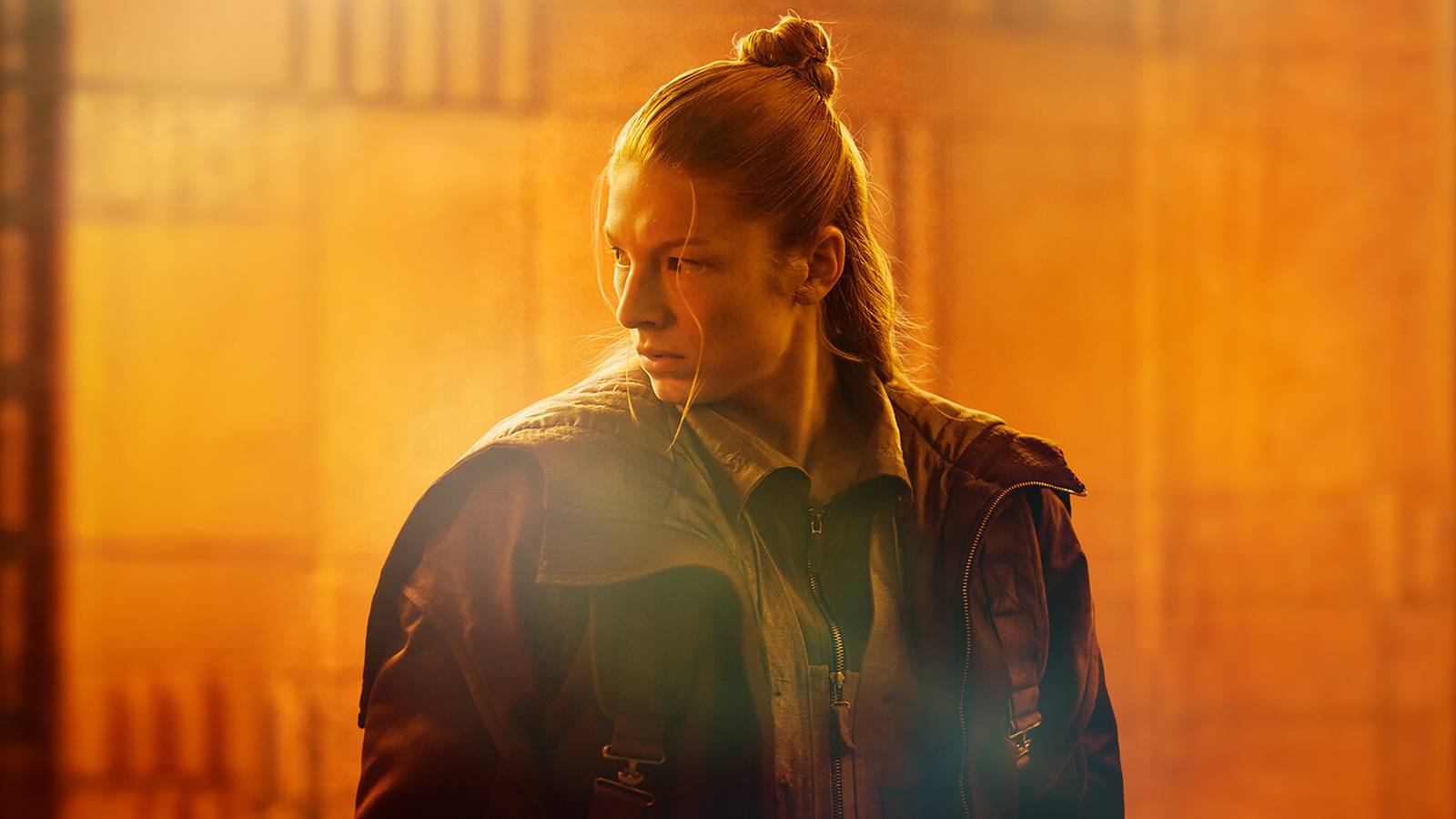
Published Nov 23, 2026, 4:30 PM EST Therese Lacson is a Senior TV Editor who has been with Collider since 2021. She got started in this business over ten years ago working primarily as an interviewer and critic. At Collider, she works closely with the features team to support the writers and also ideates and develops content daily. She has covered major industry events including Cannes Film Festival, Sundance Film Festival, SXSW, Toronto International Film Festival, and San Diego Comic-Con. Although she reviews and covers both film and television, her focus is in television and her expertise is in fantasy and sci-fi genre shows. Her favorite shows to cover include House of the Dragon, Bridgerton, Fallout, 9-1-1, and Rivals. It's been just under a decade since Denis Villeneuve gave his updated vision of the world of replicants with Blade Runner 2049 and nearly half a century since Ridley Scott introduced us to his cyberpunk, neo-noir Los Angeles with Blade Runner in 1982. Based on Philip K. Dick's novel Do Androids Dream of Electric Sheep?, the story is set in a dystopian world where humanity has created synthetic humans known as replicants, bioengineered to work on off-world colonies. Both films and Prime Video's Blade Runner 2099 follow the titular blade runners, police officers who must track down and "retire" rebel replicants. While the new streaming series might flip the script for viewers, its heart remains the same, embracing a familiar neo-noir tone while repackaging a familiar concept for lovers of the sci-fi genre. 'Blade Runner 2099' Flips the World You Know on Its Head What becomes immediately obvious when you first watch Blade Runner 2099 is that the series offers a brand-new feel to the neon-soaked world. Golden sunlight now bathes Los Angeles as replicants populate the streets and humans are relegated to the status of second-class citizens. The concept of robots and tech companies oppressing humans is not unfamiliar; in fact, it's so common in sci-fi that detractors of the show might point out that Prime Video is missing the point of the original movie. But what the franchise has emphasized over the years is that, although people might classify replicants and humans as different, those differences are only skin-deep. Showrunner and creator Silka Luisa might be deviating from expectations with the change in the human-replicant dynamic, but it's clear that the series is fully aware of the messaging at the core of these stories. Blade Runner 2099 follows Cora (Hunter Schafer), a human who is desperate to get herself and her brother, Elias (Lewis Gribben), somewhere safe. Trapped between a rock and a hard place, she takes an offer to impersonate a replicant Blade Runner with the promise that she and Elias will have a better life afterward. Thrown into an unfamiliar world, Cora is paired with replicant Blade Runner Olwen (Michelle Yeoh), who is in the last few days of her life, to hunt down Marek (Johnny Harris), a replicant on the run who shares a history with Olwen. As the line between being human and replicant blurs for Cora, and Olwen contemplates her mortality as the hours tick by, the two characters form an unlikely bond. Schafer and Yeoh make a dynamic duo, especially as Cora struggles to hide her identity and maintain her cover at work. Schafer is, by far, the standout of Blade Runner 2099, able to convey both Cora's fear and anxiety beneath the surface while also embracing her false identity as a Blade Runner with white-knuckled determination. The contrast between Schafer's performance and Yeoh's more mellow approach to Olwen makes their pairing the most interesting element of the series. While there are many moving parts, Blade Runner 2099 is at its most interesting when it investigates what it means to be human through these two characters. 'Blade Runner 2099' Evolves Ridley Scott's Dystopian Los Angeles Visually, Blade Runner 2099's Los Angeles is absolutely stunning. The series' slower moments turn the atmospheric landscape into its own living, breathing character. The practical sets, analog aesthetic, and smoky, jazzy soundtrack composed by Leopold Ross feel far closer to Scott's original film than Villeneuve's more high-tech sequel. Compared to the stylized Blade Runner 2049, this is a return to the familiar, something that becomes obvious if you watch or revisit the films right before diving into the show. The gritty sets feel tactile and eschew the more computer-generated sci-fi worlds we might be familiar with today, showcasing the production design's artistry by leaning into the little details that make the world feel richer. Ross' music is the strongest tone-setter and one of the absolute best parts of the new series. Inspired by the original soundtrack by Vangelis, saxophones and synths fill the world of Blade Runner 2099, adding a touch of noir that the series might otherwise be missing. Paired with this visual template, the series feels properly lived-in. While it doesn't manage to shake off the television show sheen common to series spun off from a film franchise, the cinematic element still dominates throughout its eight-episode run. It's in those slow shots of a golden sun setting over a cyberpunk Los Angeles where Blade Runner 2099 just feels right, and the audience is allowed to get comfortable and sink their teeth into the new reality. 'Blade Runner 2099' Struggles With Lore and Pacing in a Streaming Format Image via Prime Video Where Blade Runner 2099 falters is in attempting to grapple with the expansive world and complicated lore it has to braid itself into. Although the series takes place in 2099, it often references the beginning of the Tyrell Corporation and the origins of the Nexus replicants, which not only makes the storyline a bit more complicated but requires a lot more worldbuilding. Though the show has eight episodes to accomplish this, the fundamental change in dynamic between replicants and humans also takes up a bulk of the screen time. There are moments where the show adopts a slower pace, but there are also scenes where so much information is being dumped that it creates a tonal dissonance. In trying to balance the franchise's more filmic elements with the complex sci-fi genre, Blade Runner 2099's pacing suffers as a result. The mystery at the heart of the show involves the Nexus-1s, a new concept that hasn't been explored before. Unfortunately, the twists and turns of this mystery also create a lot more fluff during times when the series should be slowing down to more closely examine some of its key concepts. The show's format forces each episode to have a beginning and an end, creating subplots or missions that often feel unnecessary. The larger cast also doesn't help matters, making Blade Runner 2099 feel cluttered without enough room to properly develop the characters The result means that the show ends up losing its philosophical tone, delivering familiar but sometimes hollow sci-fi genre fare. While Blade Runner 2099 was intended as a limited series, its open-ended conclusion doesn't inspire the same sort of ambiguous contemplation as the films; it simply feels incomplete. Expanding lore gives way to new questions, but at least some of those questions deserve answers, and it feels like the series is a little too reluctant to give them. This all highlights the fact that making a Blade Runner television show was always going to be a tall order. The mood and vibe of the world lend themselves better to a film's big budget, but the themes and lore require deeper introspection and a far more unconventional approach to television. This is an all-too-familiar problem when franchises make the jump from film to TV, and the structure of episodic TV will have to change for these spin-off shows to defy the expectations that often weigh them down. Although Blade Runner 2099 succeeds in exploring the core tenets of the Ridley Scott film that started it all, forcing it into the structure of an eight-episode series proves that maybe some franchises are best left to the big screen. Blade Runner 2099 premieres November 25 on Prime Video. Release Date 2026 - 2026-00-00 Network Prime Video Showrunner Silka Luisa Directors Jonathan van Tulleken Writers Silka Luisa, Ryan Willison, Claire Kiechel, Kirsa Rein, Tom Spezialy Cast Blade Runner 2099 is set in a future Los Angeles where Cora, a master of disguise, partners with Blade Runner Olwen to secure her brother's future. As they navigate their personal struggles, they uncover a conspiracy that threatens the city's fragile resurgence. Pros & Cons Visually, the series feels even closer to the original series than 2049, giving it a familiar feel of nostalgia. The exploration of what it means to be human is still at the core of the series. The episodic formatting hinders the show's ability to tell a fully realized story. While Yeoh and Schafer are a strong duo, the rest of the expansive cast ultimately feels extraneous. Release Date 2026 - 2026-00-00 Network Prime Video Showrunner Silka Luisa Directors Jonathan van Tulleken Writers Silka Luisa, Ryan Willison, Claire Kiechel, Kirsa Rein, Tom Spezialy Cast Blade Runner 2099 is set in a future Los Angeles where Cora, a master of disguise, partners with Blade Runner Olwen to secure her brother's future. As they navigate their personal struggles, they uncover a conspiracy that threatens the city's fragile resurgence. Pros & Cons Visually, the series feels even closer to the original series than 2049, giving it a familiar feel of nostalgia. The exploration of what it means to be human is still at the core of the series. The episodic formatting hinders the show's ability to tell a fully realized story. While Yeoh and Schafer are a strong duo, the rest of the expansive cast ultimately feels extraneous.
Prime Video’s ‘Blade Runner 2099’ Was Never Meant To Be a TV Show | Review
Full Article
Original Source
Read the full article at Collider →KhanList aggregates and links to publicly available news content. We do not host full articles from third-party sources. Always verify important information with original sources.