
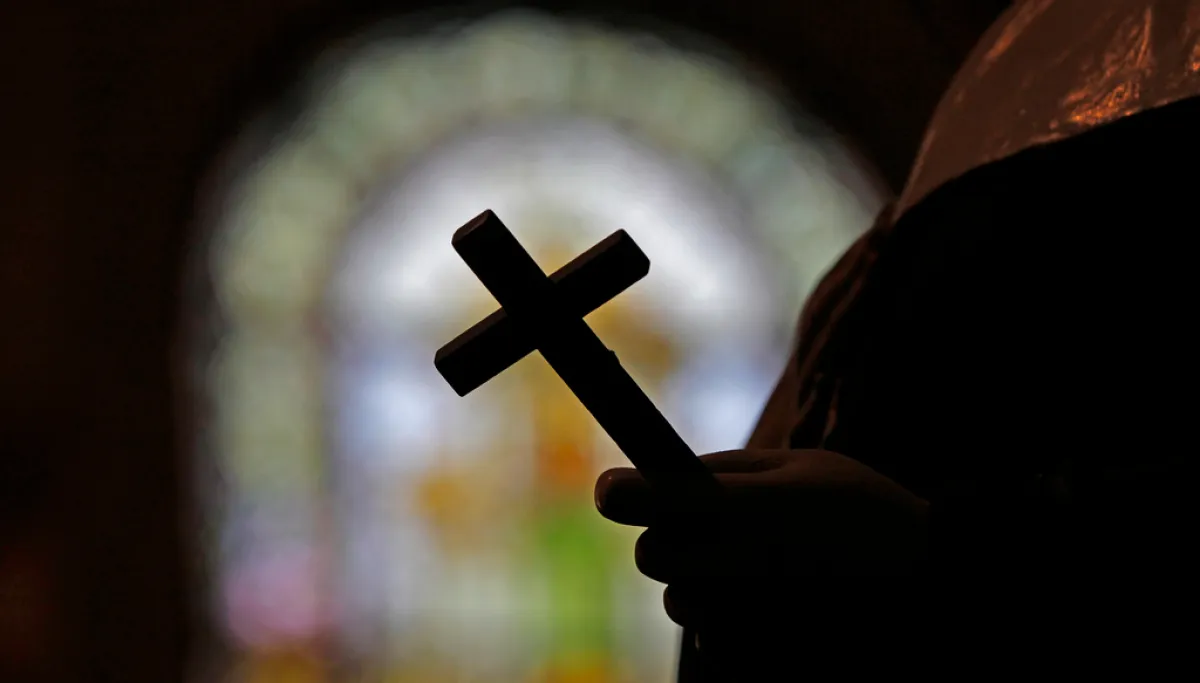
Marisol Arroyo-Castro hung a crucifix about a foot tall beside her desk and left it there for roughly a decade. In December 2024, her Connecticut school district ordered it taken down. She refused, and a reprimand, a two-day unpaid suspension, paid leave, and a transfer to a non-teaching job followed. The 2nd U.S. Circuit Court of Appeals hears her appeal on Dec. 7.In Oregon, a school board went after pride flags and Black Lives Matter signs, and a judge struck its ban down. In Connecticut, administrators went after a crucifix, and a federal judge sided with them, for now. I coached youth sports, and I know what happens to morale when a rule gets enforced against one team and not the other. My argument: If a district claims the classroom wall as its own speech, it owns everything hanging there, and it owes teachers a written rule, applied evenly, before it enforces anything against a single faith.U.S. District Judge Sarah Russell denied Arroyo-Castro a preliminary injunction on Nov. 3, 2025. Under Garcetti v. Ceballos, public employees who speak as part of their official duties are “not speaking as citizens for First Amendment purposes.” Russell found that decorating the walls was part of Arroyo-Castro’s job, so the crucifix counted as the district’s speech. First Amendment scholar Eugene Volokh’s verdict: “Generally seems correct to me.” IN WAR ON BIBLE, PASTOR CONVICTED FOR PREACHING GOSPELThe opinion shows how loose that job duty is. The district policy it describes asks for a “student-centered and task-focused” room. Arroyo-Castro’s photos of colleagues’ items include Wonder Woman action figures and a small photograph of a Virgin Mary statue. The district’s lawyers said supervisors could order a Patriots pennant or a Baby Yoda figurine moved, yet the court noted they did not argue they acted under a neutral, generally applicable policy. (Baby Yoda, it seems, now speaks for the school district.) The Religious Freedom Institute, backing her, says the district lets teachers keep secular personal items near their desks but not religious ones.Both sides agree administrators acted after complaints came in, according to Americans United and her lawyers’ demand letter. Enforcement that waits for complaints lands on whatever offends the complainer, and it needs no villain. It takes a district worried about the establishment clause and no standard written down in advance.Newberg, Oregon, shows the principle cuts both ways. In 2021, the board ordered pride and Black Lives Matter symbols removed, then widened the ban to all political or controversial signs after being advised the first version wouldn’t survive a legal challenge. A Yamhill County judge struck it down in September 2022 under the Oregon Constitution, and the board rescinded it in January 2023. Education Week found similar bans in Indiana, Nevada, and Utah. I’d have opposed the Newberg ban. Aiming at a rainbow is the same mistake as aiming at a cross.Aristotle saw this problem more than 2,300 years ago. Justice breaks down, he wrote in the Nicomachean Ethics, when equals are awarded unequal shares, and that is “the origin of quarrels and complaints.”Americans United and the Freedom from Religion Foundation both filed briefs backing the district. Russell distinguished Kennedy v. Bremerton School District, the coach-prayer case, because the coach’s students were busy elsewhere while Arroyo-Castro’s were required to be in the room. The district also cites an independent investigator who concluded she made religious comments in class unrelated to the lesson, which she denies and the court didn’t rely on. Establishment clause worries aren’t frivolous, and I can’t predict how the 2nd Circuit will rule.That doesn’t supply the missing rule. Kennedy warned that a government’s fear of “phantom constitutional violations” can’t justify real ones, and it held that a policy failing either the neutrality or general applicability test triggers strict scrutiny. The appeals court should ask whether the government-speech label can hold when the district never claims a neutral policy. Freedom of religion is different than freedom from religion.JAMES TALARICO SAID HE ‘HATES CHRISTIANITY.’ HERE’S WHYThree fixes need no new law. School boards should write a wall policy that separates official instructional displays from personal items and apply it the same way whether the item is a crucifix or a Patriots banner. Courts weighing government-speech claims should ask what a district actually allowed, not what its lawyers say it could. And parents should ask their own boards for the policy. If nobody can find one, you’ve learned something.Every coach knows the call that sticks is the one made consistently for both teams. Write the rule down and apply it to everyone.Jay Rogers is a financial professional with more than 30 years of experience in private equity, private credit, hedge funds, and wealth management. He writes about issues in finance, constitutional law, national security, human nature, and public policy.
Pride or prejudice in the classroom
Full Article
Original Source
Read the full article at Washingtonexaminer →KhanList aggregates and links to publicly available news content. We do not host full articles from third-party sources. Always verify important information with original sources.