
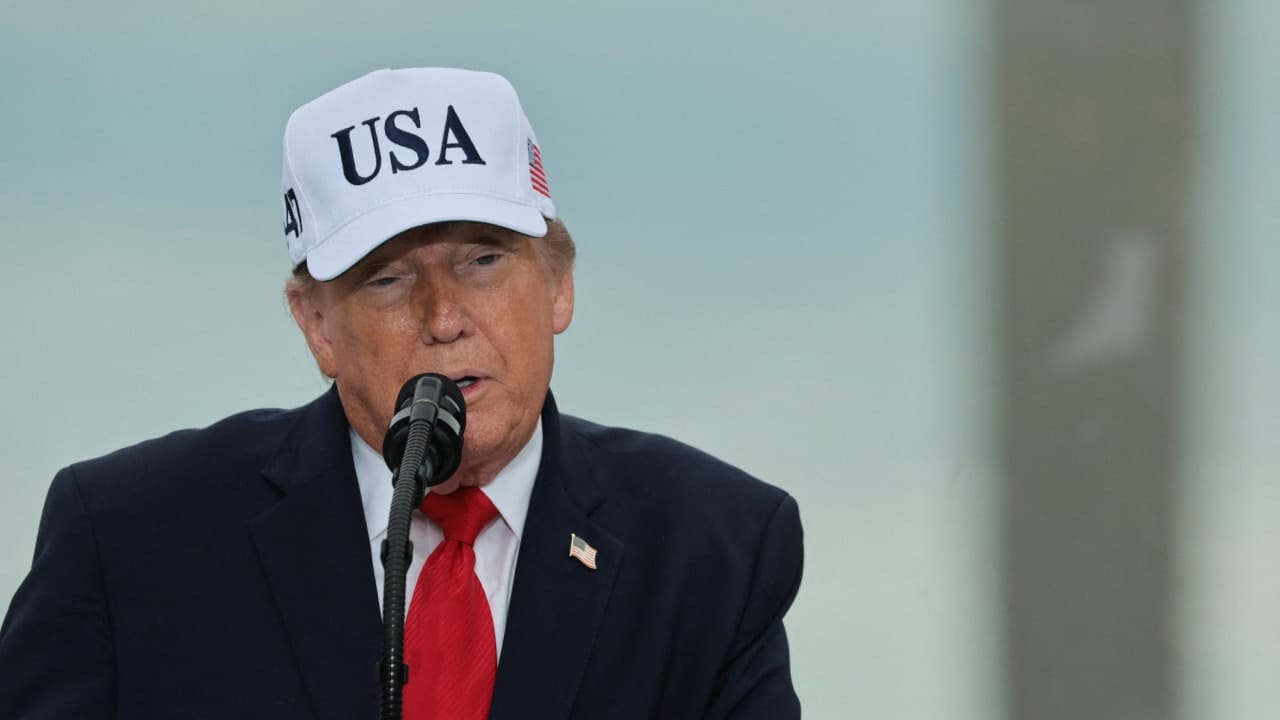
The midterms will shape the next two years of American politics. What happens in Iran could shape the Middle East for the next hundred.Follow us on GoogleUS President Donald Trump delivers remarks ahead of the midterm elections at the Lincoln Memorial Reflecting Pool, after being reopened following months of repairs, on the National Mall in Washington, DC, US, November 2, 2026.(photo credit: JONATHAN ERNST/REUTERS)NOVEMBER 7, 2026 23:46Dear President Donald Trump,A hundred years from now, few people will remember how many seats the Republicans lost in the 2026 midterm elections.But 100 years from now, the world may still remember the American president who brought an end to the Islamic Republic of Iran.Mr. President, you have an opportunity that very few American presidents have ever had: the opportunity to fundamentally change the course of history.The Democrats' victory in Congress is a political setback. Yet the decisions you make about Iran could shape the Middle East long after today's congressional majorities have been forgotten.People vote at a polling station at the Buck Creek School, during the US midterm elections on Election Day, in Jefferson County, Kansas, US, November 3, 2026. (credit: REUTERS/Nathan Howard)Mr. President, are you prepared to accept a political cost today for an achievement whose full value may only become clear after you have left office?There is an irony in the timing.According to assessments by various experts and analysts, Tehran factored the American midterm elections into its strategic calculations. The assumption was that mounting political pressure on the US administration could strengthen Iran's negotiating position and increase Washington's willingness to compromise.Iran does not need to defeat the US militarily. It needs to convince Washington that the political and economic costs of confrontation will eventually become too high to sustain.The Islamic Republic has spent decades learning how to survive pressure from stronger adversaries. American presidents, meanwhile, operate within election cycles. Every two years, the political balance can change. Every four years, the country's strategic priorities can shift.For nearly half a century, successive American presidents have confronted the same Iranian challenge. Sanctions have damaged its economy. Diplomacy has produced temporary restraints. Military operations have weakened its capabilities. Yet the regime has repeatedly survived and adapted.The events of 2026 have created a different situation.The killing of supreme leader Ali Khamenei and the military blows inflicted on Iran have shaken the regime. But removing a leader is not the same as dismantling the system that sustained him.The Revolutionary Guards remain powerful. Iran now faces two simultaneous challenges: rebuilding its military capabilities while maintaining internal political stability. That combination could constrain its room for maneuver, even as the security establishment seeks to consolidate its control.And despite the damage it has suffered, Tehran retains significant leverage.The Strait of Hormuz has demonstrated how even a militarily weakened Iran can impose economic costs far beyond its borders. Uncertainty over the location and status of highly enriched uranium also means that destroying nuclear facilities is not necessarily the same as eliminating the nuclear threat.Opportunity to prevent the Iranian regime from rebuildingThis is what makes the present moment unusual. Iran has suffered major military setbacks while confronting questions about its internal stability. Washington has an opportunity to prevent the regime from rebuilding the capabilities that have sustained its regional influence.But the pressure to demonstrate immediate results will be considerable. Congressional opposition, economic concerns, and public fatigue with foreign conflicts can all narrow the room for difficult decisions.A quick agreement that leaves the underlying threats intact could allow Tehran to claim that it survived another American president. An open-ended military campaign without a credible political objective could prove equally costly.Neither would necessarily break the cycle.Mr. President, the challenge is not simply to contain Iran for another few years. It is to change a regional reality in which Tehran's nuclear ambitions, armed proxies and threats to strategic waterways have repeatedly forced its neighbors to organize their security around the next Iranian crisis.That would mean giving Israel and the Gulf states greater freedom to build regional cooperation without the constant prospect of escalation, while creating conditions in which the Iranian people can determine their own political future.Achieving that goal would require more than an agreement between two presidents. Any settlement would need verifiable nuclear restrictions, enforceable commitments on freedom of navigation, and mechanisms to respond if Tehran violates its obligations.It would also need a political foundation strong enough to survive a change of administration in Washington. That means seeking congressional support beyond your own party and working with regional allies who have a direct stake in enforcing the outcome.The test is not simply what Tehran agrees to today, but whether the US can establish commitments that Iran cannot evade by waiting for the next American election.Nor should regime change be pursued at any cost. Iraq demonstrated the dangers of removing a dictatorship without securing a stable political future. The objective must be a durable regional order, not another power vacuum.Mr. President, you have often spoken of your desire to be remembered as a peacemaker. Iran may offer one of the defining tests of that ambition.A temporary agreement might provide political relief. A military victory might demonstrate American power. But the real achievement would be to turn Iran's present weakness into a future in which its threats cannot simply be rebuilt.If you succeed, your legacy will not depend on the outcome of a congressional election. If you fail, your successor may inherit the same adversary, armed with the lessons of another confrontation it managed to survive.The midterms will shape the next two years of American politics. What happens in Iran could shape the Middle East for the next hundred.Liron Rose is a major (res.) in IDF Intelligence, a tech entrepreneur and investor, and the creator and host of the podcast HaYanshuf (The Owl).Amit Shabi is a former analyst in Unit 8200, an investment professional, author of several finance books, and a competitive chess player.Follow us on Google
President Trump: History will remember Iran, not the US midterms - opinion
Full Article
Original Source
Read the full article at Jpost →KhanList aggregates and links to publicly available news content. We do not host full articles from third-party sources. Always verify important information with original sources.