
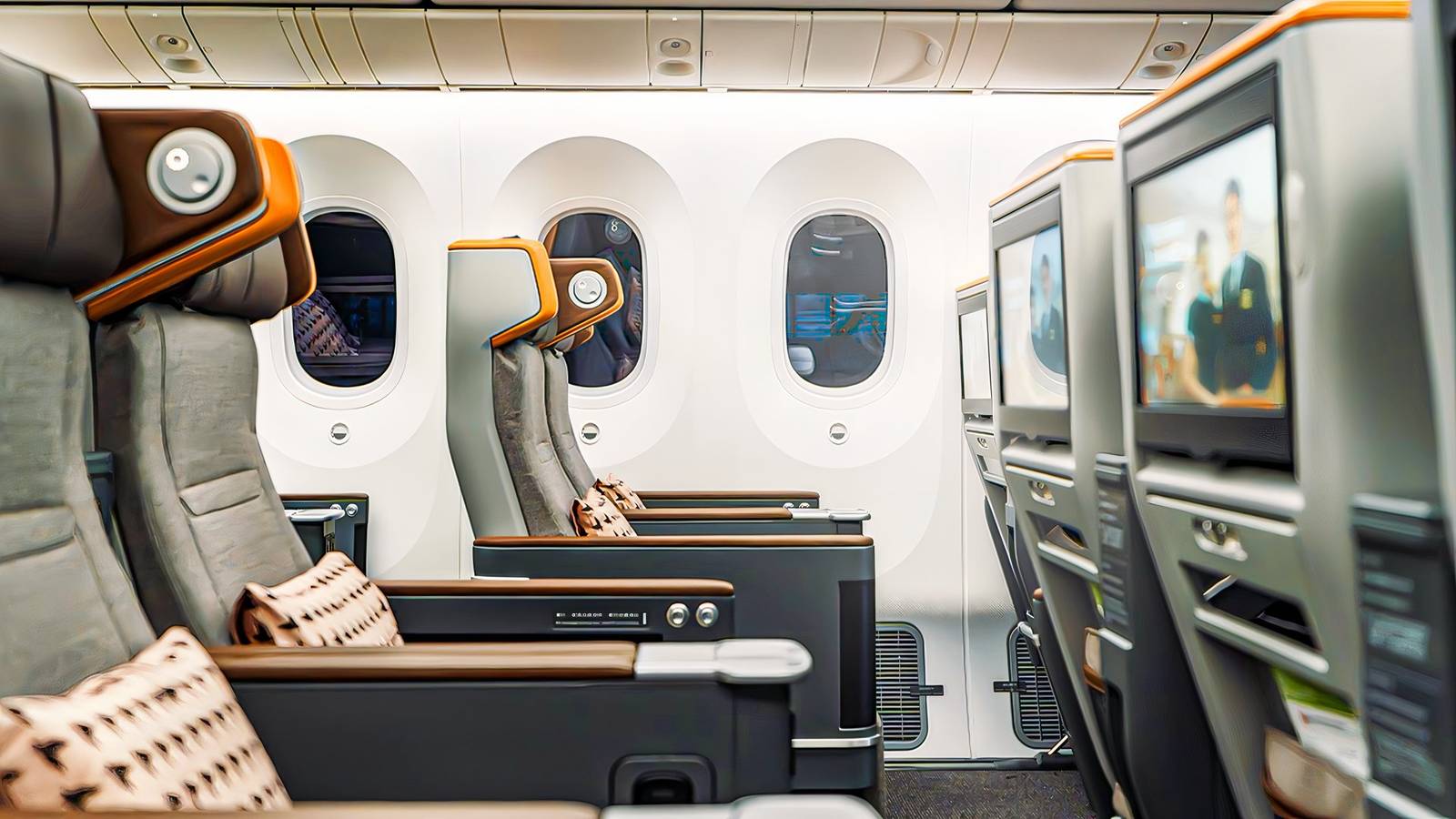
Published Nov 28, 2026, 11:00 AM EST An aviation writer, pilot, and flight operations professional who sees aviation from both sides of the cockpit door. With a background in aeronautics, safety, and human factors, she brings curiosity, firsthand experience, and a love of the details that turn aircraft and airports into stories worth telling. Paying several times more for a business class ticket can seem difficult to justify when the difference in seat width is relatively small. Yet the comparison changes when the cabin lights dim on an overnight flight. One passenger can stretch out on a fully flat bed, while another remains in a reclining seat, even with extra legroom and a more generous cabin environment. Both have upgraded from economy, but only one has a seat designed to become a sleeping surface. For anyone facing a long flight followed by a demanding day, that difference can be more valuable than the additional inches suggest. Premium economy has become an appealing middle ground for travelers who want more comfort without paying business class prices. However, the two cabins serve different purposes, and their value depends on much more than the seat itself. United Airlines' Boeing 787-9 Dreamliner offers a useful example of how the products differ, from cabin layouts and sleeping space to the services associated with each cabin. Understanding what passengers receive, how airlines package those benefits, and when they matter most makes it easier to decide whether business class is a worthwhile investment or an expensive upgrade that may not be necessary. Why The Biggest Difference Is The Bed Credit: Manoj Kumar Tuteja|Shutterstock The most important distinction between premium economy and business class on many long-haul aircraft is the ability to lie flat. Premium economy offers a more spacious version of an economy seat, generally with additional legroom, greater recline and improved personal space. Business class takes the experience further by providing a seat that converts into a horizontal sleeping surface on aircraft equipped with lie-flat seating. That changes how passengers can spend several hours in the air, particularly when a flight crosses time zones overnight. United's 787-9 illustrates the difference in one configuration, which has 48 Polaris business class seats and 21 Premium Plus seats. In this configuration, the Polaris seat offers approximately 78 inches of flat sleeping space and is about 20.5 inches wide. Premium Plus provides 38 inches of seat pitch, a seat width of approximately 19 inches and around six inches of recline. These measurements describe different things. Sleeping space is the length available when the business class seat is converted into a bed, while seat pitch measures the distance between corresponding points on consecutive seats. The figures are specific to this configuration, not universal specifications for every United 787-9. The extra room in premium economy matters, but the distinction between reclining and lying flat becomes especially relevant on overnight flights. A premium economy passenger can lean back and potentially rest more comfortably than in standard economy, but the seat remains angled. A flat bed does not guarantee uninterrupted sleep, yet it gives passengers the opportunity to rest horizontally. For travelers arriving in the morning with a full day ahead, that can be a compelling reason to consider business class. The next question is how such a substantial difference in the onboard experience translates into ticket prices. Why The Price Gap Can Be So Large Credit: eskystudio|Shutterstock Business class is not simply premium economy with a larger seat. Airlines allocate more cabin space to each business class passenger, often install more complex seating, and provide a different combination of onboard service and airport benefits. A lie-flat seat also has to function in two modes, accommodating passengers during meals, entertainment and other activities before converting into a sleeping surface. The resulting product is designed around a different level of personal space and comfort. The price difference, however, is not fixed. Premium economy and business class fares vary with the route, travel dates, demand, booking lead time and ticket restrictions. A business class fare purchased during a sale may be relatively competitive, while a flight with strong demand for overnight travel can carry a substantial premium. Comparing the cabins using a single price multiplier can therefore be misleading. The more useful comparison is the actual fare difference for the same itinerary, purchased at the same time and under comparable conditions. Feature Premium economy Business class Seat Larger reclining seat than standard economy Often a lie-flat seat on long-haul aircraft Sleeping position Reclined Horizontal on lie-flat products Personal space More room than economy Generally more space and privacy Cabin layout Varies by aircraft Often designed to provide direct aisle access Dining Upgraded meals on many airlines Typically more extensive dining and service Airport benefits Depend on airline and ticket Lounge access and priority services may be included Ticket price Usually less expensive Usually more expensive, sometimes substantially so These differences help explain why the two cabins appeal to different travelers. Premium economy offers a way to make a long flight more comfortable without paying for every feature associated with business class. Business class offers a more comprehensive experience, but its additional benefits may not be equally useful to everyone. The real value depends on which features a passenger will use, rather than the cabin label alone. What Passengers Actually Receive In Each Cabin Credit: Unaccompanied Media|Shutterstock Seat layout can affect the journey as much as the seat's dimensions. In the United 787-9 configuration, Polaris uses a 1-2-1 arrangement, giving every passenger direct aisle access. Premium Plus uses a 2-3-2 arrangement. A traveler seated beside the window or in the middle of the center group may have to coordinate with a seatmate to reach the aisle. That inconvenience can become more noticeable during an overnight flight, particularly when one passenger wants to move while another is sleeping. Travelers should check the aircraft and seat map for their specific flight because airlines operate aircraft with different cabin configurations. The differences extend beyond seating. Business class often includes more elaborate meal service, a wider selection of drinks, bedding and a more spacious environment. Some newer business class products also feature privacy doors, although doors are not standard on every airline or aircraft. Premium economy typically retains a conventional reclining seat, sometimes with an adjustable footrest, an improved headrest and a larger entertainment screen than standard economy. Both cabins can offer complimentary meals and drinks, but the details depend on the airline, route and product. Before booking, passengers should separate the features of the cabin from the benefits attached to the ticket. Direct aisle access depends on the seating layout. A privacy door depends on the particular seat. Lounge access, baggage allowances, seat selection and ticket flexibility depend on the airline's policies and the fare purchased. A passenger should not assume that every business class fare includes every benefit traditionally associated with the cabin, or that premium economy products are identical across airlines. Why Flight Timing Changes The Value Calculation Credit: Wasana Kunpol|Shutterstock The strongest argument for business class often comes down to what happens after landing. A passenger traveling overnight from the United States to Europe may arrive in the morning with meetings, connecting travel or sightseeing ahead. In that situation, a lie-flat bed provides an opportunity to rest in a position that premium economy cannot replicate. It may be particularly valuable when the traveler has little time to recover before the next commitment. On a daytime flight, the calculation can be very different. Someone planning to read, watch films, work on a laptop or enjoy the view may find that premium economy provides most of the comfort they need. The wider seat and additional legroom can make several hours more pleasant without paying for a sleeping surface that may see little use. Flight duration matters, but so do departure time, arrival time and the traveler's plans. An eight-hour daytime journey followed by an evening at a hotel presents a different challenge from an overnight flight landing shortly before a working day. There is no universal price threshold at which business class becomes worthwhile for every traveler. Someone paying personally may view a substantial fare difference very differently from a passenger traveling on an employer-funded ticket. The purpose of the journey matters, too. A special occasion may make comfort part of the experience, while a routine daytime trip may not justify the same expenditure. Once passengers identify which benefits matter most, the next step is to compare the complete cost of obtaining them. How To Compare The Actual Ticket, Not Just The Cabin Credit: MMD Creative|Shutterstock The cheapest fare displayed for a premium cabin is not always the best value. Airlines can attach different conditions to tickets within the same cabin, and those conditions may affect seat selection, baggage, changes, refunds, and access to airport lounges. United announced a tiered fare structure for eligible Polaris and Premium Plus services on April 3, with Base, Standard and Flexible options planned for rollout across selected markets during the year. The airline described the categories as a way for customers to choose between a lower entry price, additional benefits and greater flexibility. The exact availability and conditions must be checked for the flight being booked. That distinction matters when comparing the cost of a lie-flat bed with the cost of a more comfortable reclining seat. A passenger who wants to sleep during the flight may prioritize the business class seat above other benefits. Another traveler may place greater value on lounge access, baggage allowances or the ability to change plans. A lower fare may be attractive if its restrictions are acceptable, but it should not be compared with a more inclusive ticket without accounting for the differences in benefits. Aircraft assignments can change, and different versions of the same aircraft may have different cabin layouts. Seat maps and fare conditions are therefore more useful than relying on a general description of an airline's product. With those details established, the final decision becomes less about which cabin sounds more luxurious and more about which benefits justify the additional expenditure. The Upgrade That Matters Most Is The One You Will Use Credit: Cavan-Images|Shutterstock Premium economy and business class are best understood as different solutions to the demands of long-distance travel. Premium economy improves the experience of sitting, with more personal space and a more comfortable reclining position than standard economy. Business class, when equipped with lie-flat seating, changes the experience by allowing passengers to sleep horizontally. That difference becomes particularly relevant on overnight journeys when a traveler needs to be ready for work or other commitments soon after landing. On a daytime flight, the additional room in premium economy may be sufficient. United's 787-9 provides a useful example of how those products differ. In the configuration with 48 Polaris seats and 21 Premium Plus seats, the business class cabin offers direct aisle access from every seat, while Premium Plus uses a 2-3-2 arrangement. The comparison is not universal across United's fleet, and the specific aircraft assigned to a flight should always be checked. The airline's tiered-fare announcement also illustrates why travelers should examine the benefits attached to a ticket rather than assume every fare in a premium cabin includes the same services. Ultimately, the right choice depends on what the passenger needs from the journey. A lie-flat bed can be a compelling reason to pay more when a night's rest could influence the day ahead. When the priority is simply to sit more comfortably, premium economy may offer a better balance of comfort and cost. The most useful comparison is not between two cabin names, but between the extra money required and the benefit a traveler will genuinely use. On a long-haul flight, the difference between a more comfortable seat and a bed can shape not only the hours spent in the air, but also how prepared a passenger feels when the aircraft reaches the gate.
Premium Economy Vs. Business Class: What The Extra Money Really Buys On Long-Haul
Full Article
Original Source
Read the full article at Simpleflying →KhanList aggregates and links to publicly available news content. We do not host full articles from third-party sources. Always verify important information with original sources.