
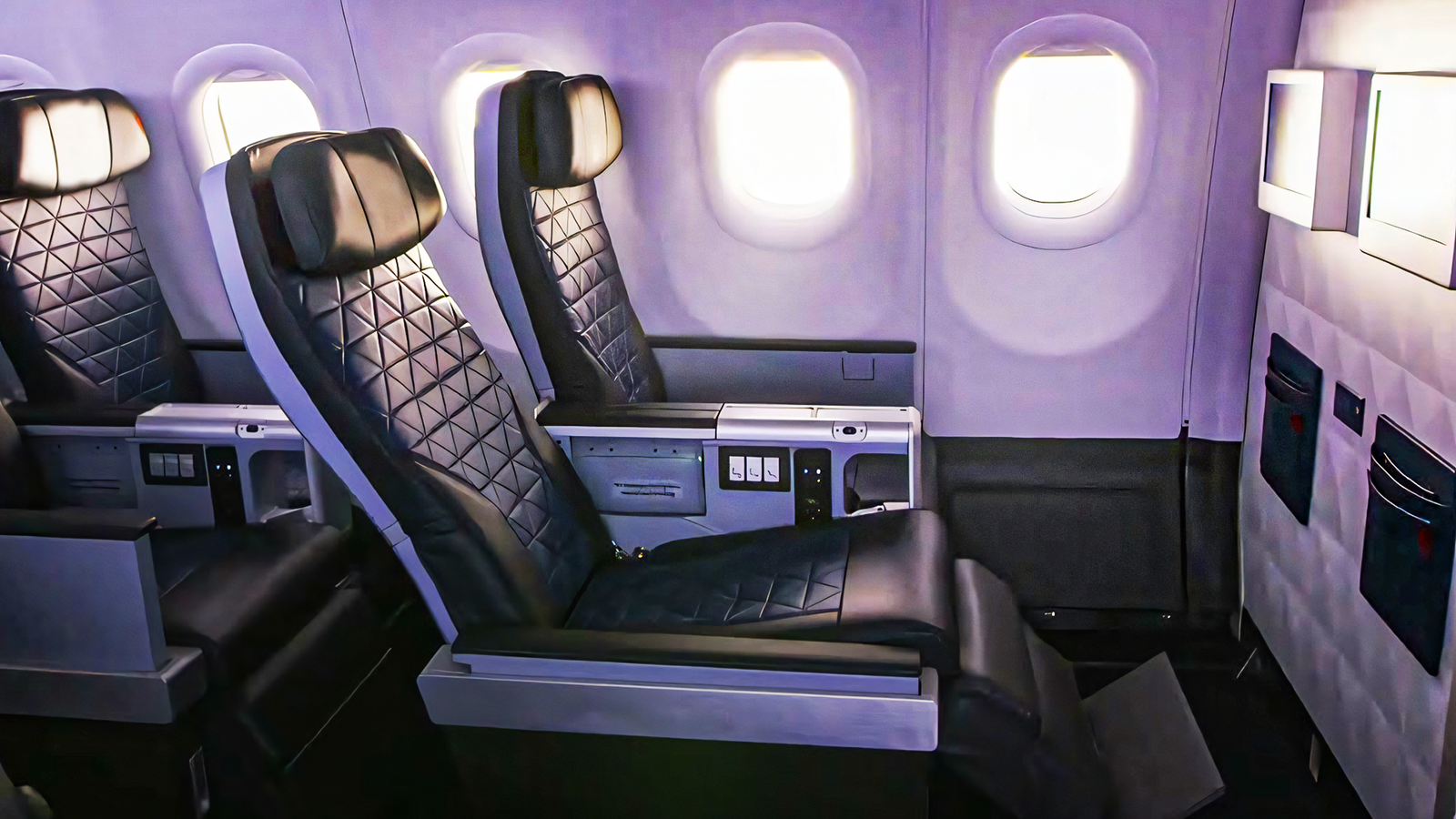
Published Nov 10, 2026, 6:00 PM EST Prachi is a London-based journalist with extensive experience in the aviation industry. She has worked for several leading industry publications, covering a broad range of topics. Her expertise lies in aircraft maintenance, emerging technologies, and advanced air mobility. She is currently pursuing a PhD in Journalism, focusing on data journalism and its potential to transform conventional aviation reporting. Demand for premium air travel is growing as passengers are increasingly prioritizing comfort when booking flights. According to consumer research, around 21% of travelers now consider physical comfort a deciding factor when allocating their holiday budgets. In response to this growing demand, airlines are investing heavily in their premium products. However, business and first class tickets remain expensive for many travelers. This is where premium economy comes in. The cabin offers passengers more comfort and additional amenities than standard economy without the considerably higher cost of business class. In recent years, its popularity has been growing. In fact, industry data shows that the share of travelers choosing premium economy has increased from 16% to 20% year over year. Many airlines have been investing in this cabin, and the three largest US carriers, American Airlines, Delta Air Lines, and United Airlines, are no exception. In this guide, we will explore how their products compare. US Airlines Were Late To The Premium Economy Market Credit: Markus Mainka | Shutterstock It is no secret to anyone that US legacy carriers were relatively slow to enter the premium economy market. For much of the 2010s, these airlines relied on extra-legroom economy products rather than introducing a separate premium economy cabin. In fact, this approach worked well in the domestic market, but several European and Asian airlines had already taken a different direction. They began offering dedicated premium economy cabins that featured wider seats, more legroom, and a distinct onboard service. Therefore, to remain competitive, all three US airlines introduced their own premium economy products. American Airlines was the first major US carrier to offer a dedicated premium economy cabin, introducing the product on its Boeing 787-9 aircraft in 2016. United Airlines and Delta Air Lines subsequently followed, launching Premium Plus and Premium Select, respectively. So, how do their products compare? In terms of seating, the three airlines offer fairly similar experiences, at least on paper. All three generally provide around 38 inches of seat pitch, which measures the distance between corresponding points on successive rows of seats. Seat widths are also comparable, typically ranging from approximately 18.5 to 19 inches, depending on the airline and aircraft type. A Closer Look At American Airlines' Premium Economy Credit: American Airlines Let’s take a look at the oneworld member’s premium economy seats. American Airlines offers its premium economy cabin on its Boeing 777-300ER, 777-200, and 787-9 aircraft, as well as Boeing 787-8s operating international services and flights to Alaska. The airline primarily uses Collins Aerospace MiQ seats for its premium economy product, although the airline’s new premium-configured Boeing 787-9s feature the Recaro R5, which offers larger entertainment screens, adjustable footrests and leg rests, and privacy wings. Overall, seat pitch is standardized at 38 inches (96.5 cm) across all aircraft types, while seat width ranges from 18.5 inches (47 cm) to 19 inches (48.3 cm). Screen sizes, however, vary by seat model. Aircraft equipped with Collins MiQ seats feature 11.5-inch (29.2 cm) screens, while the newer Boeing 787-9s featuring Recaro R5 seats offer larger 13.3-inch (33.8 cm) displays. On eligible international flights, the Dallas/Fort Worth-based airline also offers chef-inspired meals and complimentary beer, wine, and spirits when full drink service is available. In addition, passengers on long-haul flights also receive an amenity kit including some skincare and basic travel essentials. Overall, the experience is the same as economy but with a thorough upgrade. How United Airlines' Premium Economy Compares Credit: United Airlines Now let’s take a look at United Airlines’ premium economy seats, which it markets as “United Premium Plus”. The airline was the last of the Big Three US carriers to introduce a dedicated premium economy product, launching the cabin in 2019. Today, Premium Plus is available on most of United’s widebody aircraft, although there are some exceptions. According to ch-aviation, United currently operates 37 Boeing 767-300ERs, 16 767-400ERs, 55 777-200ERs, 22 777-300ERs, 12 787-8s, 64 787-9s, and 21 787-10s. Of its 55 777-200ERs, 51 feature Premium Plus. The exceptions are the airline’s high-density Boeing 777 fleet, comprising 19 777-200s and four 777-200ERs, which lack a dedicated premium economy cabin. As for the seats themselves, United uses the Collins Aerospace MiQ model, similar to American Airlines. These offer about 38 inches (97 cm) of pitch and measure between 18.5 and 19 inches (47–48 cm) wide. Passengers also receive an upgraded onboard dining service. Premium Plus meals are specially prepared and served on ceramic plates alongside metal cutlery, rather than the disposable packaging and utensils generally used in economy. What Does Delta Premium Select Offer? Credit: Delta Air Lines Delta Air Lines markets its premium economy cabin as “Delta Premium Select.” It first introduced the product in 2017 aboard its Airbus A350-900 on a flight from Detroit Metropolitan Wayne County Airport (DTW) to Tokyo Narita Airport (NRT), becoming the second major US carrier to offer a dedicated premium economy cabin. Since then, the SkyTeam member has gradually expanded Premium Select across its international network, including on some of its older aircraft, such as the Boeing 767-400ER. In terms of seating, Delta’s product is quite similar to its rivals’, although it features the carrier’s distinctive diamond stitching pattern. Premium Select seats generally offer 38 inches (96.5 cm) of pitch and a width of approximately 18.5 to 19 inches (47–48 cm), depending on the aircraft. Passengers also benefit from adjustable leg rests and footrests, greater recline, larger entertainment screens, and memory foam cushions for additional comfort. Aircraft Premium Economy Seats Configuration Airbus A350-900 48 2-4-2 Airbus A330-900 28 2-3-2 Boeing 767-400ER 20 2-2-2 Beyond the seats, the Atlanta-based airline has built a reputation for its onboard service, and Premium Select offers several improvements over standard economy. Passengers receive complimentary beer, wine, and spirits as well as soft drinks and hot beverages. The dining service also varies depending on the route, although meals are generally served on reusable tableware rather than the disposable packaging commonly found in economy. The Big Three Continue To Invest In Premium Economy Credit: Delta Air Lines Overall, all three airlines offer a fairly similar premium economy experience. Unlike business class, carriers have fewer opportunities to differentiate their products, particularly when the seats are identical or closely comparable. However, all three are targeting the same group of travelers: those looking for a noticeable improvement over standard economy without paying business class fares. Although US airlines were relatively late to introduce dedicated premium economy cabins, the product has become an increasingly important part of their business. For airlines, the appeal is also financial. Premium economy can generate around 33% more revenue per square foot of cabin space than standard economy. It can also generate approximately 6% more revenue per square foot than business class, partly because the seats take up less space and the cost of providing the onboard service is generally lower. This helps explain why the three carriers continue to invest in their premium economy products. American Airlines is expanding the cabin across its fleet, including on its newer 787-9 Dreamliners and Airbus A321XLRs. Delta Air Lines is also placing greater emphasis on premium seating. In the second quarter of 2026, the airline’s premium ticket revenue exceeded Main Cabin ticket revenue for the first time. Looking ahead, its upcoming A350-1000 aircraft are expected to feature more than 100 premium seats, including nearly 50 in Premium Select alone. Premium Economy Is Gaining Ground Worldwide Credit: Brostock | Shutterstock We are also seeing a similar trend elsewhere, as airlines increasingly add premium economy cabins to their aircraft. For instance, Emirates is rapidly expanding its premium economy offering across its fleet, while Air France has doubled the number of premium economy seats on some of its retrofitted 777-300ERs. Similarly, Cathay Pacific has increased the cabin’s capacity from 34 to 48 seats on its updated 777s, representing a 41% increase. Other airlines such as Turkish Airlines are also preparing to enter the market. The airline is planning to introduce dedicated premium economy cabins from 2028. This comes as passenger preferences are changing, especially at the higher end of the market. Looking at the wider industry, traditional first class has become increasingly rare now because airlines have shifted their focus towards business class and premium economy. In the US, American is the last of the Big Three to retain a dedicated international first class product through its Flagship First cabin, although it is now phasing it out. Elsewhere, first class remains concentrated among a relatively small number of international airlines, particularly on routes connecting major financial centers and through hubs in the Gulf. One reason for this shift is the improvement in business class products. Many airlines now offer fully lie-flat seats, greater privacy, and other amenities that were once associated primarily with first class. At the same time, premium economy has attracted passengers who want more comfort than standard economy but are unwilling to pay significantly higher business class fares. Those who are willing to spend more on business class continue to do so, but premium economy has created another option for travelers who previously had to choose between economy and business. According to Going’s 2026 State of Travel and Flight Deals Report, premium economy was the fastest-growing cabin choice among surveyed travelers, increasing from 16% to 20% year-on-year.
Premium Economy On US Airlines: How The Big 3 Actually Compare
Full Article
Original Source
Read the full article at Simpleflying →KhanList aggregates and links to publicly available news content. We do not host full articles from third-party sources. Always verify important information with original sources.