
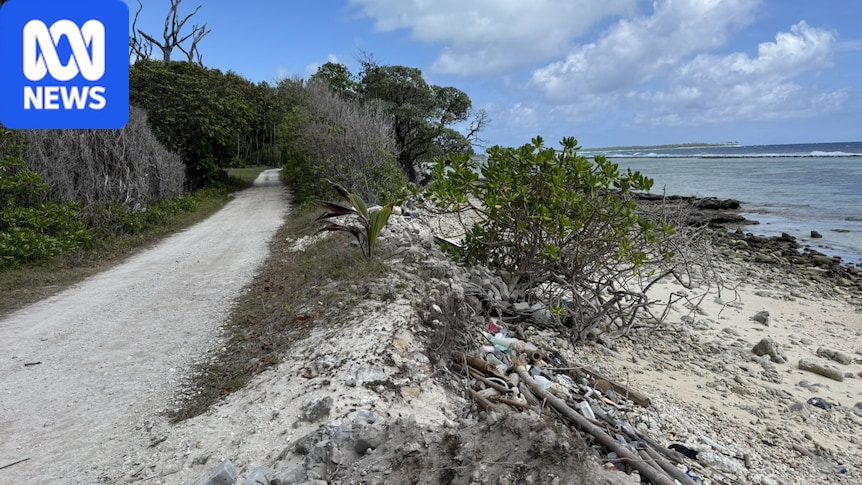
Residents of Australia's remotest territory say they feel forgotten by the government's global climate change efforts ahead of the major COP31 forum in Türkiye.The federal government hosted pre-COP meetings in Tuvalu and Fiji this week in a bid to raise the voices of Pacific Island nations.But on the far opposite side of Australia's recognised territory, and 8,900km from this week's Pacific meetings, residents of the Cocos (Keeling) Islands (CKI) feel they have been left in the lurch.Tuvalu (pictured) and Cocos (Keeling) Islands face similar climate threats like flooding and coastal erosion. (Supplied)Faced with coastal erosion, flooding and other climate-driven issues mirroring those of Pacific nations, the Cocos Islanders made a bid to be represented at COP31.Their application was approved by the United Nations, but not selected for funding by the Australian government, with the delegation informed they had been unsuccessful just before this week's talks.Their panel proposal, submitted by the University of Western Australia's Oceans Institute, would have featured the challenges faced by the Cocos (Keeling) Islands as a low-lying island community.The Cocos (Keeling) Islands are facing coastal erosion and flooding, like their Pacific Island counterparts. (Supplied: Chris Bray)Residents rue missed opportunityHome Island resident Luluk Sloan said COP31 presented an opportunity to bring global awareness to the Cocos (Keeling) Islands.With a coastal hazard management plan suggesting retreat slammed by the islands' residents, they had hoped attendance would have allowed them to learn how other island communities were dealing with climate-driven challenges."A council delegation was actually looking at visiting the Pacific Islands just to see what sort of mitigation they've got planned in terms of not retreating," she said. "I think it's a disappointment that we don't have that link; we can't really tell our story globally."Luluk Sloan lives on Home Island. (Supplied: Luluk Sloan)Ms Sloan said it felt like the islands were being left behind. "We are an Australian territory, who's voicing for us? Who's vouching for us? No-one."West Island resident Rose Cummins also would have attended the conference."I certainly applaud the Pacific Islands. I think they've done an incredible job in raising the profile of climate change and how it's directly impacting them," Ms Cummins said."I guess we would just like the same opportunity."Rose Cummins lives on West Island. (Supplied: Rose Cummins)A spokesperson for the Department of Climate Change, Energy and Water acknowledged the impact climate change was having on the Islands.But the department rejected suggestions that the focus on the Pacific came at the expense of Australian communities."Engagement with Pacific partners complements, rather than replaces, our support for Australian communities facing climate risks," the spokesperson said.The Oceans Institute said it remained committed to working with the islands' community to help address the ongoing challenges posed by climate change.Community not heardResidents say there has been a lack of meaningful consultation on the plan to manage the islands' ongoing coastal risks. "I think a lot of people felt that it's another consultation," Ms Sloan said."What are they going to do about it? Possibly, probably, nothing."Cocos (Keeling) Islands residents say they have seen metres of shoreline vanish. (Supplied: Luluk Sloan)Ms Cummins said expressions of interest for a community reference group, promised since the start of the year, were only issued last month."There's no decision-making abilities; it won't affect any policy or anything like that," she said."That will still be done by experts who don't live here."The Climate Change Department spokesperson said the Coastal Hazard Risk Management and Adaptation Plan (CHRMAP) was a key step in supporting CKI to respond and adapt to climate change."The [plan] gives us a clear picture of the coastal hazards facing the islands and will help guide the work we do together to strengthen preparedness and improve community safety," the spokesperson said.But Ms Sloan remained sceptical."I think people are slowly realising that … the delivery of services is on the decline," she said. "And that's probably because they're thinking: 'Oh yeah, 50 years from now, the islands are going to go under.'"
Pre-COP push leaves Australia's remotest territory feeling forgotten
Full Article
Original Source
Read the full article at Abc →KhanList aggregates and links to publicly available news content. We do not host full articles from third-party sources. Always verify important information with original sources.