
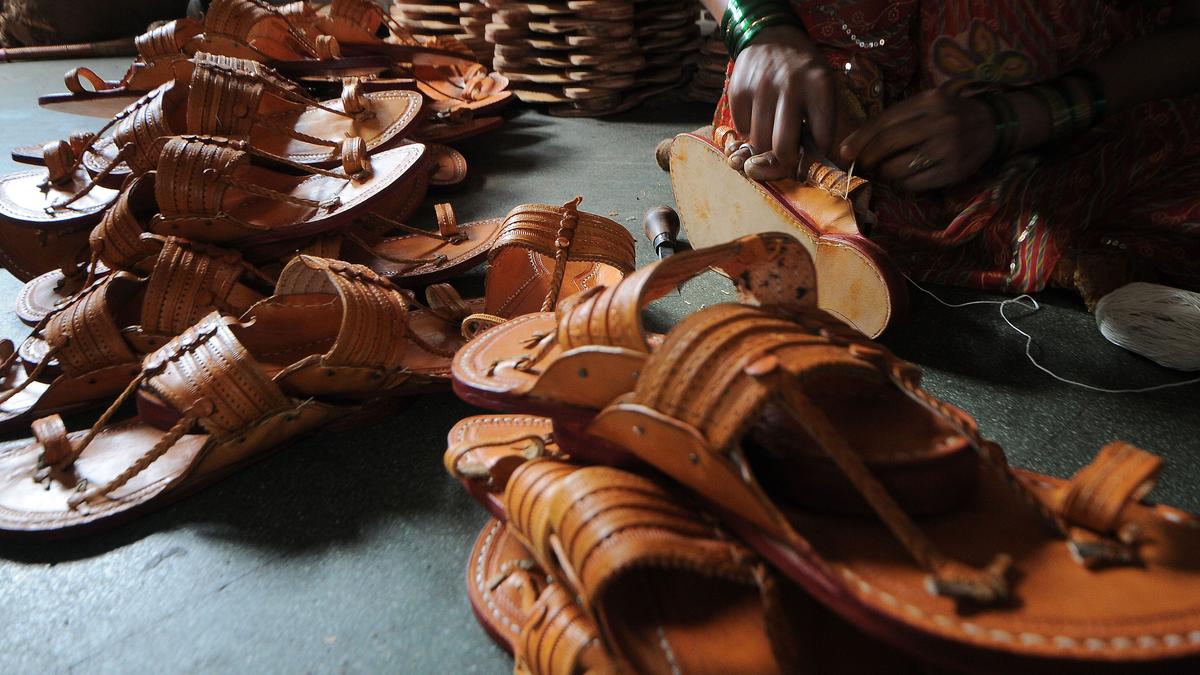
Kolhapri chappals. | Photo Credit: File Photo The story so far: On June 25, at its Spring/Summer 2026 menswear show in Milan, Italian luxury brand Prada unveiled footwear inspired by India’s Geographical Indication (GI)-tagged Kolhapuri chappals, sparking accusations of ‘cultural misappropriation’.It is a form of ‘intellectual property’ that identifies goods as originating from a specific country, region or locality, where their distinctive qualities, characteristics, or reputation are essentially linked to that ‘place of origin’. In India, there are currently 658 registered GI-tagged goods, including Chanderi sarees (Madhya Pradesh), Madhubani painting (Bihar), Pashmina shawls (J&K), Kancheepuram silk (Tamil Nadu), and Darjeeling tea (West Bengal). Importantly, GIs serve as a powerful marketing tool, driving rural development, boosting exports, enhancing consumer confidence, and preserving ‘cultural knowledge’ of local communities, farmers and indigenous groups. Unlike trademarks, which are owned by enterprises, GIs are public property belonging to the producers of the concerned goods and cannot be assigned, transmitted or licenced. Published - July 01, 2025 08:30 am IST
Prada-Kolhapuri controversy: Can a G.I. tag prevent cultural misappropriation?
Full Article
Original Source
Read the full article at Thehindu →KhanList aggregates and links to publicly available news content. We do not host full articles from third-party sources. Always verify important information with original sources.