ByMAARIVAUGUST 11, 2026 08:42Updated: AUGUST 11, 2026 09:05Meir Ben-Shabbat, a former national security adviser and head of the National Security Council, warned against complacency toward Syria and Turkey's growing regional influence in an interview with Maariv published Tuesday.According to Ben-Shabbat, who served as one of the architects of the Abraham Accords and currently leads the Misgav Institute for National Security and Zionist Strategy, Israel should continue striving for peace agreements, but not at the cost of relinquishing security assets or relying on agreements that could ultimately prove reversible."We must not give up the aspiration for peace," he said, "but we must not allow it to make us lose our judgment."Asked whether or not he believes Syria is attempting to "lull" Israel into complacency while rebuilding its military capabilities, he said that it should not be assumed that Syrian President Ahmed al-Sharaa "has abandoned his path.""I do not know how to read innermost thoughts and intentions," Ben-Shabbat said. "But as someone who came from the heart of the jihadist darkness, sat in prison with the most extreme jihadist leaders, fought in its ranks for years while yearning for the realization of the vision of the Islamic State, and reached where he is on the shoulders of a jihadist base, with [Turkish President Recep Tayyip] Erdogan's encouragement and support, one should not be impressed by the change in his outward appearance and under no circumstances assume that he has abandoned his path."Syrian President Ahmed Al-Sharaa attends a press conference, on the day he meets France's President Emmanuel Macron, in Damascus, Syria, July 7, 2026. (credit: Mahmoud Hassano/Reuters)"In a long series of articles I have published since he came to power, I recommended assuming that the change is part of the tactic he is using in order to gain recognition for his rule, stabilize it and consolidate his position, and then turn to achieving his ideological goals."He added that two weeks ago, he'd said that Israel "must not give up its control of the territory or its freedom of security action for agreements that will not be worth the paper on which they are signed. This is true with regard to Lebanon, and no less so with regard to the jihadist in a suit who also serves as Erdogan's proxy.""'In any case, and above any arrangement that is formulated, the prophetic warning must hover, "'Can a leopard change its spots?'"Turkey taking advantage of regional power vacuumBen-Shabbat further stated that Turkey appears to be taking advantage of regional changes in order to establish itself as a leading regional power, and that these moves, alongside Erdogan's "ambitions and his hostility toward Israel, increase the potential for confrontation" between the two countries."The first is Syria," noted Ben-Shabbat. "Following the collapse of the Assad regime and the forced withdrawal of the Iranian military presence, Turkey has become the dominant player in Syria. Ankara is deepening its foothold through financing and training a 'new Syrian army,' establishing energy infrastructure, transportation infrastructure, and more."Another example is the newly signed Mecca Joint Defense Agreement (MJDA) between Turkey, Saudi Arabia, and Pakistan, explained Ben-Shabbat, which "reflects the rise of a central Sunni axis.""This alliance is intended to provide mutual defense and regional stability without complete dependence on Washington, placing Turkey in a position of diplomatic and military leadership," he said.Turkey's Blue Homeland doctrine (Mavi Vatan) is a third instance of this, Ben-Shabbat said, explaining that "Turkey's maritime ambitions in the eastern Mediterranean directly clash with Israel's geopolitical energy and gas alliances with Greece and Cyprus, IMEC, and its economic agreements, creating a permanent arena of maritime friction."A fourth example is Turkey's continued support for Hamas and its leaders, said Ben-Shabbat."In addition to all of this, Turkey is currently conducting a comprehensive campaign to institutionalize accusations against Israel through a series of measures and legal proceedings," Ben-Shabbat said. "This is intended to position Israel as an international offender whose actions violate basic norms and international law."Turkey, Iran are not the sameHowever, Ben-Shabbat said Turkey should not be equated with Iran."Each has its own characteristics and requires a different way of dealing with it," he said.To some extent, suspicion and caution on Israel's part of regional agreements cannot hurt, Ben-Shabbat went on, but stressed that Israel "must not give up the aspiration for peace, but on the other hand, we must not allow that aspiration to make us lose our judgment.""We need to give everything its proper time, not rush into premature agreements, but at the same time not miss genuine opportunities. Most important, we must not place our security in the hands of any other party; we must preserve security margins, not exchange tangible assets for one piece of paper or another, and understand that an agreement can be reversible," he said. "Even if we sign with a party that supports us and wants genuine peace, someone with a different position and different ambitions can always replace them."Follow us on Google
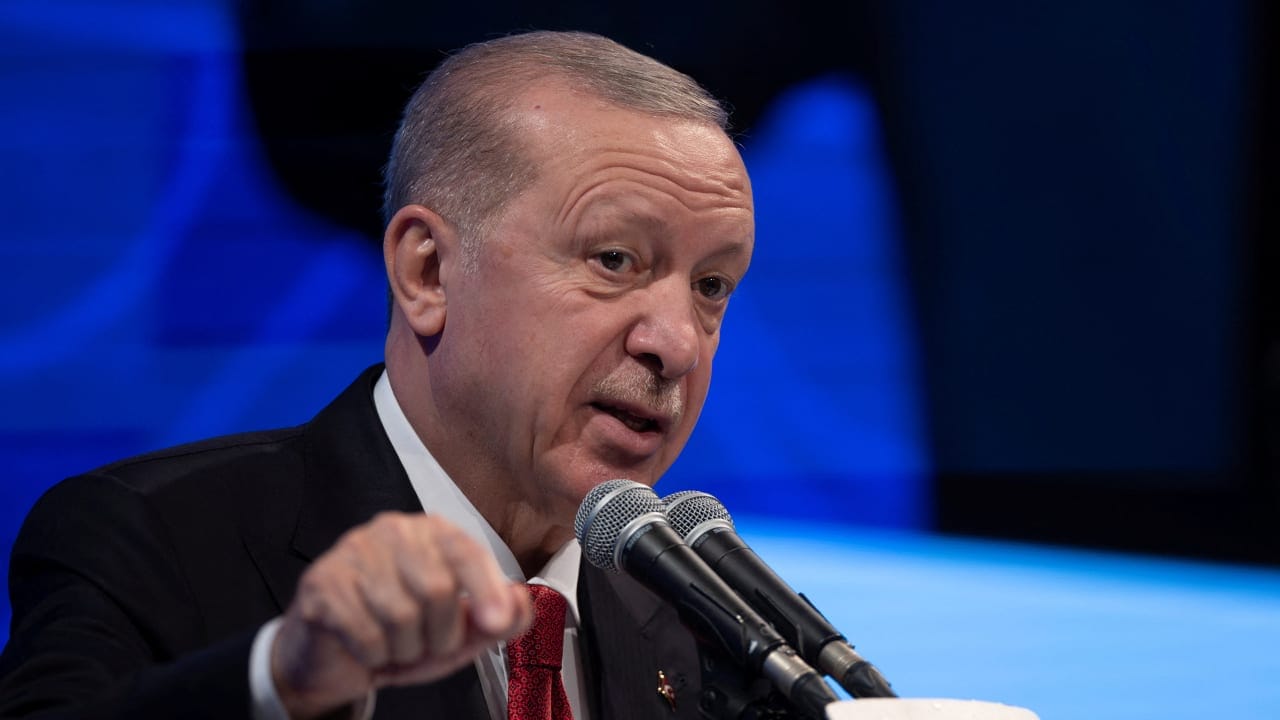
'Potential for confrontation with Turkey has increased,' warns ex-National Security Council chief
Full Article
Original Source
Read the full article at Jpost →KhanList aggregates and links to publicly available news content. We do not host full articles from third-party sources. Always verify important information with original sources.