
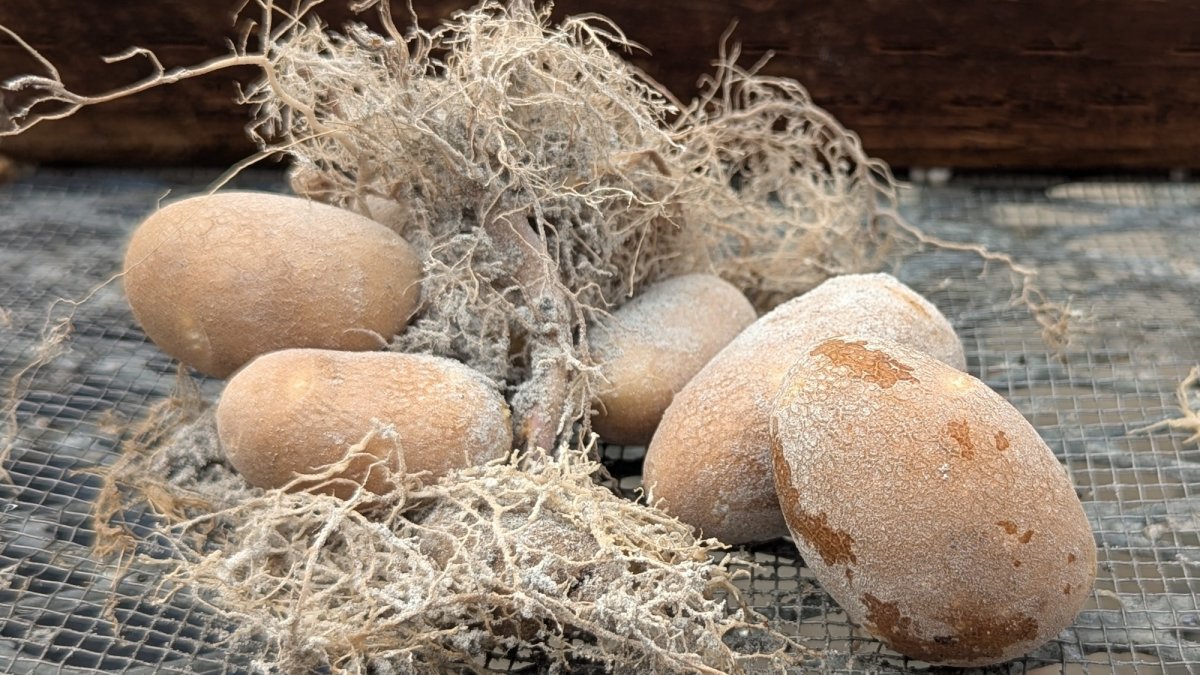
Potatoes grown at Oregon State University in soil that simulates conditions on the moon. Credit: Sean Nealon / Oregon State University Astronauts living in the first permanent lunar base may see a sizable number of spuds on their dinner plates. In a study published today in the journal npj Microgravity, botanists at Oregon State University (OSU) proved it’s possible to grow healthy, edible potatoes in simulated moon soil with the help of everyday worms. Importantly, the team also identified the proper proportions of lunar regolith and compost needed to produce potato yields similar to those grown on Earth. “We found that potatoes can complete their entire life cycle in simulated lunar soil when supplemented with organic matter,” Aymeric Goyer, an OSU botanist and study co-author, said in a statement. “That’s an important step toward developing reliable food production systems that could support long-term human exploration of the Moon.” Can we grow potatoes on the moon? Far from any nearby grocery store Even in a controlled habitat, life on the moon will be physically demanding for astronauts. They’ll require carefully maintained, nutritious diets to keep them healthy, but it’s not as simple as sending them off packed with calorically dense prepackaged meals. Cargo room on spacecraft is limited and costly, and the desolate lunar surface isn’t exactly hospitable to agriculture. In addition to constant bombardment by cosmic and solar radiation, temperatures can swing anywhere between 250 degrees and -410 degrees Fahrenheit. Indoor horticulture will also be challenging. Lunar regolith is an annoyingly powdery substance composed of sharp-edged, miniscule particles created over billions of years of asteroid impacts, but little else. With essentially no organic material at all, the dust alone isn’t capable of supporting plant life. Growing moon potatoes on Earth While it is easy enough to combine that lunar regolith with agricultural additives, researchers weren’t sure if these could overcome moon soil’s heavy metals and irradiation. To test it, Goyer and his colleagues first obtained simulated lunar regolith made to resemble the samples collected during the Apollo missions. Regolith composition varies by region on the moon, so they selected five different types based on darker lunar mare dust and the lighter lunar highland soil. They then mixed the mock moon dust with vermicompost, the nutrient-rich soil created when worms break down organic materials. Next, they planted potatoes in various ratios of regolith and vermicompost, and monitored their growth. As a control, the team even planted potatoes in soil taken from Hermiston, Oregon, an area famous for some of the world’s highest spud yields. The lunar potatoes were compared with potatoes from Hermiston, Oregon, which is famous for its yields. Credit: Sean Nealon / Oregon State University The team found that composite soil with only 30 percent vermicompost was enough to produce potato crops comparable to those farmed on Earth. Their findings suggest the supplemental organics bind to the regolith’s heavy metals, which shield the plants and minimize any damage to their roots. “We believe the compost helps balance some of the toxicity we see in lunar regolith,” added OSU botanist and study co-author David Handy. But bushels of moon potatoes only go so far if they lack any real nutritional value. Even here, the lunar simulations offered promising results, particularly when it came to glycoalkaloids. The naturally forming potato toxins can cause green skin discoloration, but analysis indicated no statistically relevant rise in glycoalkaloids for the lunar crops. With the potato viability debate settled, Goyer’s team will next compare 10 specific spud varieties grown in simulated lunar regolith to determine the most nutritious and resilient options for NASA astronomers. 2026 Popular Science Home of the Future Awards 39 products that will improve your everyday life.
Potatoes grown in moon dirt are as nutritious as Earth potatoes
Full Article
Original Source
Read the full article at Popsci →KhanList aggregates and links to publicly available news content. We do not host full articles from third-party sources. Always verify important information with original sources.