
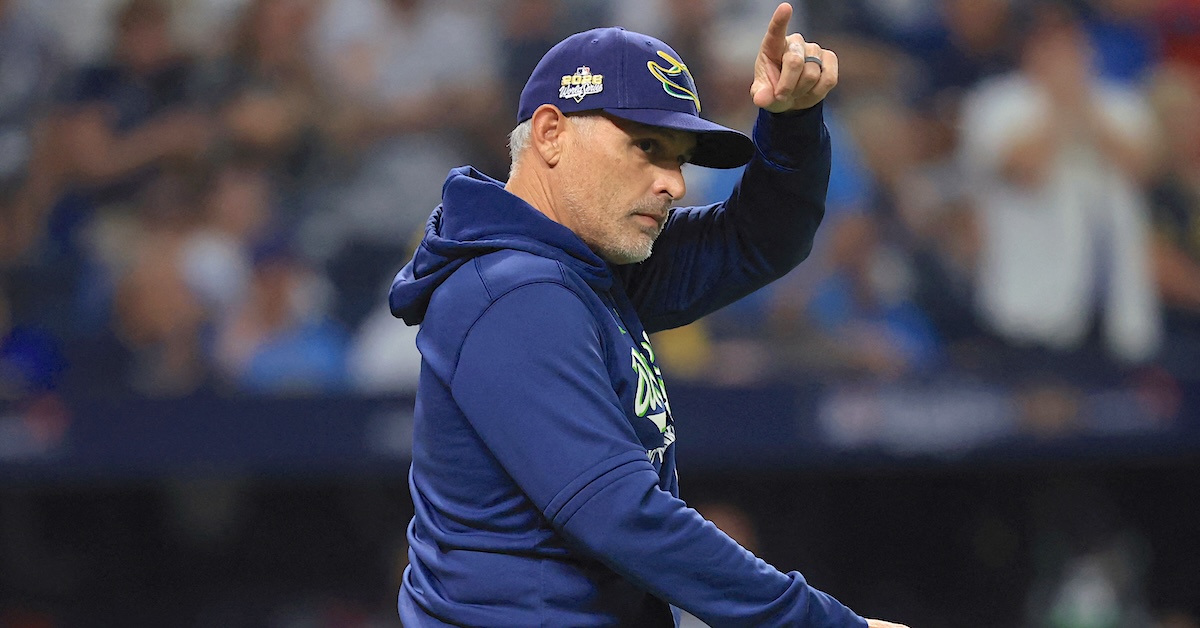
Kim Klement Neitzel-Imagn Images For my final Postseason Manager Report Card of the 2026 season, I’m here to evaluate Kevin Cash, Rays manager and World Series loser. While Tampa Bay fell short of its first World Series championship in franchise history and ended the year with something of a whimper, Cash did a commendable job steering his club during its a deep postseason run. As both Ben Clemens and I have mentioned before each of our previous manager report cards this postseason, I care about process and not results here. It’s easy to say, “That was a great move because it worked,” or “That was a bad move because it failed,” but managers obviously can’t know the results of their decisions as they’re making them. I’ve tried my best to transport myself back to the moment of each decision — taking into account the pitches, innings, and plate appearances that led up to it — while ignoring the outcome. Lastly, before we get into the grades, I’ll also reiterate that while these are ostensibly manager report cards, there’s a much larger group of people behind the skipper that helps to inform his decisions. Before the game, that includes discussions with the front office, which provides the reams of data that every manager has at his disposal during play. During the game, he’s getting feedback from his coaching staff and players on their levels of health and readiness. It really does take a village to get through a baseball game, and realistically, the praise and scorn doesn’t belong to the manager alone. Batting: A- For as long as the Rays have been good, dating back to their first postseason and World Series appearance in 2008, a calling card for their offense has been fungibility and flexibility. That was true yet again this year, as only four players (Yandy Díaz, Junior Caminero, Taylor Walls, and Jonny DeLuca) started all 14 of Tampa Bay’s playoff games; only leadoff hitter Díaz was invariably in the same spot in the lineup. The Rays faced five southpaw starters in those 14 games, and while the team does not deploy strict platoons for lefty bats Jonathan Aranda, Liam Hicks, Chandler Simpson, Victor Mesa Jr., and Richie Palacios — all started against at least one of those five games — righties Ryan Vilade, Nick Fortes, and Ben Williamson each started multiple times. That created a lot of mixing-and-matching within games as opposing teams went to their bullpen. The three-game sweep of the Yankees in the Division Series was straightforward for Cash, even as all three games were close. In the 1-0 win over Gerrit Cole in Game 1, the only change was pinch-running Jorge Mateo for Caminero in the bottom of the eighth, with Mateo representing a key insurance run. Hicks, Simpson, and Mesa all stayed in the game to face lefty Ryan Weathers in the sixth, with the possibility that their spot in the lineup would come up again against a righty arm. Hicks and Simpson did, in fact, get another plate appearance, but against lefty Brent Headrick. I was pretty neutral on leaving them both in, as Headrick was tough on both lefties and righties this year, and subbing Simpson out especially would’ve downgraded the defense with the Rays clinging to a tight lead. Game 2, a 5-2 Rays victory, had even fewer inflection points. Once again, inserting Mateo as a pinch-runner (this time for Díaz) was the only offensive move Cash made, as the skipper again kept his lefties in the game against Headrick; I’m even more OK with that this time, with the Rays up by three runs. Cash’s lone lineup move in Game 3 was pinch-hitting Cedric Mullins for Vilade once starter Max Fried came out of the game, thereby upgrading the defense, too. The Yankees used three traditional starters for the three-game set, but the same can’t be said for the Guardians in the Championship Series, whose aggressive bullpenning presented a new challenge for Cash. The first game featured six Cleveland arms, alternating left-right-left-right-left-right, beginning with starter Foster Griffin, which relegated Hicks and Simpson to the bench. Mullins was the first off the bench as a pinch-runner for Vilade in the sixth, representing an insurance run with the Rays up 2-1. The game was tied by the time Cash made the obvious move to pinch-hit Hicks for Fortes against the righty Hunter Gaddis, as was using Simpson to hit for Walls in the ninth as the Rays made a last-ditch effort before losing 7-3. I have no criticism about any of the moves or non-moves, even if Mullins ultimately had to face lefty Erik Sabrowski in the eighth once he was in the game, as there was no countermove available to Cash. Game 2 against Parker Messick had just one offensive substitution, with Palacios hitting for Williamson against righty Shawn Armstrong in the sixth. Game 3 against Gavin Williams had zero pinch-hitters; the only in-game change was Mateo coming off the bench to run for Palacios. Cash instead let three of his lefties face Sabrowski in the seventh inning. That’s a perplexing move on the surface, but Sabrowski is a reverse-splits guy, so I think the manager was right to hold tight. With runners on second and third and nobody out in the sixth inning of Game 4 and the Rays up 2-1, Cash wisely swapped out Hicks for Williamson against the lefty Tim Herrin, whose splits are more traditional. That did leave a key bat in Hicks out of the game for the home stretch, but I’m fine with Cash’s dice roll at a prime time to try for insurance runs. As I wrote in the my report card of Guardians manager Stephen Vogt, the last two games of the series ended up being back-to-back bullpen games, with Messick recording only six outs in Game 5. That left Cash with plenty of buttons to push. Vilade was replaced in the fourth inning of Game 5 by Mesa against Armstrong with a runner in scoring position and two outs, and Caminero and Díaz were both replaced by pinch-runners late in the game with the Rays up by two. I’m not really a fan of pinch-running for your top hitters, especially Caminero (since he was removed in the eighth with nobody out and certainly could have hit again in the ninth), but Díaz’s removal in the final inning was justifiable, as realistically his spot wasn’t going to come up again in regulation. Cash held the line in Game 6, his first game of the playoffs with zero substitutions on offense. While the Guardians used eight pitchers, the Rays jumped out to an early lead, offering Cash the leeway to keep his standard lineup in the game (Armstrong started for Cleveland, so all of Tampa Bay’s regular lefties were in there) even as lefties Herrin, Joey Cantillo, and Sabrowski were all used. Knowing that Gaddis and Cade Smith were looming and would be used no matter what in a win-or-go-home game for Cleveland, I’m fine with Cash sticking with all of his starters. The Rays could get nothing going on offense in the World Series against the Brewers, with a dreadful wRC+ of 29 and just one home run in the five games. That wasn’t for lack of effort from Cash, who was as active as ever in trying to score some runs. That included a couple moves in Game 1, namely hitting Vilade for Walls against postseason demigod Aaron Ashby in the eighth inning and using Mateo to run for Aranda in the ninth. Both decisions were elementary, and in going back over the game I didn’t notice any glaring non-moves from Cash. Game 2 featured similar no-brainer decisions against Ashby, with Hicks and Walls being hit for by Vilade and Williamson. Game 3 was entirely a wash once the Brewers scored eight runs in the fifth; Cash made just a couple of white-flag “get these guys in the game” moves by sending Mullins and Mateo up for plate appearances. However, Game 4 was anything but, as Cash ended up emptying his bench of all five position players in the 12-inning thriller. The first domino came early in Game 4, with Mesa hitting for Vilade in the fifth inning against righty Abner Uribe. Starting Vilade was confusing, as he’s on the roster to mash lefties, but the Brewers started righty Dustin May in a bullpen game. That meant Vilade’s one plate appearance of the game ended up coming against a righty, and he was unavailable later on against Ashby. But given the starting lineup was what it was, I thought Cash made the right in-game decisions at the right times. Mateo and Mullins were used as pinch-runners for the hobbled Díaz and Caminero, and Fortes ran for Hicks. Considering Díaz and Caminero were physically compromised (Díaz appeared to tweak his quad on a swing earlier in the game, and Caminero looked to hit the bag in pain reaching first on a throwing error), using a pinch-runner for each was fine by me, even if it ran the risk of the lineup spot coming up with a far worse hitter had the game kept going. Not having Vilade available off the bench nearly came back to bite Cash, because he had to use Williamson instead of Vilade to hit for Mesa in the 12th. While Williamson, of course, came through with a walk-off single with the bases loaded and nobody out, Vilade would’ve been the far better option had he still been available. In Game 5, which turned out to be the final game of the World Series, the Rays started Williamson and Vilade against reverse-splits righty Jacob Misiorowski, ultimately removing them both for pinch-hitters Mesa and Palacios in the seventh against Uribe. With Ashby not a sure thing to be available after he threw 31 pitches in Game 4, I think subbing out the righties for the lefties was worth the risk even if it gave a pocket of three straight lefties for the Brewers to target later. The Rays were running out of time and needed runs, and if there’s one thing to take from Cash’s World Series moves on offense, it’s that at the end of the day, the manager can’t stand up there with a bat. Pitching: B The Rays stayed true to their brand with how they constructed and deployed their offense, but they were very much not the Rays of recent years on the mound. While the 2020 AL Champion Rays — and many Rays teams before and after — were defined by having just enough starting pitching and an excellent bullpen, the 2026 Rays got through the playoffs with four legitimate starting pitchers and a shaky bullpen best described with “which of these guys are we using to get to Bryan Baker?” Even Baker himself had question marks by the end of the playoff run, as he dealt with diminished velocity. Cash and pitching coach Kyle Snyder had no problem getting to Baker in the Division Series, with the big righty closing out all three games of the sweep. In not allowing a hit until the eighth inning of Game 1 (a double by Austin Wells, who was thrown out trying for third), Drew Rasmussen gave Cash his easiest game to manage of the postseason, exiting with 101 pitches through eight stellar innings. It would’ve been interesting to see what Cash would’ve done if the no-hitter had still been in tact entering the ninth with the Rays up 1-0, but pulling the plug on Rasmussen after eight was the only choice at that point. With Rasmussen covering eight innings in Game 1 and off days scheduled for both before and after Game 2, the Rays could afford to be aggressive with their bullpen, and they certainly were in both Game 2 and Game 3, with neither starter finishing five innings. The Yankees absolutely loaded up on lefties against Freddy Peralta in Game 2 — as they had against Rasmussen — and after getting through the order exactly twice, Peralta was pulled for lefty Cam Booser in what was then a 1-1 tie with two on and two out. Booser bent but didn’t break, walking Ben Rice before inducing a deep fly out from Cody Bellinger. I liked Cash not pressing his luck with Booser, who didn’t have good feel for his cutter, and instead sending out another lefty, Ian Seymour, to start the sixth inning. This was the game when the Yankees’ defense fell apart, and by the time Seymour took the mound, the Rays held a four-run lead. That cushion, along with Yankees manager Aaron Boone’s decision not to pinch-hit for his lefty bats until the eighth inning, allowed Cash to let Seymour cruise for three innings — Rice’s second homer of the game was his only blemish — before Baker closed it out. Nick Martinez couldn’t even last as long as Peralta did in the decisive Game 3, recording just 11 outs and facing 16 hitters, the last of whom drilled a line drive off his left arm. With four of the next five batters left-handed, Cash called on Seymour again, this time with a runner on first, two outs, and the Rays leading by a run. The first batter he faced, the lefty-swinging Spencer Jones, lifted an opposite-field game-tying double, but Seymour settled in from there, getting out of the inning and then pitching a clean fifth. By that time, the Rays had retaken the lead, 4-2, and with a more balanced part of the Yankees lineup coming up, with left-right-left-right to begin the sixth, Cash brought in righty Griffin Jax. I liked going to Jax — ostensibly a starter — here, because the extra days off in the series meant that if the series went to a Game 4, Rasmussen could simply start on regular rest, with Peralta on regular rest in Game 5, meaning Jax wouldn’t be needed to start until the ALCS. Jax was shaky in his first inning, walking a batter and giving up a near-homer to Anthony Volpe that got overturned from a game-tying round-tripper to a fan-interference double, making it a one-run game. Sending Jax out to try to steal another out or two in the seventh was justifiable, though I don’t particularly agree with the choice to leave him in to face Rice over bringing in Booser. But in Cash’s defense, Jax looked much better at the start of the seventh than he did in the sixth. I can also understand his wanting to avoid an up-down with Booser and just having him start the eighth clean. That was a less platoon-advantaged pocket for Booser, especially once Paul Goldschmidt predictably hit for Luis García Jr. to start the inning. But the die had been cast at that point and Booser had to face three batters — two of whom were righties — before Kevin Kelly came on for pinch-hitter Giancarlo Stanton, a move I’d have made too. Baker then got the ninth, as he always does. Tampa Bay moved to a four-man rotation for the ALCS against the Guardians, with Jax slotting in as the third starter behind Rasmussen, Peralta, and in front of Martinez. Rasmussen was cruising along in Game 1 until Chase DeLauter homered in the sixth to cut the Rays’ 2-0 lead in half. Rasmussen was nonetheless sent out for the seventh inning having thrown 90 pitches, and while it immediately backfired when he gave up a game-tying homer to Patrick Bailey on his 91st and final pitch, I’d have made the same move, too. He was still largely cruising at that point, and Bailey was the seventh batter in the lineup; trying to get Rasmussen through the bottom of the order a third time was rational considering his pitch count. Decisions from there were easy, with Booser getting a pocket of lefties and Tyler Wells and his excellent changeup getting the eighth inning against switch-hitter José Ramírez, lefty DeLauter, and righty Jo Adell. It was easy to see that Wells didn’t have his best command, which is why he was pulled after just three batters with runners on second and third and one out. Seymour was a good choice there against the lefty Nathaniel Lowe; if Vogt had replaced Lowe with a righty like David Fry, Seymour’s changeup still would’ve played well. Seymour unfortunately didn’t have his best stuff either, letting in the two inherited runs to make it a 4-2 Guardians lead. Mullins homered to cut the lead to one in the bottom of the inning, but Cash still went to bottom-of-the-totem-pole arm Cole Sulser to pitch the ninth with Ramírez due up fourth in the inning. As a strong proponent of win-chasing throughout the course of the playoffs, I would’ve much rather seen Baker here. And since Sulser gave up three runs and gave way to Kelly, why not just have Kelly start the inning, at the very least? The increasingly fissuring cracks in the bullpen perhaps contributed to the Rays’ pushing Peralta farther in Game 2 than I thought they would at any point in the postseason. He was permitted to throw 99 pitches and face 25 hitters, though it certainly helps that his first and only runner in scoring position came in the fifth inning with two outs, at which point the Rays had spotted him a 3-0 lead. I was surprised to see Peralta stay in to face Adell representing the tying run in this spot, but it was a justifiable move considering the lack of depth in the Tampa Bay bullpen and Adell’s large platoon splits. It paid off, as Adell lined out to end the inning. Using Kelly against switch-hitters and lefties to start the seventh was not ideal, but it was necessary. Given all the lefties in the Cleveland lineup, at some point the Rays would need to throw a righty reliever at them. Kelly made sense as the pitcher to do it — he has a good changeup to neutralize the lefties, and Wells looked bad in Game 1 — but he couldn’t get through the inning. With two on, two out and DeLauter due up, Cash called for Seymour, who allowed an RBI double. That brought up Adell with the tying run on second, a tough proposition for a southpaw. But Seymour buckled down and struck out the imposing righty before facing a weaker part of the lineup in the eighth. That left Baker for the ninth, and by this point it was clear that Cash wanted to use Baker as traditionally as possible: not before the ninth inning and not when the Rays were losing. Considering his apparent distaste for win-chasing, I thought Cash was at least ideologically consistent in how he handled Game 3. Jax faced exactly 18 hitters in four-plus innings, with another bottom-of-the-order outburst (hello, Petey Halpin) propelling the Guardians to victory. But I don’t see a real reason not to have sent Jax out for the fifth even though it backfired spectacularly with that home run to Halpin and all three hitters in the bottom third of the order reaching. By the time Jax exited, there was still nobody out in the fifth with the top of the order due up. I liked Cash going with a higher-leverage arm in Wells to keep the deficit at one, and I also endorse sending Wells back out for the sixth considering how strongly he performed to get out of the fifth. Going with the lefty Steven Matz for the seventh was a fine choice against the bottom of the order, though I wasn’t sure about keeping him in for the top of the order — including Ramírez from his stronger side of the plate — in the eighth. As it did for the Guardians, the rainout of Game 4 presented a unique complication for the Rays: the potential of four games in four days to end the series, with the Guardians ahead two games to one. Martinez still wasn’t pushed beyond 18 batters in Game 4, though, with Cash rolling the dice on his bullpen after Martinez got 16 outs on just 79 pitches. I loved the gutsiness of using Peralta on his throw day to empty the tank with his velocity and get a couple of (hard-hit) outs in the sixth before going to the actual bullpen arms with an expanded 5-1 lead in the seventh. Maybe the plan was to get Seymour through the rest of the game and keep the single-inning relievers untouched, but the lefty wobbled his way through a four-hit, two-run seventh and made that impossible, and also started a trend of shaky outings from him. Kelly started the seventh and faced three hitters before Booser was brought in against the lefty Lowe, prompting Vogt to call on the righty-hitting Fry to pinch-hit. I think Cash handled that inning perfectly. Kelly faced Ramírez batting from his weaker side and DeLauter, who mashed lefties, as his two matchups against left-handed hitters. And I’d rather have had Booser against Fry coming in cold off the bench than Kelly against Lowe, too. Baker for the ninth, even with the Rays back up four, was the right call to tie the series. As I’ve said in prior scorecards, four runs in the playoffs may as well be a save opportunity. Game 5 was the easiest for Cash to manage of the whole series, with the Rays spotting Rasmussen a run in each of the first three innings. Tampa Bay’s ace cruised through five innings before giving up a run in the sixth, but was allowed to start and finish the seventh against 5-6-7 in the lineup. With a two-run cushion and an increasingly shakier bullpen, that was the right move, as was using Booser to start the eighth before flipping Ramírez around to his worse side of the plate against Wells and, of course, turning it over to Baker for the ninth. The beginning of Game 6 mirrored the onset of Game 5, with the Rays again scoring three runs in their first three innings at the plate. Staked to that lead, Peralta was allowed to reach the sixth despite giving up a fair bit of traffic and hard contact, ultimately facing 23 hitters and recording 16 outs. Once Lowe drove in the first Guardians run to cut the lead to 3-1 with an out in the sixth, Booser entered against the lefty Travis Bazzana and the switch-hitter Bailey, who is better from the left side. He retired them both without a problem and was sent back out for the seventh against the bottom of the order and lefty Steven Kwan at the top, an easy choice. Now up 5-1 entering the eighth, Wells got the same pocket of Ramírez-DeLauter-Adell that he’d become accustomed to facing and was also permitted to face Lowe with Fry perhaps looming on the bench. Based on the prior logic I laid out earlier, I’d have pulled Wells after the three hitters and dared Vogt to go to his bench; instead, Wells gave up a single to Lowe before Seymour came in and very nearly coughed up the four-run lead by throwing just three of 12 pitches for strikes. Kelly had to clean things up against Brayan Rocchio — under no circumstances was Seymour going to stay in the game with his command — before Baker clinched the trip to the World Series in the ninth. I would have liked to have seen Baker used more aggressively throughout the series, but I at least respect Cash’s sticking to his guns of attempting to avoid an up-down for Baker whenever possible — especially since Baker was bleeding velocity already. Just two of his nine pitches were fastballs, and they were just 92 and 93 mph, despite the adrenaline of clinching a trip to the World Series in his home ballpark. The story of the World Series may well have been the Rays’ anemic offense (or the Brewers’ great pitching, however you’d like to view it), but that doesn’t mean that Cash didn’t make pitching decisions worth evaluating. The most consequential was the one made before the series started: The manager pushed Rasmussen’s start back to Game 2 to give him an extra day of rest. While Martinez settled in just fine in Game 1 after a laborious two-run first, and the blame for the 3-2 loss certainly falls more squarely on the offense, it certainly would’ve been nicer to have the better arm in Rasmussen on the mound to start the series. Martinez was permitted to face a 19th hitter with nobody on to finish off the fifth and then turned the deficit over to the bullpen, and Cash again stuck with avoiding win-chasing by using Matz for five outs and Kelly for just one (it took him four batters just to get that one). The “don’t chase a win” ethos was especially solidified by Cash’s usage of Sulser and Garrett Cleavinger — who hadn’t pitched in a game in months — for the seventh and eighth with the Rays down by two. Again, I’m very pro win-chasing, but I appreciate that Cash stayed consistent with his own strategy, which kept his grade up. The extra rest did Rasmussen no good, as he struggled through easily his worst outing of the postseason. The Rays exploded for four runs in the first, but Rasmussen gave two of them back in the bottom of the inning and another in the fourth; he recorded 11 outs on 89 pitches before exiting after 20 batters faced. With the bases loaded and two outs in the fourth, bringing Booser in to a messy spot against Christian Yelich was an easy call over going to Seymour, and Booser recorded four key bridge outs to get the Rays through the fifth. I understood using Seymour as the next man up in the sixth even though it didn’t work out, as leadoff man Sal Frelick homered to tie the game; Seymour’s shakiness was evident by this point, but it was still a good pocket of the lineup to use him, with four of five batters he faced swinging from the left side. Going to Wells for righty Willson Contreras was fine by me, too, as was leaving him in for the start of the seventh with two lefties due up, because of his neutralizing changeup. Brice Turang was on third with one out when Cash made another good-on-paper decision to bring in Kelly to face righty Cooper Pratt; Wells is an extreme fly ball pitcher, and Kelly offered a much better chance at inducing a groundball directly at one of the drawn-in infielders to keep the runner at third, although he also was less likely to get a strikeout. It didn’t work out for Kelly, as Pratt hit a go-ahead single, but that doesn’t invalidate Cash’s sound thought process. Kelly retired the next three before running into trouble that Matz had to bail him out of. If ever there was a point to chase a win with Baker, it really should’ve been in the eighth, down by a run against the top of the order. Being on the road does make for tougher calculus, but those are the hitters you’d want Baker to face, and the bottom of the ninth, of course, never came. The fifth inning of Game 3 was an utter disaster for the Rays, but I don’t think any moves Cash made in that inning contributed to the carnage. I was fine with Peralta facing Contreras even with two on; there were two outs, and this was the first of potentially three straight games. Going to Booser for a string of lefties was fine, too, even though he got dinked and dunked around; once he left the game, the score was 8-0. Everything after that was pretty inconsequential, but I’d absolutely have used a position player to pitch as early as the sixth inning. It would’ve been embarrassing in front of the home crowd, I know, but Cash should’ve put his pride aside instead of using Sulser, Cleavinger, Wells, and Matz for completely meaningless outs. With their backs against the wall in Game 4, the Rays had no choice but to go to Jax to start the game, and he again faced exactly 18 hitters. The 18th, David Hamilton, took him deep to start the fifth and knot the game at 2, but that probably would’ve been his last hitter anyway, and going to Kelly against the top of the order was probably the best choice Cash had considering just how poorly the non-Baker bullpen had performed since Game 5 of the Cleveland series. Martinez was able to give a couple scoreless innings in the sixth and seventh, facing seven hitters. I can see an argument for simply having Martinez start the game on short rest if he was available anyway, but having him in the bullpen let Cash decide when to deploy him, if at all, rather than using him from jump street. Using Baker for as long as he could go (two innings), beginning in the eighth inning with the score still tied, was obvious, with Wells and Booser combining for six outs once Cash had to dip into the “man I really didn’t want to have to use these guys” segment of his bullpen. Based on how they’d performed recently, I would’ve much rather seen Matz than Seymour in the 12th, with yet another bad Seymour outing (32 pitches to get three outs, giving up a homer to Pratt) putting the Rays on the brink of a sweep. Cash and Seymour were ultimately bailed out by Williamson. “Don’t chase wins” obviously goes out the window when trailing in a win-or-go-home Game 5, and Cash managed the staff appropriately. Giving Rasmussen an extra day of rest to start the series meant he had to start on short rest in this game and was limited to four innings of one-run ball on 48 pitches. He was pitching well without a downtick in velocity whatsoever, and I would’ve sent him out there for the fifth without second thought, but I’ll give Cash and Snyder the benefit of the doubt of having information that I’m not privy to. My bigger gripe with the decision was replacing Rasmussen with Kelly, which felt like a waste against the lefty-heavy bottom of the lineup. This was the time to use a lefty, either Matz, Seymour, or even Cleavinger. Sure, that would have represented less urgency than using a more trusted arm in Kelly, but Cash needed to turn to members of that trio at some point anyway. If he’d gone to one of these lefties immediately after lifting Rasmussen, Kelly would’ve been available to face the meat of the Milwaukee order the next time those hitters came up. As it turned out, Kelly didn’t make it through the inning. He gave up a run before being pulled for Cleavinger against Jake Bauers, and Cleavinger stuck around for the sixth against 3-4-5 in the lineup. Considering Cleavinger’s long layoff, this is another situation where I’d have gone to a different lefty rather than have an up-down from a reliever. Instead, Cleavinger let the first three reach before Wells had to clean up his mess with the bases loaded and nobody out. He and Matz did a nice job of limiting the Rays to one run, but that made the deficit 4-0. At that point, I have no qualms with what Cash did: He left Matz out there for three more outs, put Baker in against the heart of the order in the eighth, and used Seymour for the bottom of the order rather than send Baker out there for a second inning on a second straight day. The blame for the series loss goes to the offense and the team’s lack of reliable relievers, not Cash, even though he certainly didn’t manage things perfectly.
Postseason Manager Report Card: Kevin Cash
Full Article
Original Source
Read the full article at Blogs →KhanList aggregates and links to publicly available news content. We do not host full articles from third-party sources. Always verify important information with original sources.