
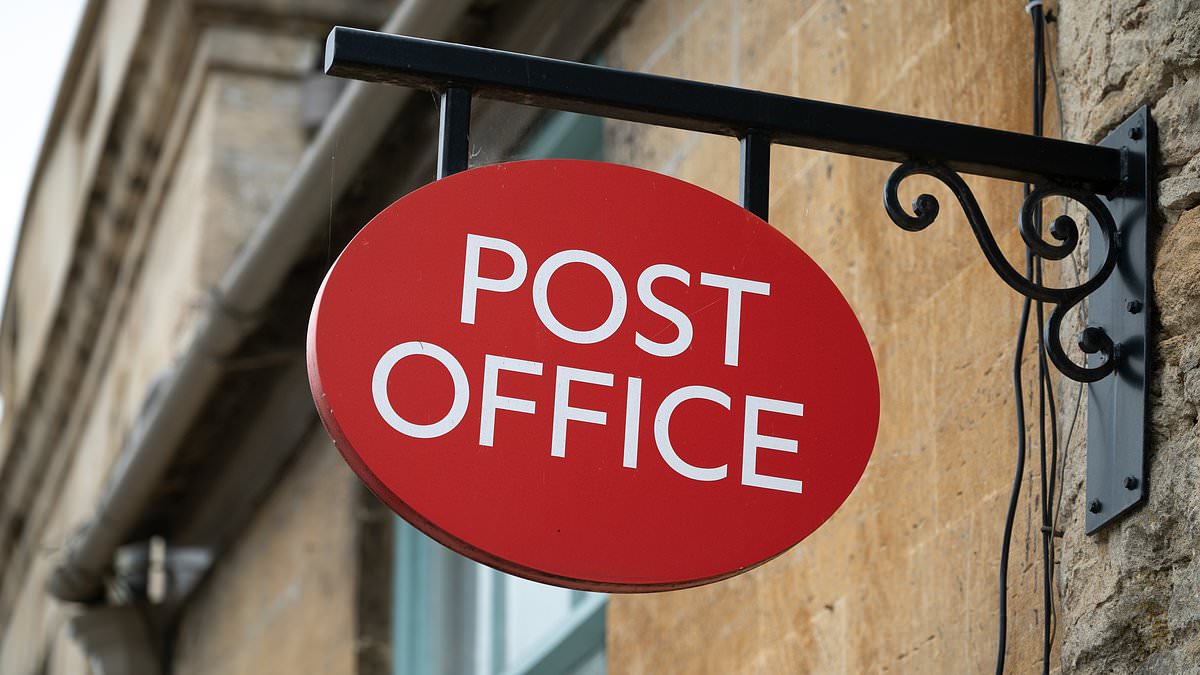
The boss of the Post Office has urged ministers to save village branches from crippling hikes in business rates.Chief executive Neil Brocklehurst said post offices play a ‘similarly vital role in communities’ to pubs, which have been handed support with the commercial property levy.He said post offices also need ‘urgent help’ in the form of ‘targeted relief’.Controversial changes in last year’s Budget mean post offices will pay nearly £45million in business rates this year – an increase of £29million.Nearly 600 branches will have to pay rates for the first time.Writing for the Daily Mail, Brocklehurst said: ‘There is a contradiction at the heart of the Government’s ambition for growth. We say we want thriving high streets and essential services within easy reach of every community. But many of the businesses delivering exactly that are facing a sharp increase in costs.’ Post offices will pay almost £45million in business rates this year - an increase of £29millionHe added: ‘Government has already accepted that pubs merit financial support because of their wider social and economic contribution to communities – with a 20 per cent cut to their business rates bill set to come into effect in England next year. Few would dispute the important role pubs play in bringing people together. But post offices play a similarly vital role in communities.‘If Government is serious about growth in every postcode, then it should recognise the unique role post offices play in making that growth possible. That is why postmasters are calling for targeted business rates relief.’There were 11,708 post office branches in the UK as of February 2026, according to a recent report from the Office for National Statistics. It said that the number of branches has remained relatively stable since 2009.The business is hoping to extend its network and opening hours by 2030.Brocklehurst is just the latest businessman to call for reform of the rates system.Writing for the Daily Mail on Monday, Mark Allan, the boss of commercial property giant Landsec, said a shake-up was required to help firms tackle Britain’s youth unemployment crisis.He said the growing number of youngsters not in education, employment or training – so-called NEETs – was ‘a catastrophe in slow motion for our economy’.‘It’s become increasingly clear that addressing the NEET crisis can’t be viewed solely through the narrow lens of skills and education,’ said Allan.‘It should go without saying that businesses also need the capacity to create entry-level jobs, something that has been made harder by the decisions taken by successive governments.’Post offices play a vital role in our communities By Neil Brocklehurst, chief executive of the Post OfficeDuring his first few weeks in office, Prime Minister Andy Burnham has made good growth in every postcode a defining objective of his Government. It’s a simple proposition. Economic success should not be confined to city centres or a handful of prosperous regions. It should be felt in our daily lives: on high streets and in villages across the UK. Post Office chief executive Neil BrocklehurstIf we are serious about good growth in every postcode, we must be equally serious about what will make that possible.Visit a post office on any morning and you’ll see what that looks like in practice. A small business owner depositing the previous day’s cash takings. Vinted and TikTok shop traders dropping off parcels. People of all ages depositing and withdrawing cash and paying their bills. These are ordinary moments, but together they are the building blocks of local economic activity and community life.With 11,500 branches across the UK, a thriving Post Office network is not merely an accessory to growth in every postcode. It is a driving factor that makes growth possible.Every week, more than ten million people and businesses visit a post office. The value of these visits goes further than just the money spent in branch: someone who drops off a parcel or pays a bill at the post office is likely to visit nearby businesses too. Collectively, this creates a halo effect worth £3billion of spend in nearby shops annually.And then there’s the social impact of having a post office nearby. The public tells us there is a connection between community identity, pride and the state of the local high street. Over half say that a local post office fosters a sense of belonging to the community and is important to its identity.Yet there is a contradiction at the heart of the Government’s ambition for growth. We say we want thriving high streets and essential services within easy reach of every community. But many of the businesses delivering exactly that are facing a sharp increase in costs.Most post offices are independently run small businesses and they earn remuneration for each transaction carried out in branch. Now faced with rising costs, postmasters continue to tell me they are struggling. We are making urgent and essential changes to how Post Office operates to address this. Last year, we increased postmaster remuneration by over £86million – but it’s not enough against a backdrop of rising costs. For some, particularly in rural and isolated communities, these additional costs come at a time when margins are already under significant pressure.Government has already accepted that pubs merit financial support because of their wider social and economic contribution to communities – with a 20 per cent cut to their business rates bill set to come into effect in England next year. Few would dispute the important role pubs play in bringing people together. But post offices play a similarly vital role in communities.Recent changes to the business rates system mean post offices across the UK are forecast to pay almost £45million in business rates this year. That's around £29million more than branches paid under the previous relief system. Nearly 600 additional post offices will begin paying business rates for the first time, while the average bill is expected to rise to around £3,700. For rural post offices, the increase is particularly stark, with average rates bills expected to be around four times higher in 2026 than they were in 2023.This burden is not just felt by the postmaster. If a branch closes, it is felt by the small business owner who relies on Post Office for banking services, or the vulnerable customer who prefers that face-to-face support, as well as nearby shops who see their footfall affected.If the Government is serious about growth in every postcode, then it should recognise the unique role post offices play in making that growth possible.That is why postmasters are calling for targeted business rates relief. This is not a request for special treatment. It is recognition that post offices are different from other retailers. They are community infrastructure: supporting other local businesses and providing services that many people would otherwise struggle to access.The conversation about growth can often feel distant from people's daily lives. But growth in every postcode is not an abstract slogan. It is a small business able to keep trading, a busy high street, a village retaining vital services. Across Britain, postmasters are supporting good growth in every postcode every day, but they need urgent help in order to continue doing so.DIY INVESTING PLATFORMSAJ BellAJ BellEasy investing and ready-made portfoliosHargreaves LansdownHargreaves LansdownFree fund dealing and investment ideasinteractive investorinteractive investorFlat-fee investing from £4.99 per monthFreetradeFreetradeInvesting Isa now free on basic planTrading 212Trading 212Free share dealing and no account feeAffiliate links: If you take out a product This is Money may earn a commission. These deals are chosen by our editorial team, as we think they are worth highlighting. This does not affect our editorial independence.Compare the best investing account for you
Post Office boss calls for tax breaks to save rural branches from soaring costs
Full Article
Original Source
Read the full article at Dailymail →KhanList aggregates and links to publicly available news content. We do not host full articles from third-party sources. Always verify important information with original sources.